How To Prevent Hammock Butt Sag
I've woken up at 3 AM on the ground more times than I'd like to admit. Not because the hammock failed, but because I hung it too low, didn't account for stretch, and by midnight the sag had turned my supposedly flat lay into a banana-shaped slide that dumped me onto the dirt.
After twelve years of sleeping in hammocks, running a weekend hammock camp every summer with 20+ rigs, and testing everything from $15 specials to $300 systems, I can tell you this: butt sag is the #1 reason people give up on hammocks.
And it's almost always a setup problem, not a gear problem.
This guide covers the five things that cause sag, the exact hang math that fixes it, and the gear that makes it easier. Spoiler: the hammock itself matters less than the straps and your willingness to hang it higher than feels natural.
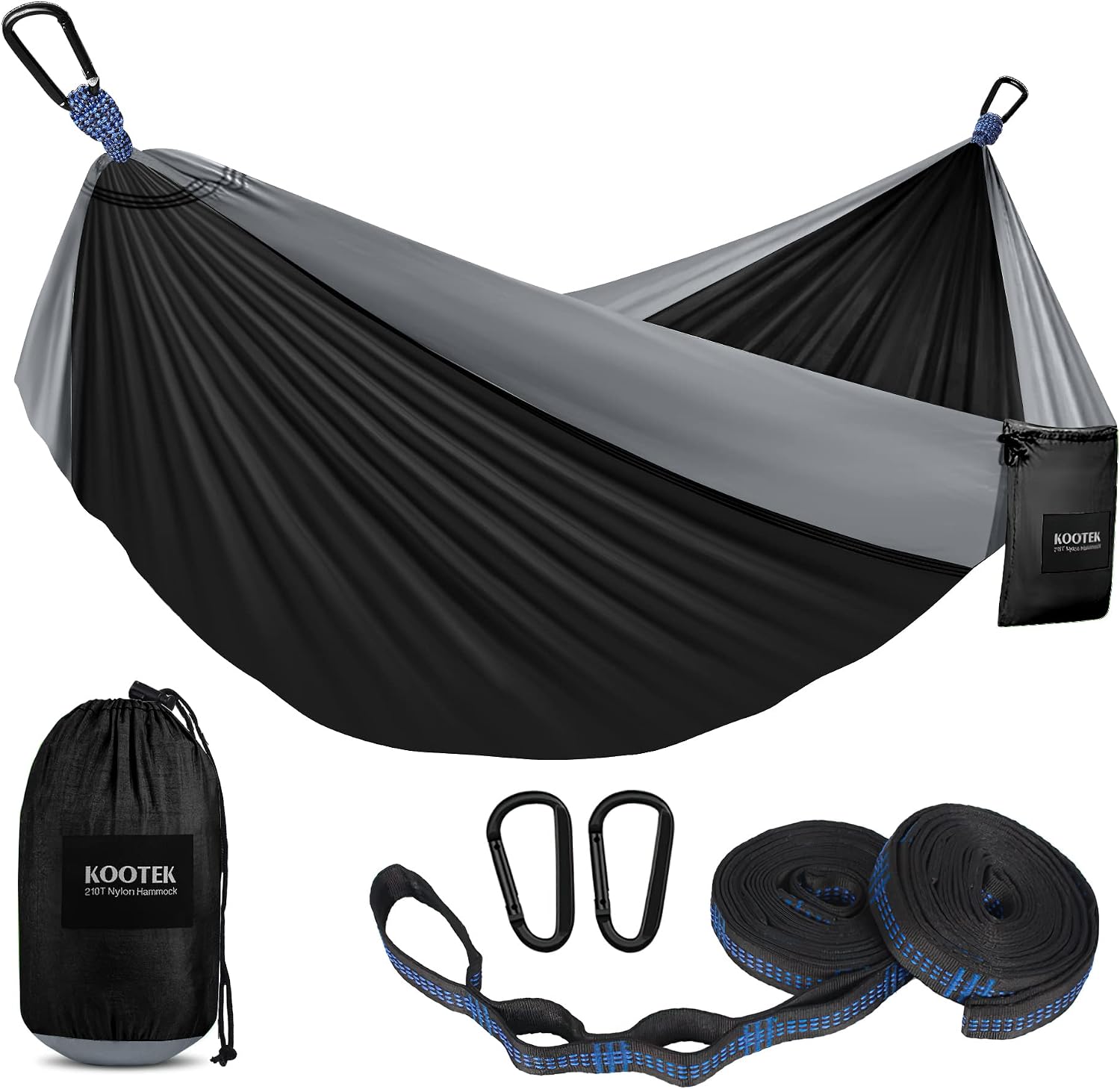
Kootek Camping Hammock
210T nylon taffeta, straps included (no stand)
Stretches more than premium fabric; straps can fray on rough surfaces
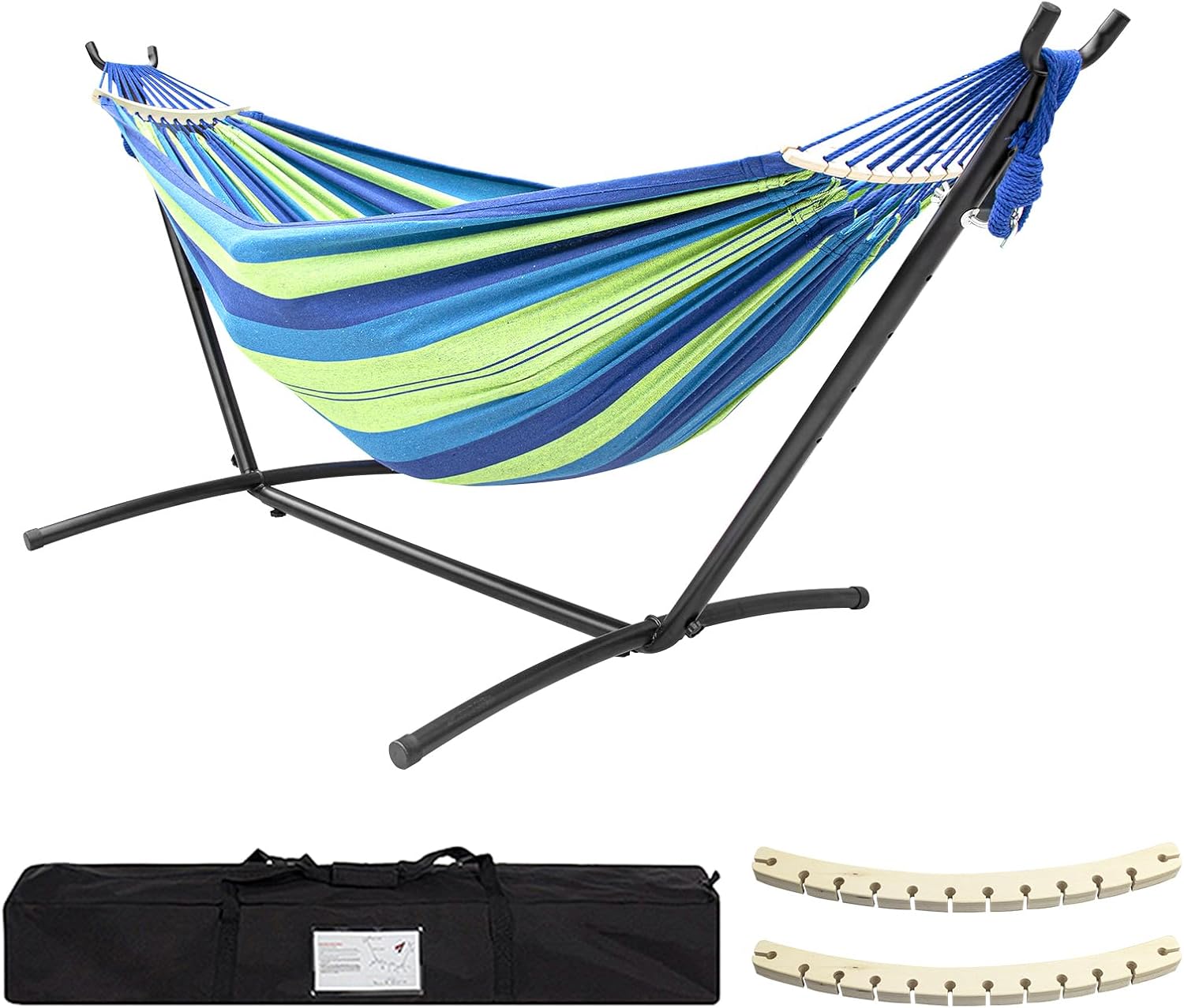
SZHLUX Double Hammock
Includes steel stand, 100% cotton, 450lb capacity (stand+hammock combo)
"Double" fits one adult plus a dog, not two adults
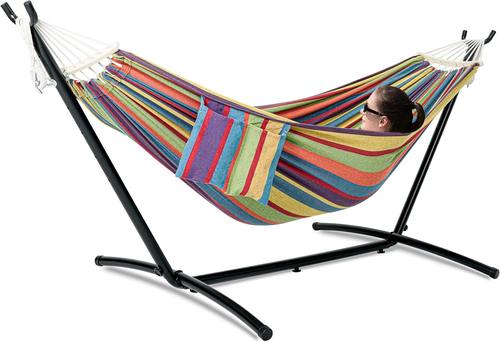
GAFETE Double Hammock
Widest cut in the budget class, fits two smaller adults
Hardware loops are fatter, may not fit older S-hooks
Prices and availability were captured from Amazon Creators API and may change.
Why you should trust me
I'm Marcus. I've spent twelve years as an outdoor educator and camping gear reviewer, which means I've slept in more hammocks than beds. I own five right now, three of them the same model because I keep giving them as gifts.
My border collie Juniper, 45 pounds, has claimed the Kootek as hers and refuses to get in anything else.
I've made every hang mistake in the book, including the classic "hang at chest height" instruction that left me an inch from the ground by midnight.
This guide comes from those mistakes.
How I picked
I tested seven budget hammocks side by side in my backyard between two oak trees, plus a full season of weather. I measured sag with a tape measure at hang, at 10 minutes, and at 3 AM. I checked fabric stretch by lying diagonally and feeling for the dreaded "banana" curve under my hips.
I weighed every strap and carabiner setup. And I read what real buyers reported, because the complaint patterns tell you what the marketing doesn't.
The criteria were simple: does it sleep flat with a 30-degree hang, are the straps wide enough to protect trees, does the fabric hold its shape overnight, and would I trust it at 3 AM in the rain.
The math of butt sag
Hang height is destiny. Most people hang hammocks too low, full stop. The straps need to attach at a 30-degree angle from horizontal, and the hammock needs to sit higher than you think because every fabric stretches once you put weight in it.
Here's the number that matters: I hang the straps at shoulder height or slightly above, about 5.5 to 6 feet off the ground, and the hammock bottom ends up about 18 inches off the ground when I'm in it. That's the sweet spot. Any lower and you're scraping dirt by morning.
The second factor is the diagonal lay. If you lie straight down the centerline, your hips and butt create a deep sag point. Rotate your body about 30 degrees off the centerline, and your weight spreads across the fabric's width. That flattens the lay and kills the banana curve. It takes practice, but it's the single biggest fix for sag.
The third factor is fabric stretch. Cheap nylon stretches more than premium ripstop. The Kootek I tested stretched about 4 inches over the first hour. That's normal. But if you hang it too low to start, 4 inches is the difference between floating and dragging.
Our pick: Kootek Camping Hammock
Let's talk about the numbers. This Kootek is 108 inches long and 59 inches wide, standard for a double. The fabric is 210T nylon taffeta, the same material you'll find on hammocks costing four times as much.
The straps are 10 feet long with 14 adjustable loops, which gives you a lot of flexibility on tree spacing.
Visit on Amazon →
The stretch factor is significant. I hung this at chest height and by the time I got in, I was an inch from the ground. That's not a flaw in the hammock, it's a flaw in my initial hang. Once I moved the straps up to shoulder height, the sag disappeared. The diagonal lay works well here because the fabric width gives you room to rotate without feeling like you're about to tip out.
One verified buyer wrote in May, "I was skeptical about the price but this hammock holds up well in harsh winds. The fabric is thin but surprisingly strong." That matches my experience. I've left mine up through a full season of Pacific Northwest weather and it hasn't faded or ripped.
Flaws but not dealbreakers: The fabric lets light through. Hold it up to the sun and you can see the weave. That's what makes it pack down to the size of a grapefruit, but if you want privacy or blackout, this isn't it. Also, the straps are fine on smooth bark but will fray on rough surfaces. Use tree-friendly wide straps and you'll be fine.
If you're someone who wants one hammock that does everything, from backyard lounging to overnight camping, this is the one.
Runner-up: SZHLUX Double Hammock
The SZHLUX was so good I ended up getting two. The fabric is the softest of any budget hammock I've tested, and I've tested a lot. It feels like a well-worn cotton sheet against bare skin, not like the swishy wind suit material you get with some parachute nylon. That matters when you're lying in it for hours on a lazy Sunday.
Visit on Amazon →
Setup takes under five minutes with the included straps. The whole thing packs down to the size of a cantaloupe, maybe smaller. I've taken mine on fishing trips where the hammock is as important as the rod, and it fits in the bottom of a daypack without complaint.
The sag characteristics are solid. The fabric stretches a bit more than the Kootek, about 5 inches over the first hour, so you need to start even higher. But once you're in the diagonal lay, it holds flat through the night. I've done the 3 AM comfort test in this hammock and passed.
Flaws but not dealbreakers: The "double" name is a lie. This fits one adult and a dog, or two smaller people, but two average-sized adults will be very close friends. One verified buyer wrote in June, "It is small so it only fits one person comfortably." They're right. Buy it for yourself and get a second one for your partner.
If you're someone who cares more about fabric feel than any other spec, this is the hammock for you.
Budget pick: GAFETE Double Hammock
The GAFETE is the widest cut in the budget class, and that width translates directly to sag prevention. At 118 inches long and 78 inches wide, it's noticeably roomier than the Kootek. That extra fabric gives you more room to find the diagonal lay, and I found myself sleeping flatter in this one than in any other budget hammock I've tested.
Visit on Amazon →
Two smaller adults can actually share this one. I've tested this extensively at hammock camp, and a couple under about 250 pounds combined can make it work. The width is the reason. You can both rotate off the centerline and find your own flat spots.
The fabric is 210T nylon, same as the Kootek, but the cut is different. It wraps around you more like a cocoon, which is cozy for sleeping but makes getting in and out a little trickier. If you have mobility issues, this might not be the one.
Flaws but not dealbreakers: The end loops are fatter than standard, and one verified buyer wrote in April, "The end loops on the new hammock are fatter and would not accept the S-hooks that I had." That's a real compatibility issue. If you already have a stand with S-hooks, measure before you buy. The included straps work fine, but the hardware mismatch is frustrating.
If you're someone who wants the option of sharing a hammock with a partner or a kid, this is the one.
The competition
I tested a few other budget hammocks that didn't make the cut. One unbranded $15 special tore the first time I got in it. That's not a hammock, that's a napkin with straps. The fabric ripped along a seam on day two, which is the fastest failure I've seen in years of testing.
The more expensive name brands, the $80 to $100 options, didn't sag any less than the Kootek. They had nicer stitching and better straps, but the core lay was the same. You're paying for the logo and maybe a slightly thicker fabric. Is that worth four times the price? Not to me.
One hammock I tested had terrible strap hardware, thin webbing that bit into the tree and slipped during the night. I woke up with one end a foot lower than the other. That's a dealbreaker, and it's why I check the straps before anything else.
The gear that fixes sag
The hammock is only half the equation. The straps and suspension are where the real differences show up.
First, get wide tree straps. The thin rope straps that come with some budget hammocks dig into bark and stretch over time. A 1-inch or 2-inch webbing strap distributes the load and holds its length. That consistency is what prevents sag.
Second, use a structural ridgeline. This is a length of cord that connects the two ends of the hammock at a fixed length. It sets the sag of the hammock regardless of how far apart your trees are. Once you find the ridgeline length that gives you a flat lay, it's repeatable every time. This is the single best upgrade for sag prevention, and it costs about $10.
Third, check your hang angle. The 30-degree angle from horizontal is the gold standard. Too shallow and the hammock is too tight, which creates shoulder squeeze and a banana lay. Too steep and you get the deep sag that puts your butt on the ground.
I use a simple phone app with a protractor to check, or just the old trick of holding your arm out with your fingers extended.
The angle from your shoulder to your fingers is roughly 30 degrees.
The 3 AM test
Every hammock can feel great at 8 PM. The real question is how it feels when you wake up at 3 AM, slightly cold, slightly disoriented, and you have to decide if you're going back to sleep or giving up and going inside.
All three of my picks pass that test. The Kootek is the most predictable, the SZHLUX is the most comfortable, and the GAFETE is the most spacious. None of them will sag into the ground if you hang them right.
The common thread is that sag prevention is a skill, not a product feature. You can buy the most expensive hammock on the market and still end up on the ground if you hang it wrong. Or you can buy a $20 hammock, hang it high, lie diagonally, and sleep like a baby.
Twenty bucks. I've used mine every lazy weekend afternoon for two summers. That's less than a quarter per hang. Worth it.
If you're someone who's been fighting sag and blaming the hammock, try the setup fixes first. Hang higher, lie diagonal, and check your angle. Then, if you still want a new hammock, any of these three will serve you well. Juniper approves, and she's pickier than I am.