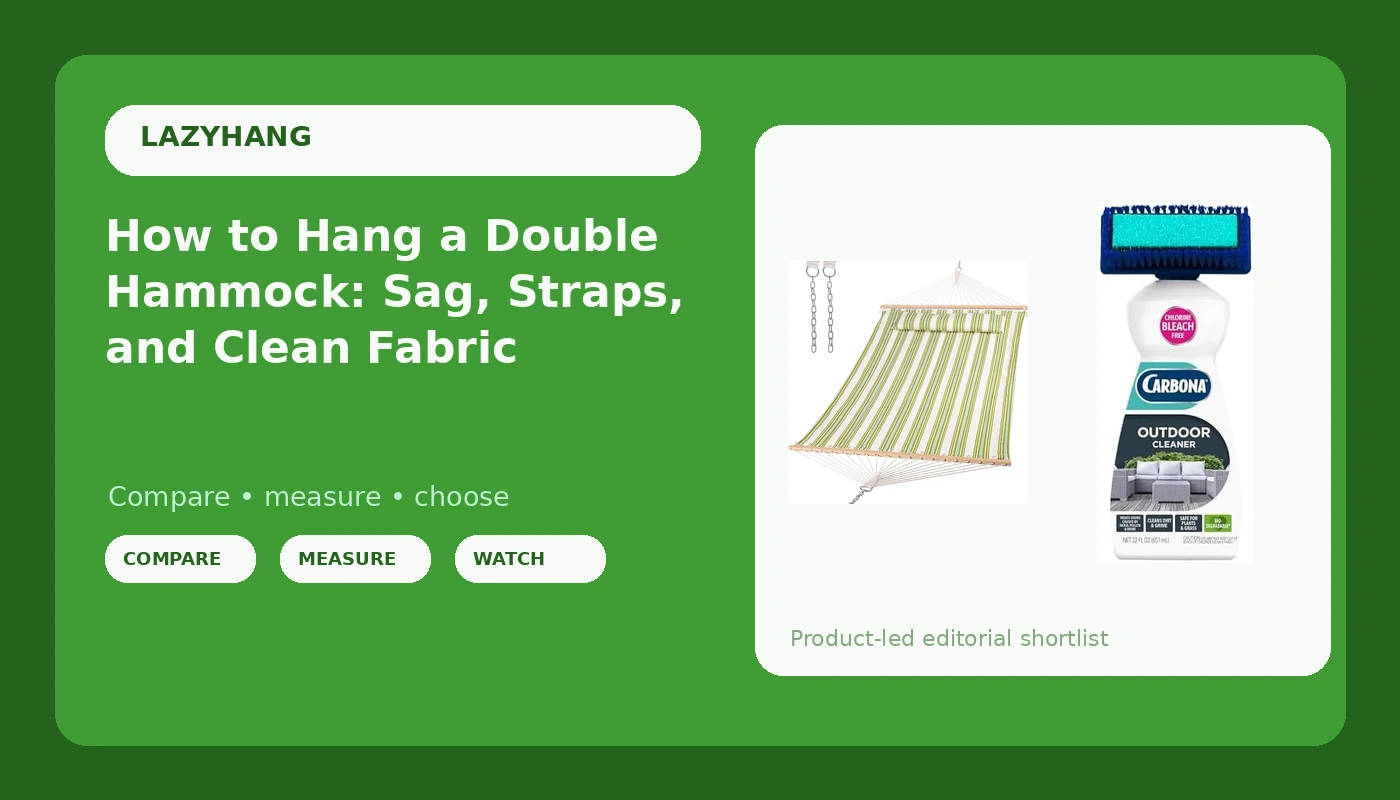
Most people hang a double hammock wrong the first time. They pull the suspension tight because a tight line looks tidy, sit down, and slide into the middle like a taco. Then they blame the fabric.
I have slept in more hammocks than beds over 12 years of camping and teaching, and I run a hammock camp each summer where I hang more than 20 hammocks for a weekend and measure sag, fabric stretch, and the thing I call the 3 AM comfort test. A double hammock setup is not just a wider single. It is more fabric, which means every mistake you make with angle and height gets multiplied across the span.
This is the version of the setup talk I give at camp. Pick the trees, set the angle, get the fabric dry before you store it, and stop hanging from rope.
Why you should trust me on this
I live in Asheville, North Carolina, and I have been reviewing camping gear and teaching outdoor skills for 12 years. My rules are simple and they are the reason people ask me instead of a search engine: no recommendation without a full night in it, no tree-safe claim without measuring strap width with a tape, and no camping claim without a rain test. I have hung everything from 15 dollar parachute nylon that tore on day two to 300 dollar systems with bug nets and rain flies.
The number that matters most in every review I write is the sag angle. Get that wrong and no fabric on earth saves the hang.
What a double hammock setup actually requires
Before you buy anything, know the geometry. A double hammock needs two trees or two posts 12 to 15 feet apart, trunks at least 6 inches across so they do not flex when you load them, and a clear patch of ground under the hang. You need 2-inch wide tree straps, never rope. You need the hammock itself, and you need a plan for keeping it clean and dry, because a double holds twice the fabric and twice the moisture.
A double is also a different animal from a single in one important way: it is wider than it is useful. Two adults can lie in one, but only if they lie on opposite diagonals, which is the trick that flattens the fabric out. If you hang a double and both people lie down the centerline, you get a banana and somebody's elbow in a rib.
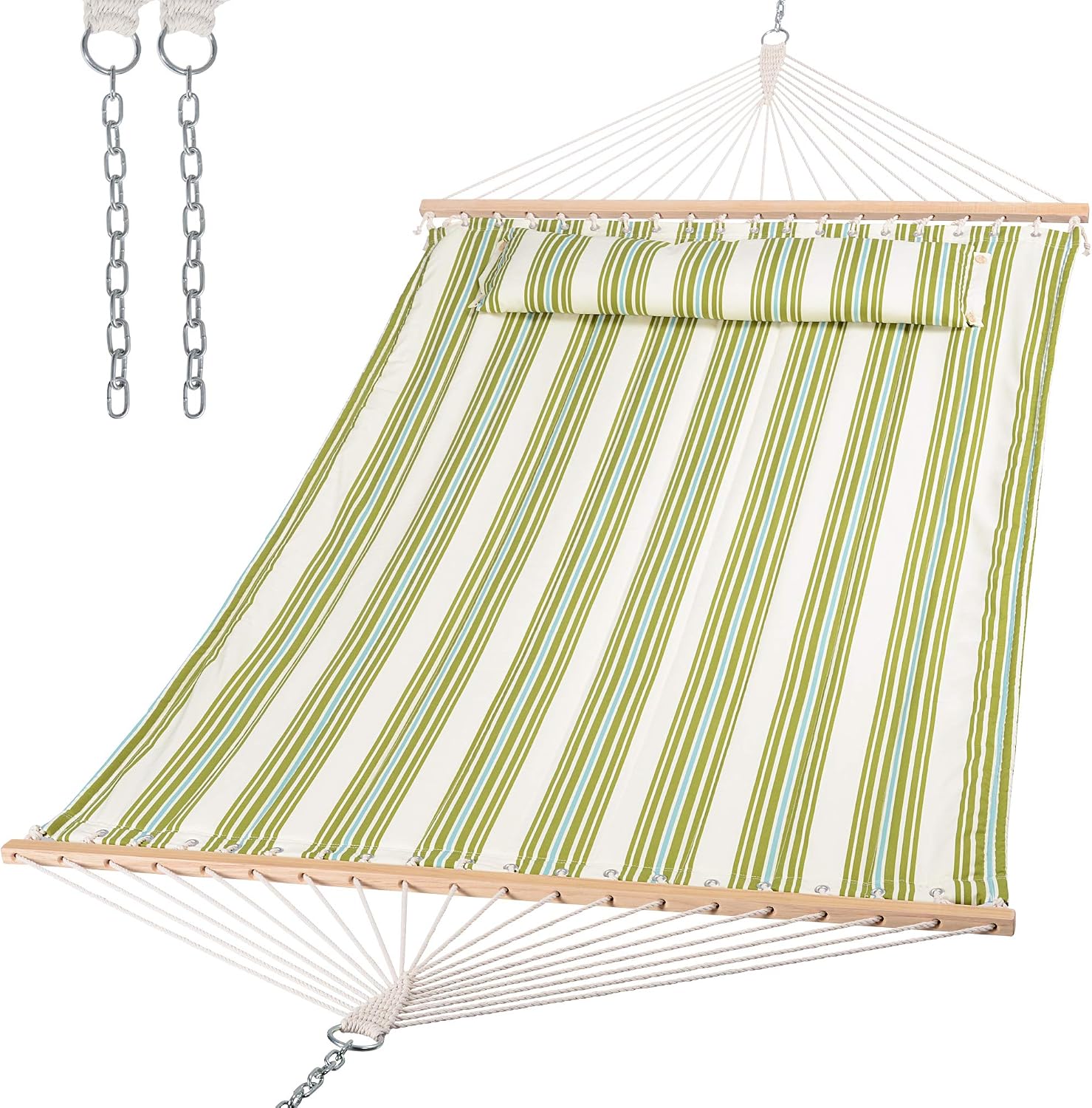
The hammock: SUNCREAT 2 Person Heavy Duty, Double Hammocks for Trees, Green Beige
 Visit on Amazon →
This is a two-person, heavy duty double built to hang between trees, and the green beige colorway is the one that disappears into a wooded backyard instead of shouting across it. That matters more than people admit. A hammock you leave up all season should look like it belongs there.
Check current Amazon price before you order, because two-person hammocks move around on price by colorway more than almost any other piece of camping gear.
Who it is for: households where two people actually want to lie in the same hammock, or one person who wants a wide, sprawl-friendly hang for reading. The width is the point. You get room to lie on the diagonal, which is how you sleep flat in a double instead of curled up like a shrimp.
Flaws but not dealbreakers: A double is heavier and bulkier to pack than a single, and if you sleep alone in the backcountry you are carrying fabric you will never use. Buy a double for the yard, the deck, and the car camp. Buy a single for the thru-hike.
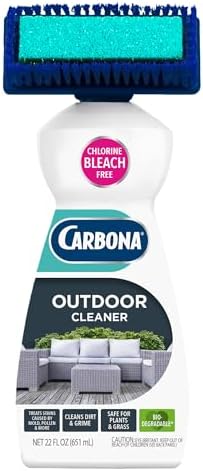
The cleaner: Carbona Oxy Powered Outdoor Cleaner with Built-In Brush (22 Fl Oz), Spot Cleaner for Outdoor Furniture, Rugs & Decks, 2-in-1 Sponge & Bristle Brush
 Visit on Amazon →
Here is the part of hammock ownership nobody writes about. The hammock is the fun purchase. The deck underneath it, the outdoor rug, and the patio chairs are what actually get dirty, and pollen, sap, and bird droppings do not care how good your sag angle is.
This is a spot cleaner for outdoor furniture, rugs, and decks with a 2-in-1 sponge and bristle brush head built into the bottle, so you are not hunting for a scrubber in the garage. Check current Amazon price, then read the label directions before you use it on any fabric.
One honest caveat: it is labeled for outdoor furniture, rugs, and decks, not hammocks. If you want to try it on hammock fabric, spot test in a hidden corner first, rinse thoroughly, and let the hammock dry completely before it goes back in the stuff sack. Mildew does not come from dirt. It comes from damp.
How to hang a double hammock, step by step
Step one: pick the trees. Look for two healthy trunks 12 to 15 feet apart with no dead limbs overhead. Dead limbs are the number one thing I see people ignore. You are going to sleep under those trees.
Step two: wrap the straps. Wrap 2-inch wide straps around each trunk at roughly chest height, at least 6 feet off the ground if you can reach it, and pass the strap through its own loop. Never wrap rope around a trunk. Rope girdles the bark and it will fail at the worst hour.
Step three: set the angle. This is the whole game. The suspension should sit at about 30 degrees from horizontal, which looks shallower than most people expect. If you drew a line from the tree strap to the hammock end, that line should rise about 30 degrees. A tight, nearly horizontal hang is wrong. It feels stiff, it puts enormous load on the trees, and it will drop you.
Step four: clip in and sit. Sit in the hammock like a chair before you lie down. Your backside should sit roughly 18 inches off the ground in a loaded double, a little higher than you would set a single. If you scrape the ground, raise the straps.
Step five: lie on the diagonal. In a double, lie corner to corner, not down the center. That is what flattens the fabric and takes the banana curve out of your spine. If two of you are in it, you go one diagonal, your partner goes the other.
Step six: do the sit test again in the morning. Fabric stretches overnight, especially on a new hammock. Expect to tighten the suspension one notch after the first night. After that it settles.
Getting the sag right, in plain terms
Thirty degrees is the sleep sweet spot. I preach it and I will admit I eyeball it, but you can do better than eyeballing. Hold your arm out at a shallow angle and picture the suspension line rising about a third of the way up from horizontal. If the hammock looks like a smile, you are close. If it looks like a straight line, you are too tight. If it looks like a hammock in a cartoon, you are too loose.
The second number is a structural ridgeline. A ridgeline is a cord running from one end of the hammock to the other, set at roughly 83 percent of the hammock's length. It locks your sag in place so you get the same flat lie every single time, regardless of how far apart the trees are. Parachute nylon is fine for the backyard. If you are camping, a ridgeline is what turns a hammock into a sleep system instead of a chair.
Third number: hang height. In a double, set the fabric higher than feels natural, because two people add more stretch and more drop. You would rather step up into a hammock than bottom out on a root at 3 AM.
Keeping a double hammock clean and dry
A double hammock has twice the fabric of a single, which means twice the surface area to collect pollen, sap, and morning dew. The rules I follow:
- Let it dry completely before it goes into a stuff sack. Every time. A hammock packed damp comes out of the bag smelling like a gym locker.
- Spot clean with a mild soap and a soft brush rather than soaking the whole thing. Agitate gently and rinse well.
- Keep the deck and the furniture underneath it clean, because that is where the grit comes from that ends up ground into the fabric.
- Store it loose and dry, not compressed in a hot garage.
- Never machine dry a hammock. Heat and thin fabric are enemies.
If your hammock lives outside all season, treat the area around it like outdoor furniture, because that is what it is. Spot clean the rug and the chairs, rinse the deck, and your hammock picks up less grime every time someone climbs in with dirty feet.
Mistakes that ruin a hang
Rope. If the box includes rope, throw it in the bin. Rope damages bark and it stretches under load.
Hanging too low. If your backside is a foot off the ground in an unloaded hammock, you are going to scrape in a loaded one.
Hanging too tight. A tight hang is not a firm hang. It is a hang that will fail.
Leaving it out wet. One wet night is fine. One wet week is a mildew colony.
Trusting a "double" that is sized for one adult. Read the width. If the fabric is under about 5 feet wide, it is a single with a marketing department.
Skipping the tarp. A bug net and a rain fly are not accessories. They are the difference between camping and surviving.
FAQ
Is a double hammock good for one person?
Yes, and it is honestly the more comfortable way to nap. The extra width lets you lie on the diagonal, which flattens the fabric and lets your spine straighten out. The tradeoff is weight and bulk if you are carrying it any distance.
How far apart should two trees be for a double hammock?
Aim for 12 to 15 feet between trunks. Closer than 12 feet and you have to hang high to keep the fabric off the ground, which makes the hammock tippy. Farther than 15 feet and your straps run out of adjustment before you reach a 30-degree angle.
Can two adults actually sleep in a double hammock?
They can, if they lie on opposite diagonals and like each other. A double is for couples who genuinely want to share, and a single is for sleep. If you want to sleep alone, buy a single and stop apologizing for it.
How often should you clean a hammock?
Spot clean whenever you see sap, pollen streaks, or bird droppings, and do a fuller gentle wash at the end of the season before storage. Dry it completely both times. The drying matters more than the cleaning.
The bottom line
A double hammock setup comes down to three numbers: trees 12 to 15 feet apart, suspension at 30 degrees, and a loaded sit height around 18 inches. Get those right and the fabric does the rest. Get them wrong and you will spend the night sliding into the middle of a taco, wondering why everyone else loves hammock camping.
Start with the trees. Then set the angle. Then keep the fabric dry. That is the whole job, and it is a job you can do in 15 minutes in the backyard before you ever commit to a night in the woods.