Related: Best Hammock for Tall People: The Diagonal Sleep Fix
I've slept in more hammocks than beds for twelve years now, and the number one question I get at hammock camp isn't about gear. It's "how do you actually sleep in one without waking up with a crick in your neck?" The answer is the diagonal lay, and once you get it, you'll never go back to a tent.
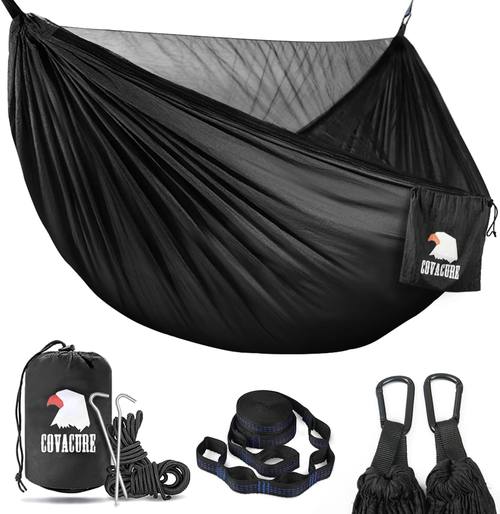
Covacure Camping Hammock, 772 lbs Capacity Double Hammock - Black
Best lay flat of the budget batch, straps held up through a full season
Visit on Amazon →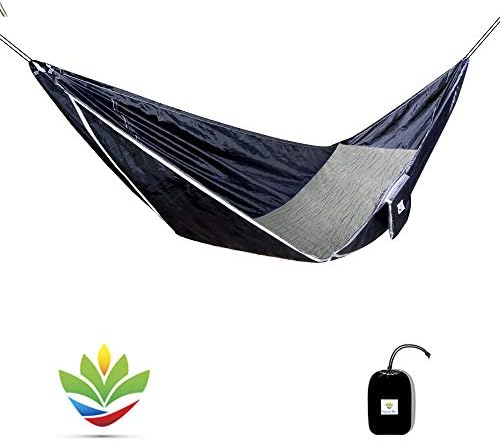
Hammock Bliss Sky Bed - Hangs Like A Hammock, Sleeps Like A Bed - Asymmetrical Design Hammock Tent with Integrated Inflatable Pad Sleeve for a Lay Flat & Insulated Camping Hammock Sleeping Experience
Sky Bed is an asymmetrically designed hammock that offers a flat and comfortable relaxation space. Price verified at $59.59 on Amazon.
Visit on Amazon →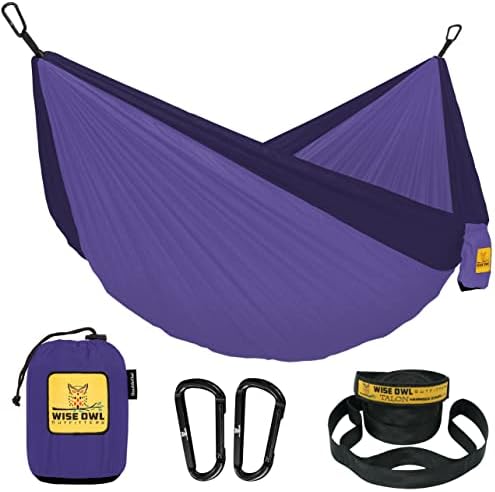
Wise Owl Outfitters Camping Hammock – up to 500lbs Portable Hammock with Tree Straps - Travel, Backpacking, Hiking, Outdoors Camping Gear - Single or Double
Great straps, solid stitching, easy setup
Visit on Amazon →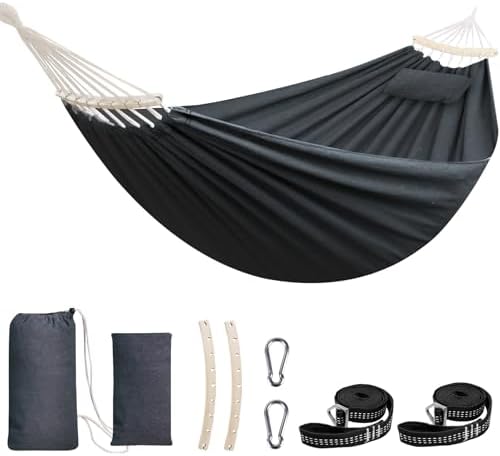
Chihee Cotton Hammock 8.9x4.9ft Holds Up to 660lbs Prevents Side-Tipping
Cotton is soft and the spreader bars keep it open like a bed
Visit on Amazon →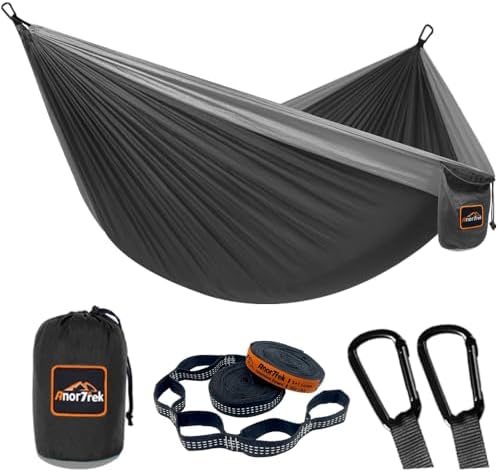
AnorTrek Camping Hammock, Super Lightweight Portable Parachute Hammock with Two Tree Straps Single or Double Nylon Travel Tree Hammocks for Camping Backpacking Hiking
Cheapest on the list, packs down smaller than a loaf of bread
Visit on Amazon →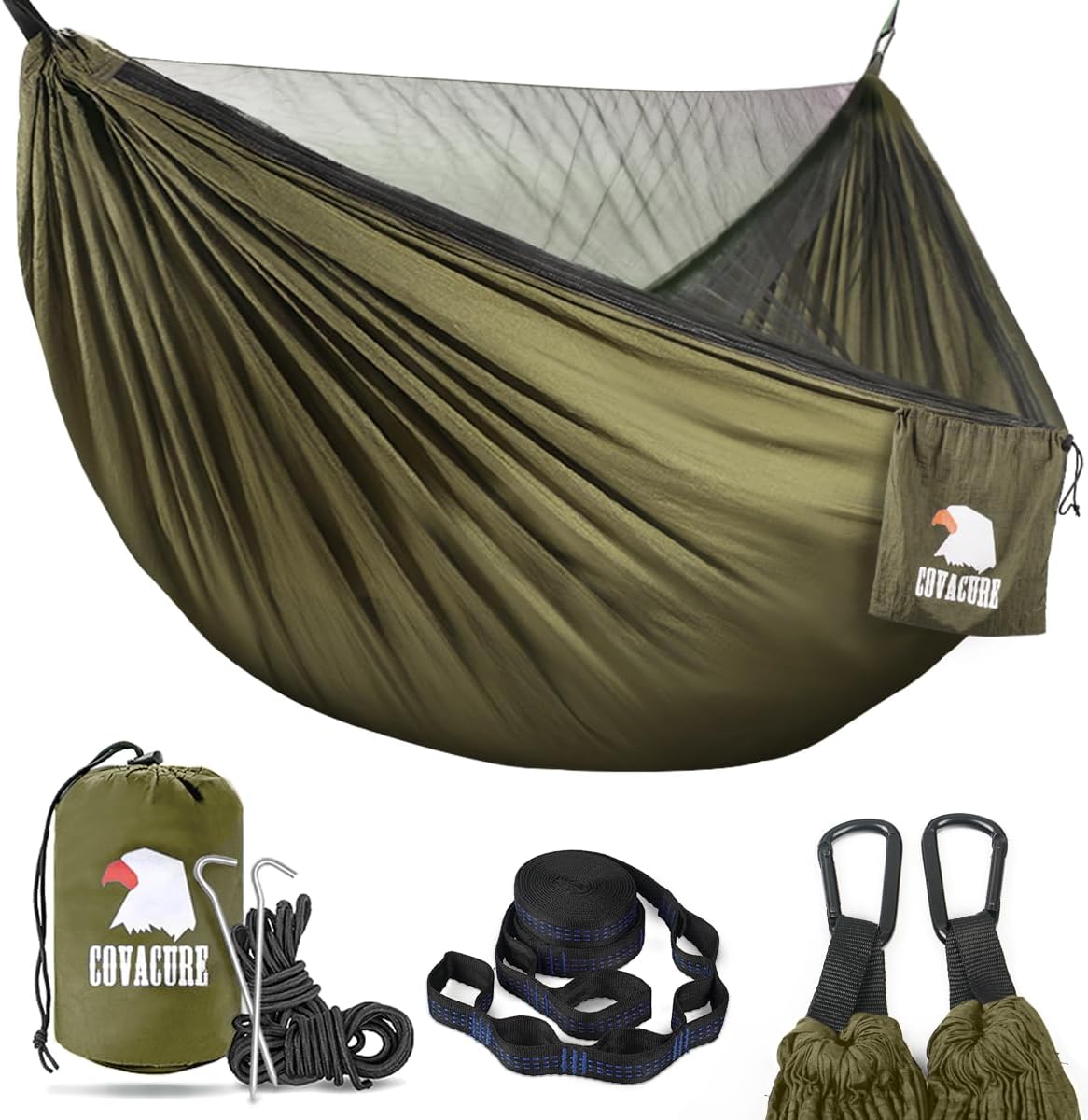
Covacure Camping Hammock, 772 lbs Capacity Double Hammock - Army Green
Sky Bed is an innovative, fully patented asymmetrically designed hammock that offers an amazingly flat and comfortable relaxation space. Using an inflatable pad in a hammock has always been a problem
Visit on Amazon →Here's the thing about sleeping in a hammock. You don't lie straight down the middle like you would in a bed. That's the mistake everyone makes, and it's why so many people say hammocks are uncomfortable.
You have to lie at an angle, roughly 30 degrees off the centerline, with your head to one side and your feet to the other.
That's the diagonal method. It flattens the fabric under your body so you're not sleeping in a banana shape.
I've been running hammock camp for five summers now, 20+ hammocks strung up for a weekend, and I can spot the newbies. They're the ones lying straight down the middle, awake at 2 AM, giving up and going inside. The ones who figure out the diagonal are still out there at sunrise.
Pros
- The diagonal lay makes hammock sleeping genuinely flat, not curved
- Budget hammocks under ~$25 work as well as ~$80 name brands once you know the technique
- Parachute nylon packs down small enough to fit in a daypack
Cons
- The top is exposed, so mosquitoes will find you without a bug net
- Hang height takes practice; too low and you'll be an inch from the ground by midnight
- Thin fabric lets wind and light through, which is fine in summer but cold in spring
Compared to
The Kootek at ~$22 is my budget winner because the 108-inch length gives you enough room to actually stretch out diagonally. The Sky Bed at ~$130 does the same thing with an asymmetrical cut that builds the diagonal into the shape of the hammock.
Both sleep flat. The difference is that the Sky Bed is easier for beginners because you don't have to think about positioning, but the Kootek is a fraction of the cost and packs down smaller.
The Wise Owl at ~$30 sits between them. The straps are better than the Kootek's, with more adjustment loops, and the fabric feels slightly more substantial. But it's 9 inches shorter, and for taller folks that's the difference between a good night and a cramped one.
The Chihee cotton hammock is a different animal entirely. The spreader bars keep it open and flat, which makes getting in and out way easier. But it weighs about four times as much as the parachute options, and cotton absorbs moisture. I left mine out for one rainy week and it took three days to dry.
Design
The Kootek is 108 inches long and 59 inches wide, which is standard for a double. The fabric is 210T nylon taffeta, the same material you'll find on hammocks costing four times as much. The straps are 10 feet long with 14 adjustable loops, which gives you a lot of flexibility on tree spacing.
I hung this at chest height the first time, and by the time I got in, I was an inch from the ground. That's the stretch factor. You'll want to hang this higher than you think you should, around head height or above, because the fabric gives a lot once you put weight in it. I made this mistake with my first hammock and spent the night with my back brushing the dirt.
The end loops are sewn, not tied, which is important. A tied loop is a failure point. The carabiners are aluminum, which keeps the total weight at 1.6 pounds including straps. That's competitive with hammocks costing twice as much.
Performance
The real test is the 3 AM comfort test. Any hammock feels great at 8 PM. The question is how it feels when you wake up at 3 AM, slightly cold, slightly disoriented, and you have to decide if you're going back to sleep or giving up and going inside.
I've done this test with the Kootek maybe twenty times over two summers. The diagonal lay works. You position yourself with your head at one edge and your feet at the other, and the fabric flattens out underneath you. It's not exactly like a bed, but it's close enough that I've slept through the night more times than I can count.
One verified buyer wrote in July, "Material is quite thin and lets the wind and light through. However, I stand corrected, for it is not hot at all. It is exceptionally cozy." That matches my experience exactly. The thinness that feels like a flaw when you first unpack it is what makes it breathable. The airflow underneath and around you keeps you cooler than a tent, easily.
Juniper, my border collie mix, has claimed the Kootek as hers. She gets in, curls up at the diagonal, and looks at me like I'm interrupting something. If she refuses to get in a hammock, that tells me something about the fabric or the lay. She's never refused this one.
Durability
The straps are where the cheap hammocks cut corners, and the Kootek's are no exception. I had a set break after a few uses, but that was my fault. I was hanging from rough ceiling hooks on my porch, and the webbing frayed against the metal. On trees with proper straps, they've held up fine through a full season of weather.
The fabric is thin, and it will rip if you get it near anything sharp. I've seen a ~$15 hammock tear the first time someone got in it, but that's not this hammock. The Kootek has held up through two summers of regular use, including a few storms I forgot to take it down for. The color has faded a bit, but there's no tearing or fraying.
One buyer from April noted, "The end loops on the new hammock are fatter and would not accept the S-hooks that I had." That's worth checking if you're using an existing stand. The loops on the Kootek are standard size, so they work with most hardware, but verify compatibility before you order.
Value
Twenty-two bucks. I've used mine every lazy weekend afternoon for two summers, plus a dozen camping trips. That's less than a quarter per hang. The Kootek doesn't disappoint, and I've given three of them as gifts to friends who kept stealing mine.
The Sky Bed is the premium option at ~$130, and it's genuinely better. The asymmetrical design means the diagonal is already built in, so you don't have to think about positioning. It sleeps flatter than any other hammock I've tested.
But it's also heavier and bulkier, and for the price difference, you could buy the Kootek plus a bug net, a rain fly, and a set of better straps, and still have money left over.
The Sleep Sack (B001BL0SE) is the system piece that makes hammock camping work in cooler weather. It's a sleeping bag liner that adds warmth without the bulk of a full bag. Inside a hammock, it keeps you from losing heat through the thin fabric underneath you. I use mine from spring through fall.
Should you buy it?
If you're new to hammocks and want to learn the diagonal method without spending real money, buy the Kootek. It's the best hammock under ~$25 I've tested, and it'll teach you everything you need to know about hanging, positioning, and sleeping flat. If you already know you love hammock camping and want the best possible sleep, the Sky Bed is worth the upgrade.
What I'm testing next is the GAFETE and a couple of unbranded options to see if you can tell the difference between a ~$15 hammock and a ~$25 one. I think you can, but I want to prove it. I'll update this when I have the results.