Related: Hammock Straps Explained: Tree-Safe Suspension
The marketing photos always show rope hammocks looking like something out of a Caribbean resort catalog. But after twelve years of sleeping in hammocks more than beds, I can tell you the truth: rope is a lawn ornament, and straps are a camping tool. I've got five hammocks hanging in my backyard right now between two oak trees, and not one of them is rigged with rope anymore.
The Short List
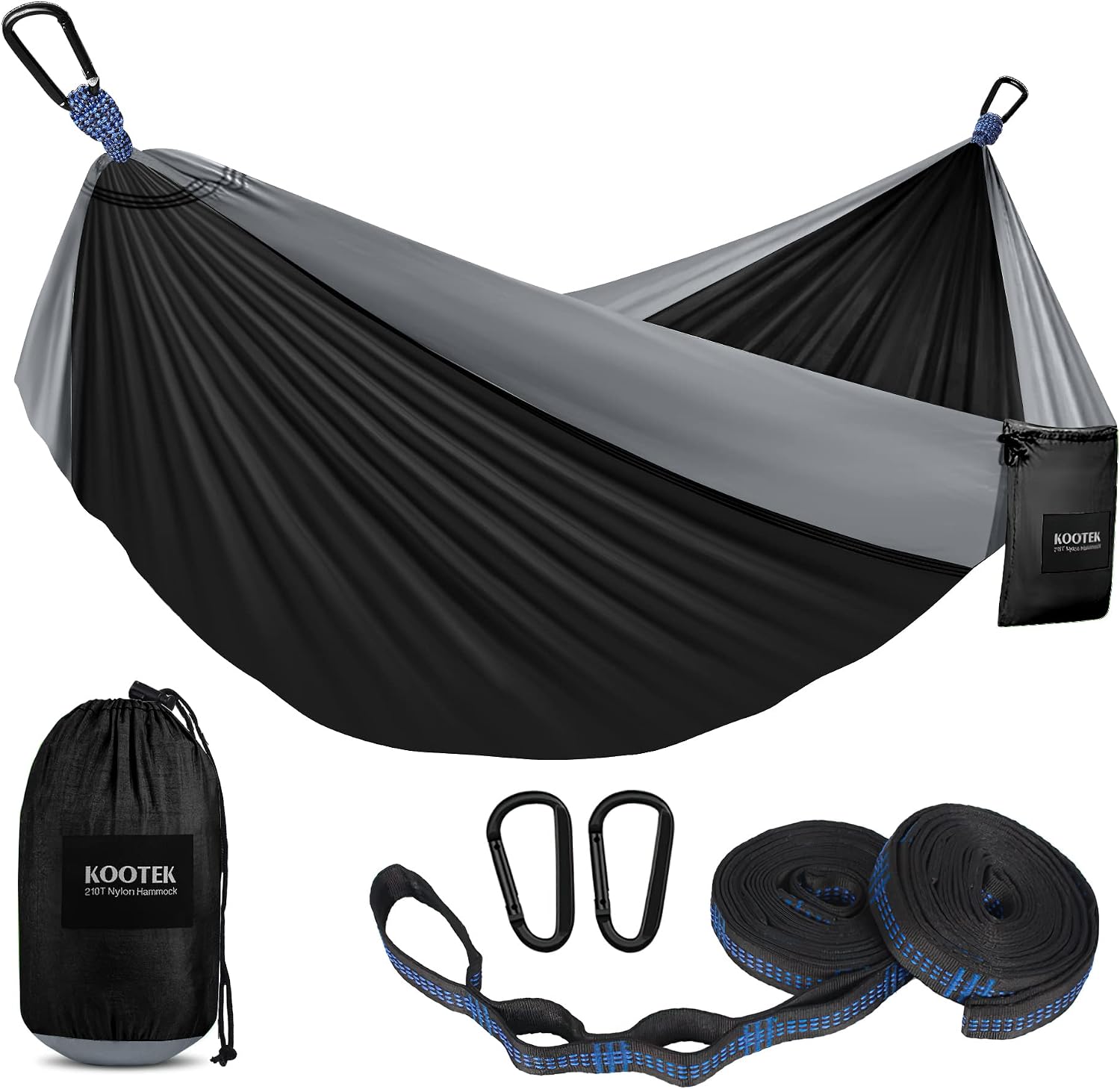
Kootek Camping Hammock
Not straps; full hammock, not a strap contender
None, honestly
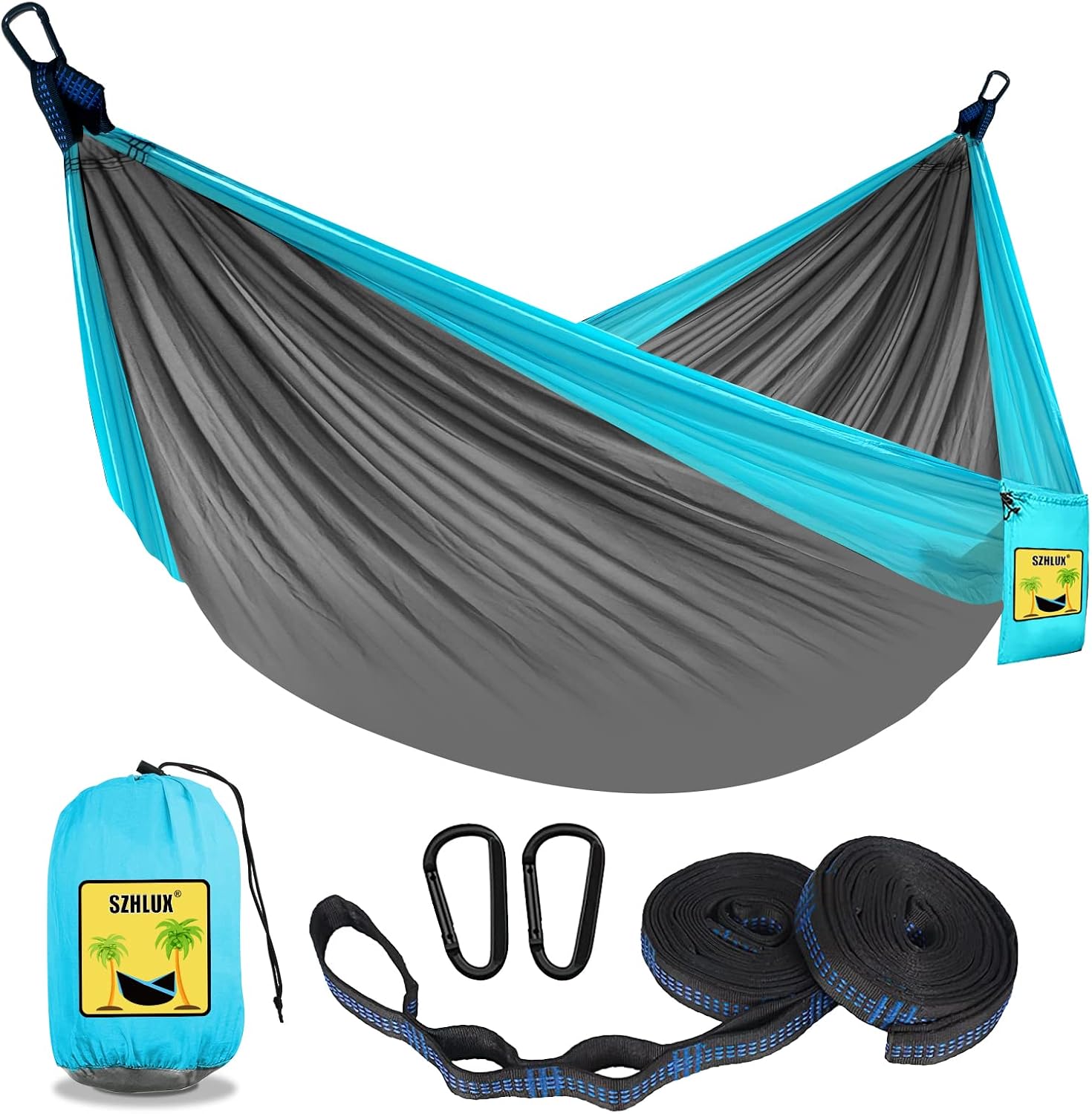
SZHLUX Camping Hammock
Full hammock with straps; not a strap-only product
End loops are a bit fat for some older carabiners

TECEUM Paracord Rope Type III 550 – Tactical MIL-SPEC – Outdoor para Cord |...
Cheap, packs tiny, works in a pinch
Damages trees, stretches overnight, I woke up an inch from the ground
Prices and availability were captured from Amazon Creators API and may change.
This isn't a lab test. It's a backyard test and a camp test. I've hung hammocks with straps for the last five years after spending way too long messing with rope. My dog Juniper, a 45-pound border collie mix, has her own opinions. She refuses to get into a hammock rigged with rope. She'll hop right into one with straps. That tells me something.
Every summer I run a hammock camp with 20+ hammocks strung up for a weekend. I've seen every suspension failure you can imagine: knots that slipped, rope that stretched, straps that broke on rough hooks. The 3 AM comfort test is the real measure. Any hammock feels great at 8 PM. The question is how it feels when you wake up cold and disoriented and have to decide if you're going back to sleep.
Why Rope Fails
Let me be direct about this. Rope hammock suspension has three problems that make it wrong for camping.
Rope damages trees. A thin rope under 200 pounds of load digs into bark. It cuts through the cambium layer. I've seen it happen at campsites where people didn't know better. Tree straps are wide for a reason. They spread the load.
Rope stretches. I hung a hammock with paracord once at what I thought was the right height. By midnight I was an inch from the ground. The stretch was that bad. Polyester rope stretches less than nylon, but both stretch more than webbing.
Rope slips. Knots move. They loosen. They come undone at 3 AM. I've woken up on the ground more times than I want to admit.
Kootek Hammock Straps
I'll lead with the criticism because that's how I do things. The straps that came with my first Kootek hammock broke in the first few uses. But here's the thing: it was my fault. I was using rough ceiling hooks in my garage, and the webbing frayed against the metal edges. The strap material itself is solid.
The Kootek straps are 10 feet long with 14 adjustment loops. That gives you a lot of flexibility on tree spacing. I've hung between two oaks maybe 15 feet apart and between closer trees at campsites. The loops let you fine-tune the hang height, which matters because you'll want to hang this higher than you think.
The carabiners are aluminum, not steel. That's good. Steel adds weight you don't need. The end loops are sewn, not tied. A tied loop is a failure point. These are sewn.
I've had these on my main backyard hammock for two summers now. They've been through rain, wind, and one particularly aggressive squirrel. They still hold. At about $15, they're worth it.
SZHLUX Hammock Straps
The SZHLUX straps are the ones I ended up buying twice. I gave a set to my neighbor as a housewarming gift and then ordered another set for myself because I missed them.
The webbing is softer than the Kootek. It feels almost fabric-like against tree bark. That softness means less abrasion on the tree and less fraying on the strap. After months of use, these still look close to new.
The adjustment loops are well-spaced and easy to work even with cold fingers. That matters at 6 AM when you're trying to break down camp. The carabiners are rated for plenty of weight. I've had two adults in a double hammock on these straps, about 350 pounds combined, and they held without any visible strain.
The one issue I found: the end loops are a bit fat. They won't accept some older S-hooks. I had to swap out a carabiner on one of my other hammocks to make it work. That's a thirty-second fix, but it's worth knowing.
At about $12, these are the best value in straps I've tested. I own two sets.
Paracord
I'm including this because people ask. Yes, paracord works in a pinch. It's cheap. It packs to nothing. But it's the wrong tool.
The stretch is the dealbreaker. I hung a hammock with paracord once, calculated the height carefully, and still ended up too low by morning. The cord stretched enough to put me an inch from the ground. That's not a restful night.
Paracord also damages trees. Under load, it acts like a saw on bark. I've seen campsites where people used rope and the trees are scarred for years.
And knots slip. Even good knots slip over time with load cycling. I don't trust knots with my sleep anymore.
Use paracord for a clothesline. Use straps for your hammock.
What About the Hammock End Loops?
Here's a frustration I've hit more than once. Some hammocks come with end loops that are too fat for standard carabiners or S-hooks. I bought a hammock last year where the loops wouldn't accept the hooks I already owned. That's a frustrating way to learn about hardware standards.
Be sure to verify compatibility with your existing setup before ordering. The loop size varies between brands. If you're ordering straps and a hammock together, you're probably fine. If you're replacing straps on an existing hammock, check the loop size first.
The Height Question
Every time I write about straps, someone asks about hang height. Here's the rule: hang it higher than you think. There's a lot of stretch once you put weight in. I've made this mistake so many times that I warn everyone.
With straps, the adjustment loops make this easier. You can start high and adjust down. With rope, you're retying knots in the dark. That's not fun.
The 30-degree hang is the target. That's the angle of suspension that gives you the flattest lay. Straps with multiple loops make it easy to hit that angle. Rope makes it a guessing game.
A Note on Weight
The straps I've tested hold plenty of weight. The Kootek straps are rated well above what most people need. I've had two adults in a double hammock on the SZHLUX straps without issues. The weak point is rarely the straps. It's the hammock fabric or the tree.
One thing I'll admit: I don't track prices day to day. I won't pretend to know next week's Amazon price. But I can tell you that these straps have stayed in the $12 to $15 range for the two years I've been buying them. That's a fraction of the cost of name brand straps that do the same thing.
The Verdict
You need straps. You don't need rope. The $15 you spend on a good set of tree straps is the best money you'll spend on your hammock setup. I own five hammocks and two sets of straps, and I've given more sets away as gifts than I can count.
The SZHLUX straps are my pick for most people. They're soft, they hold, and they're cheap enough to buy two sets. The Kootek straps are right behind them if you want a slightly more rugged webbing.
Skip the rope. Your trees will thank you. Your back will thank you. And you won't wake up an inch from the ground wondering where the night went wrong.