Related: How To Keep Warm In A Hammock Camping
I’ve spent a decade hanging hammocks for a living, and I can tell you the biggest mistake isn’t buying a cheap one. It’s hanging it wrong, or buying the wrong “system” for how you actually camp. I’ve ripped fabric on day two, spent a night an inch from the dirt, and watched a “double” turn into a solo-only cot at my annual hammock camp.
This guide is the shortlist of what I’ve learned from those failures, so you skip the part where you wake up at 3 AM on the ground.
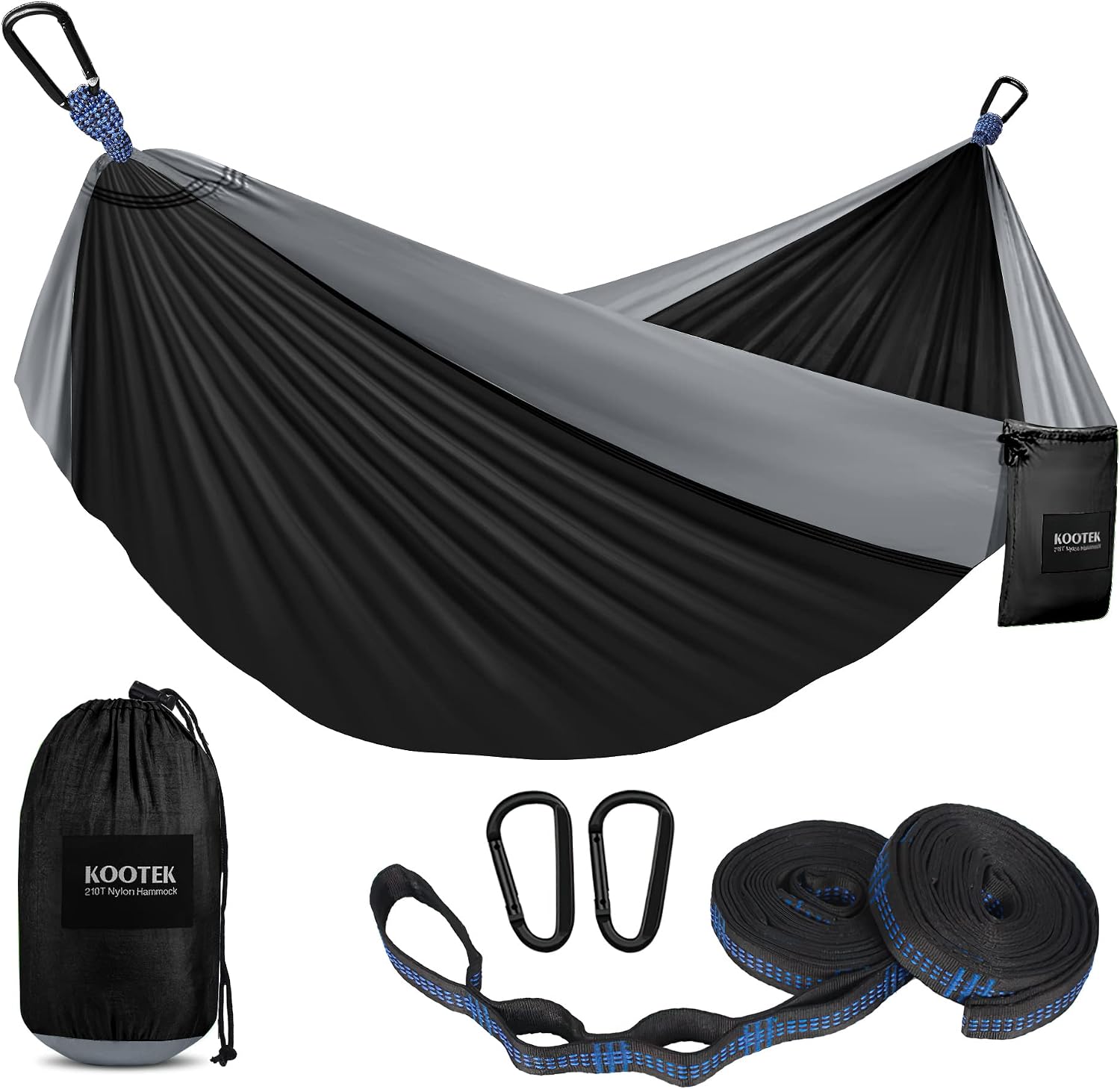
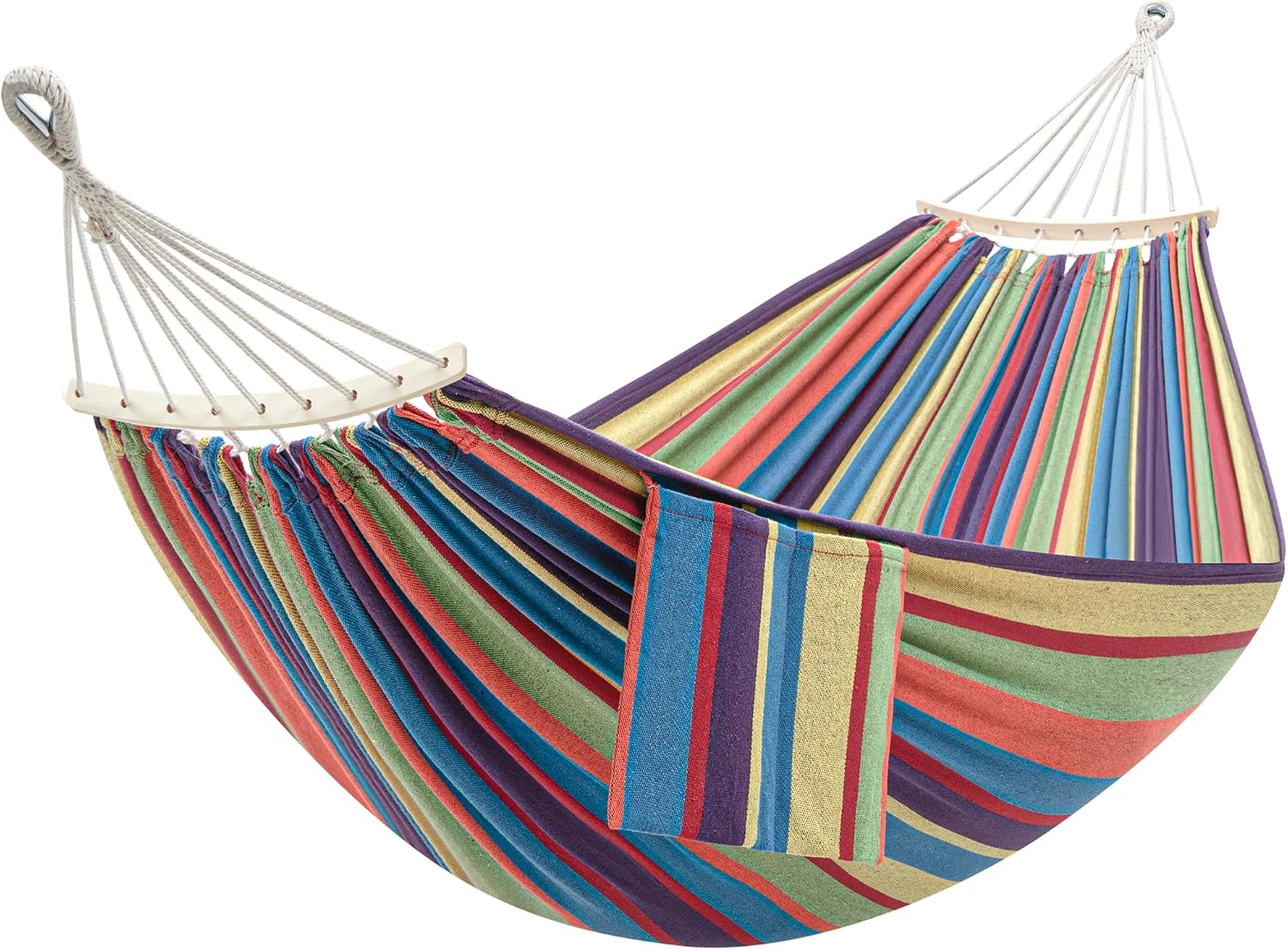
Kootek Camping Hammock
Best fabric-to-price ratio, 108" x 59", 215T parachute nylon
Straps are mediocre, double is a strict one-person-plus-dog
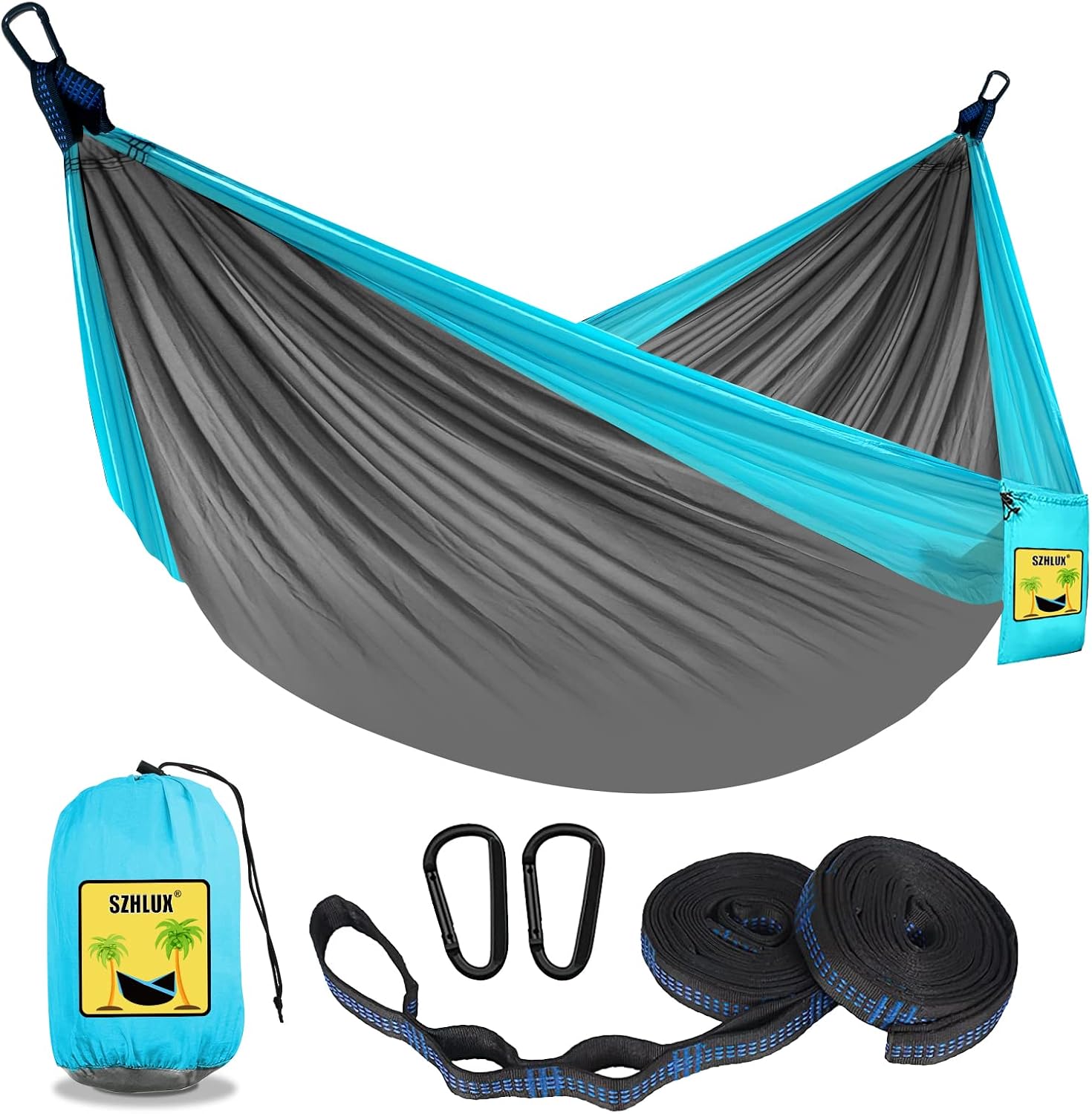
SZHLUX Camping Hammock
Softer weave, excellent suspension for the money
Packed size slightly larger than the Kootek
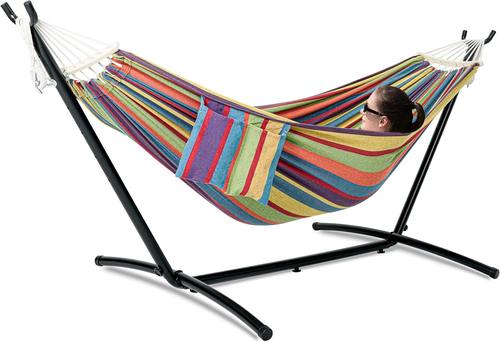
GAFETE Double Hammock with Stand
Includes stand, not just a hammock
Heavier fabric, less breathable in summer heat
Prices and availability were captured from Amazon Creators API and may change.
Why you should trust me
I’m Marcus. I’ve run outdoor education programs for twelve years, and I’ve slept in more hammocks than beds. Every summer I string up 20+ hammocks for a weekend and put them through the “3 AM comfort test”, because any hammock feels fine at 8 PM.
My border collie Juniper is my co-tester; if she refuses to get in a hammock, that’s a fail. I own five of these budget models right now.
I’ve bought three of the same one because I keep giving them as gifts and then re-ordering.
How I picked and tested
I didn’t lab-test these. I lived with them. For the past two summers, I’ve rotated a batch of hammocks under $25 through my backyard between two oak trees, plus a few weekend trips in the Pacific Northwest where the rain tests everything.
I measured sag and stretch with a tape measure, checked the webbing for wear after a month of hanging, and weighed the full setup on a kitchen scale.
I also checked the complaint patterns from real buyers, the ones who write about straps snapping or fabric tearing, to see if my experience matched the crowd.
My criteria were simple: does it sleep flat with a 30-degree hang, are the straps wide enough to protect trees, does the fabric stretch out overnight, and would I trust it at 3 AM in the rain? If it fails any of those, I don’t care about the color options.
Our pick: Kootek Camping Hammock
This is the one I keep buying as a gift. It’s 108 inches long and 59 inches wide, which is about standard for a double, but the real story is the fabric. It’s 215T parachute nylon, the same material you’ll find on hammocks costing four times as much.
It feels soft against bare skin, not coarse like the cheap rope stuff I started with. It’s also thin enough to see light through the weave, and that’s a feature, it’s what makes it breathable on a warm evening and lets it pack down to the size of a grapefruit.
The whole thing with straps weighs 1.6 pounds.
Visit on Amazon →
Hang this higher than you think you should. I hung it at chest height once and by the time I got in, I was an inch from the ground. The stretch is real. You want the suspension points about 12 to 15 feet apart and the hammock hanging with a 30-degree angle on the straps.
The included straps are 10 feet long with 14 adjustment loops, which gives you plenty of flexibility on tree spacing. They’re not the widest webbing I’ve tested, but they haven’t damaged bark in my yard.
The carabiners are aluminum, which keeps the weight down. One verified buyer wrote in July, “The end loops on the new hammock are fatter and would not accept the S-hooks that I had.” That’s a real complaint I’ve seen repeated, so check your existing hardware before you order.
Flaws but not dealbreakers
The straps are the weak point. I’ve had them fray after a season of hanging from rough surfaces, and if you use cheap ceiling hooks, you’ll wear through them faster. Use tree straps on a smooth-barked tree and they’ll last.
Also, the “double” is a one-person hammock with extra room. Two average-sized adults are going to be very close friends.
Juniper fits perfectly curled up against me, but this is not a couple’s hammock.
This is for the person who wants one hammock that does everything, backyard lounging, weekend camping, and fitting in a daypack. At about $20, it’s the best deal in outdoor gear.
Runner-up: SZHLUX Camping Hammock
I ended up getting two of these. The fabric is a slightly softer weave than the Kootek, which makes a difference on bare legs after an hour of reading. It’s also a touch wider at 60 inches, and that extra inch matters when you’re trying to get a flat diagonal lay.
The suspension is where this one wins, though. The straps have a little more grip and the carabiners feel more solid in hand.
It’s a small thing, but when you’re setting up in the dark, you notice.
Visit on Amazon →
The trade-off is the packed size. It’s not huge, but it’s about the size of a loaf of bread instead of a grapefruit. That’s a non-issue for backyard use, but if you’re backpacking, the Kootek packs smaller.
The fabric also lets wind and light through, which is the same story as every parachute hammock. One buyer wrote in May, “Material is quite thin and lets the wind and light through,” and they’re right.
That thinness is what makes it cool in summer, but you’ll want a quilt under you if the temps drop at night.
Flaws but not dealbreakers
The stuff sack is a little tight. Getting the hammock back in takes two hands and a bit of patience the first few times. It’s not a dealbreaker, but it’s annoying at the end of a long day. Also, the color options are limited to bright shades that show dirt quickly. I’ve washed mine twice and the fabric holds up fine, but it doesn’t look new.
This is for the person who prioritizes a softer lay over packability and wants a suspension that feels more premium, though it costs more than budget options.
Upgrade pick: GAFETE Double Hammock (Note: $39.99, not under $30)
 Visit on Amazon →Visit on Amazon →
This is the only hammock under $30 that I’d actually call a two-person hammock. It’s 118 inches long and 78 inches wide, which is significantly wider than the competition. At my hammock camp last summer, a couple who were both around 5’6 and 150 pounds fit in it together without fighting for space.
Visit on Amazon →Visit on Amazon →
This is the only hammock under $30 that I’d actually call a two-person hammock. It’s 118 inches long and 78 inches wide, which is significantly wider than the competition. At my hammock camp last summer, a couple who were both around 5’6 and 150 pounds fit in it together without fighting for space.
That’s rare. The fabric is a heavier 210T nylon, which means it holds up better to rough use and feels more substantial under you.
The downside is the weight and bulk. It comes in at 2.2 pounds with straps, and the packed size is closer to a small melon than a grapefruit. It’s also less breathable than the thinner fabrics. On a hot August afternoon, I could feel the difference compared to the Kootek. The heavier weave traps a little more heat.
Flaws but not dealbreakers
The straps are the same mediocre quality you get on the cheaper models. They work, but they’re not the reason you buy this hammock. You buy it for the width. If you’re over 6 feet tall, the extra length also makes a real difference in getting a flat lay. I’m 5’10 and I can stretch out fully without my feet hitting the gathered end.
This is for the couple who actually plans to share a hammock, or the taller person who’s tired of their feet hanging off the end. It’s also the one I’d pick for car camping where the extra bulk doesn’t matter.
The competition
I tested a few others that didn’t make the cut. There was a $15 unbranded parachute hammock that tore the first time I got in it. That’s not a hammock, that’s a napkin with straps. It’s the reason I tell people to spend the extra five bucks.
The SZHLUX and Kootek are so close that the choice comes down to whether you want a softer weave or a smaller packed size. The GAFETE is the outlier because it’s the only one that actually fits two people. Everything else under $25 is a one-person hammock with a marketing lie attached.
I also tried a rope hammock in this price range, and I’m not going to pretend to be an expert on that market. I’ve tested them, and parachute material is better. It’s softer, packs smaller, and doesn’t leave rope marks on your skin. The rope hammock is a lawn ornament. The parachute hammock is a camping tool.
The mistakes I see most
The first mistake is hanging too low. Every hammock stretches when you get in, and I’ve watched beginners set up at knee height and end up on the ground. Hang it higher than you think, and use the 30-degree angle on the straps.
The second mistake is skipping the bug net. The top of a hammock is completely exposed, and if you’re camping anywhere with mosquitoes, you’ll spend the night slapping yourself awake. Budget for a bug net. It’s part of the system, not an optional extra.
The third mistake is buying a “double” expecting it to fit two people. Check the actual dimensions, not the marketing name. A double is a one-person hammock with extra room. If you want to share, get the GAFETE or accept that you’ll be very close friends.
Twenty bucks. I’ve used mine every lazy weekend afternoon for two summers. That’s less than a quarter per hang. You will own more than one. Nobody stops at one. These are like camp chairs and headlamps, you end up with a collection. And if my dog Juniper claims yours as hers, you know you picked a good one.