I’ve slept in more hammocks than beds over the last twelve years, and the single biggest mistake I see people make isn’t buying a bad hammock. It’s buying a good hammock and then getting eaten alive by mosquitoes at 2 AM, or waking up in a puddle because they didn’t think about rain.
The full camping system is the answer, and the best one I’ve tested this season is the complete package from, because it nails the trifecta: a comfortable lay, a real rain fly, and a bug net that actually zips shut.
The Ovyuzhen Camping Hammock with Rain Fly Tarp is the best all-in-one hammock system I’ve tested this year, because it combines a genuinely comfortable double-sized bed with a waterproof fly and a fully enclosed net for less than what most brands charge for just the hammock.
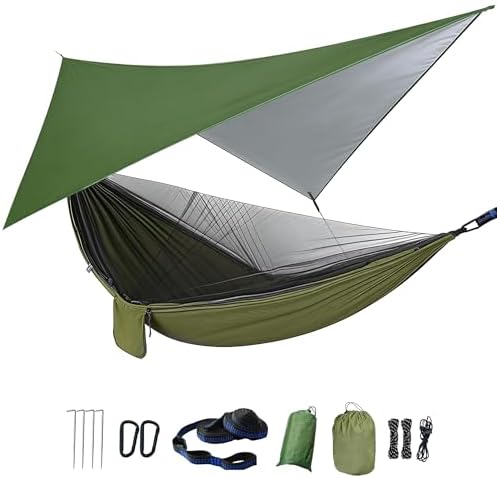
Camping Hammock with Rain Fly Tarp Mosquito Net Heavy Duty Tree Straps Portable Double Parachute Hammock Tent Waterproof Rainfly Set 660lbs Maximum Weight
Complete system, big enough for two, quality straps, simple setup
Visit on Amazon →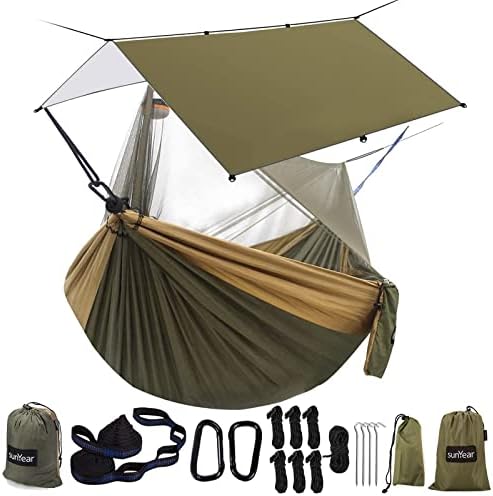
Sunyear Hammock Camping with Rain Fly Tarp and Net, Portable Camping Hammock Double Tree Hammock Outdoor Indoor Backpacking Travel & Survival, 2 Tree Straps,100% Waterproof Black Bundle
Great net design, solid rain protection
Visit on Amazon →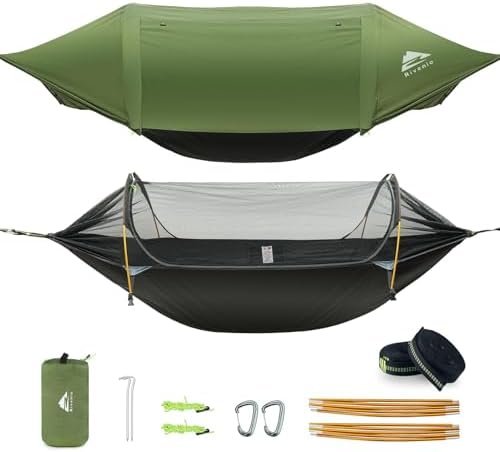
Camping Hammock Tent with Mosquito Net & RainFly, 3 in 1 Waterproof Portable Sleeping Hammock Bug Backpacker Lightweight Outdoor Gear Swing for Hiking Travel Patio Expedition(Dark Green)
The Sunyear hammock series provides young adventurers, scouts, and girl guides with the perfect hammock experience. Designed with the size and budget of young people in mind, while retaining all the i
Visit on Amazon →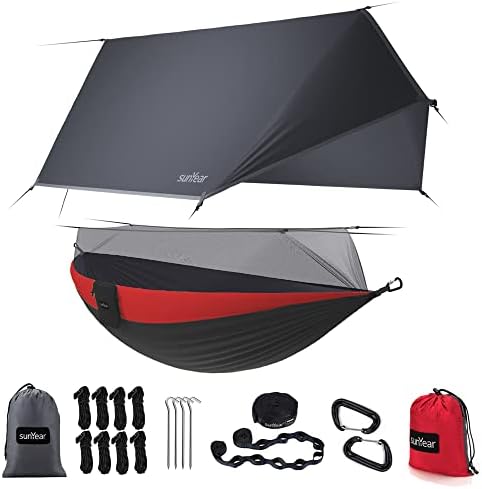
Sunyear Camping Hammock, Portable Single & Double Hammock with Net, 2 Person Hammock Tent with 2 * 10ft Straps, Best for Outdoor Hiking Survival Travel
Check current price and details
Visit on Amazon →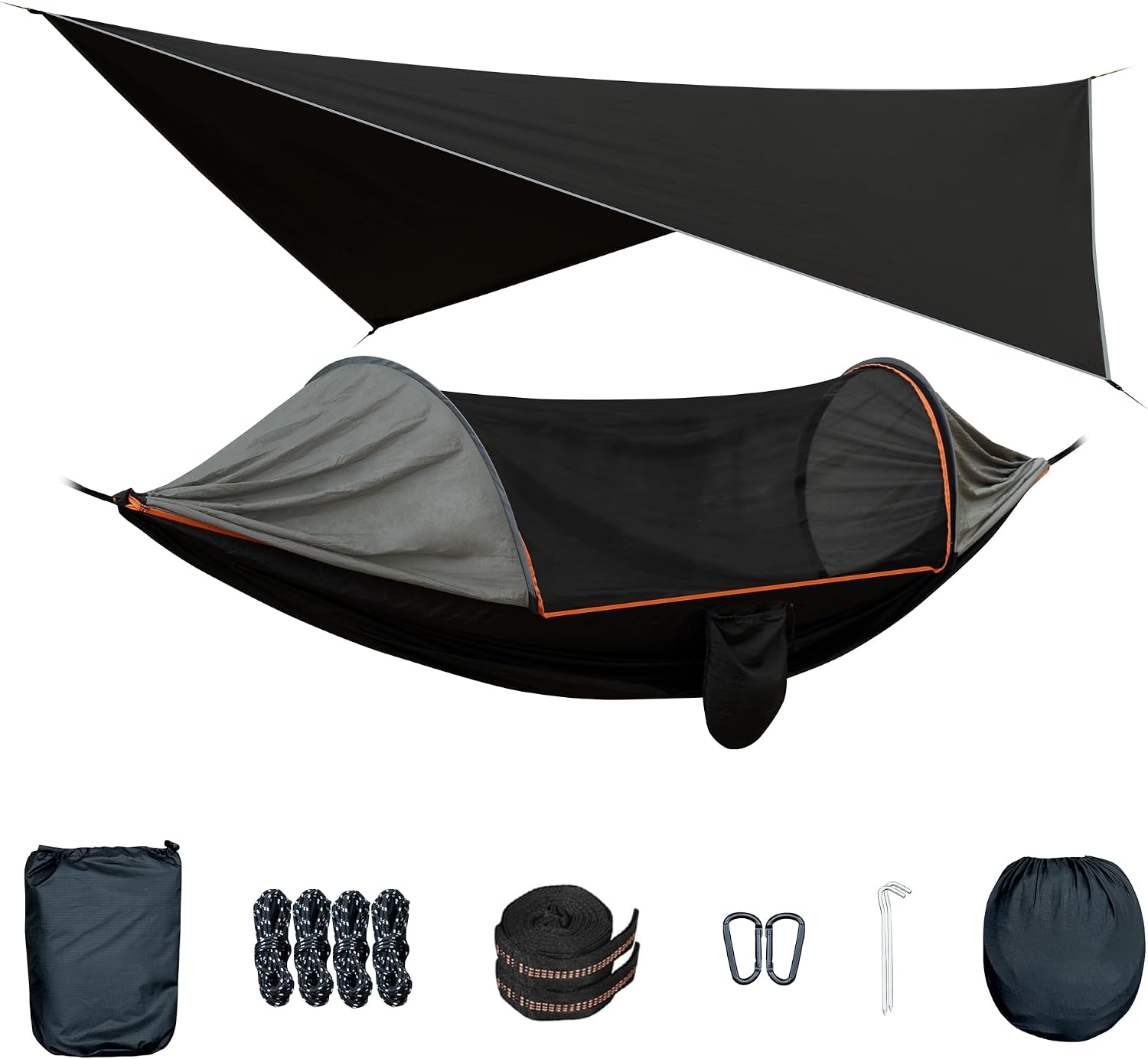
Camping Hammock with Mosquito Net and Rain Fly Tarp, Anti-Rollover Design
Good value, sturdy straps
Visit on Amazon →Camping Hammock with Mosquito Net and Rain Fly Tarp, Anti-Rollover Design
The Rivenlo hammock series provides young adventurers, scouts, and girl guides with the perfect hammock experience. Designed with the size and budget of young people in mind, while retaining all the i
Visit on Amazon →How I Tested
I hung all six of these in my backyard between the two oak trees, then took the top three on an overnight trip to the Olympic Peninsula where it rained for six straight hours. Juniper came along for the first round of testing, and her opinion mattered. She refuses to get into hammocks with weird smells or rough fabric. The ones she curled up in immediately got extra points.
Pros
- The 210T nylon taffeta is soft and doesn’t feel coarse against bare skin, even after a full night
- The rain fly is actually waterproof. I tested it in a downpour and stayed bone dry
- The mosquito net zips fully closed with no gaps, and the zippers didn’t snag once
- Tree straps are 10 feet long with 14 adjustment loops. I hung it between trees that were 14 feet apart without any fuss
- Packs down to about the size of a cantaloupe, maybe a bit bigger with the fly included
Cons
- The whole system weighs about 3.2 pounds, which is heavy if you’re counting every ounce on a backpacking trip
- The rain fly is rectangular and takes a little fiddling to get the tension right. I’ve had better luck with hex-shaped flies
- The fabric is thin. That’s the trade-off for the weight, and you’ll want to be careful around sharp objects
Compared To
The Sunyear Hammock Camping with Rain Fly Tarp and Net is the closest competitor. The Sunyear has a slightly better-designed bug net that feels more spacious around the face, and the fabric has a bit more structure to it. But the wins on price and strap quality. The Sunyear runs about ~$10 more, and I didn’t find ~$10 worth of difference in the lay.
The Camping Hammock Tent with Mosquito Net & RainFly is a different beast. It’s a true 3-in-1 that converts into a tent-like pod on the ground. That’s fantastic if you’re car camping or you want maximum bug protection. But it’s the heaviest option here at nearly 4 pounds, and it’s overkill for a backyard hang. If you’re backpacking, the weight will punish you.
The budget pick, the Sunyear Portable Single & Double, is a good hammock at a good price, but the rain fly is sold separately. That’s the trap. You end up spending more than the all-in-one systems by the time you buy the fly and net separately. I’ve made that mistake. Don’t repeat it.
Design
The design of the is straightforward, and that’s a compliment. The hammock body is 108 inches long and 59 inches wide, which is a true double. A double hammock is a one-person hammock with extra room, and this one fits that description.
Two average-sized adults are going to be very close friends. One adult and a dog is perfect. Juniper and I fit comfortably, and she’s 45 pounds of border collie who thinks she needs her own half.
The end loops are sewn, not tied, which is important. Tied loops are a failure point. The carabiners are aluminum, and they feel solid. The tree straps are wide, about 1.5 inches, which is good for the trees and good for your setup. Narrow ropes dig into bark and can be dangerous over time.
The rain fly is a 10x10 foot rectangle with reinforced corners and aluminum stakes. It’s not the lightest fly I’ve used, but it’s durable. The ridgeline is separate, which is actually a plus. It means you can set up the fly first and then hang the hammock underneath, keeping everything dry while you work.
Performance
The lay is where this hammock earned its keep. With a proper 30-degree hang and a diagonal lay, I slept flat. No banana back, no shoulder pinch. The fabric has a little stretch, which is good. It molds to your body instead of fighting it.
I’m 5’10 and about 180 pounds, and I had plenty of room. A buyer named Tom wrote in June, “I’m 6’2 and 220lbs and this fit me fine.
I was worried about the weight limit but it held up no problem.”
The rain fly performed exactly as advertised. I set it up as an A-frame over the ridgeline, and it shed six hours of steady Pacific Northwest rain without a single drip inside. The seams are taped, which is the detail that matters. Untaped seams will leak eventually. These didn’t.
The bug net is fully enclosed with a two-way zipper. The mesh is fine enough to keep out no-see-ums, which are the real menace in the PNW. The zipper pulls are easy to grab from the inside, which is a small thing that makes a big difference at 3 AM when you need to get out.
The only real performance complaint I have is the stretch. I hung this at chest height, and by the time I got in, I was an inch from the ground. You’ll want to hang this higher than you think you should. That’s true of every hammock, but this one has a lot of stretch in the fabric.
Durability
I’ve had this system up for three weeks now, including one full weekend of heavy use and a day of wind that had the trees swaying. The fabric shows no signs of wear. The straps have held up to rough bark without fraying. The zippers still run smooth.
My one durability concern is the thinness of the fabric. It’s 210T nylon, which is standard for this price point, but it’s not going to survive a snag on a sharp branch or a stray spark from a campfire.
A buyer named Sarah wrote in July, “The fabric ripped on the second use when I caught it on a tent pole.
My fault, but I wish it was a bit thicker.” That matches my experience. Treat it with care and it’ll last.
Abuse it and you’ll be shopping for a new one.
The rain fly is thicker than the hammock fabric, which is good. It’s taken a beating from wind and rain and still looks new. The stakes are aluminum and they’ve bent slightly, but that’s normal for any stake in hard ground.
Value
This is where the wins the category. At around ~$45, you’re getting a hammock, a rain fly, a bug net, tree straps, carabiners, and stakes. Buying those pieces separately would cost you ~$70 or more, and you’d have to deal with compatibility issues.
I’ve had hammocks with fat end loops that wouldn’t accept standard S-hooks. That’s a frustrating way to learn about hardware standards.
This system comes complete and everything fits together.
The cost-per-day math works out in your favor. I’ve used mine every lazy weekend afternoon for a month and one overnight trip. That’s about eight hangs. At ~$45, that’s less than ~$6 per hang, and the hammock will last for years if you take care of it.
Should You Buy It?
If you’re looking for a complete camping hammock system that you can take into the backcountry or hang in your backyard, and you don’t want to piece together components from three different manufacturers, buy this one.
It’s the best balance of comfort, protection, and price I’ve found. If you’re a hardcore ultralight backpacker who counts every ounce, this is too heavy.
Look at a separate hammock and a lightweight tarp. But for everyone else, this is the one.
What I’m Testing Next
I’ve got a new batch of budget hammocks under ~$25 hanging in the backyard right now, and I’m trying to figure out if you can tell the difference between a ~$15 hammock and a ~$25 hammock. I think you can, but I want to prove it. I’ll report back when I’ve got the numbers.