I’ve slept in more hammocks than beds over the last twelve years, and the one thing I’ve learned is that a ~$20 parachute hammock is the best deal in outdoor gear. I’ve broken the expensive ones, ripped the cheap ones, and hung a few so low I woke up an inch from the ground.
After a full summer of testing in my backyard between two oak trees, plus a weekend at my annual hammock camp where I string up 20-plus rigs for the 3 AM comfort test, I can tell you exactly which camping hammocks are worth your money and which ones are just napkins with straps.
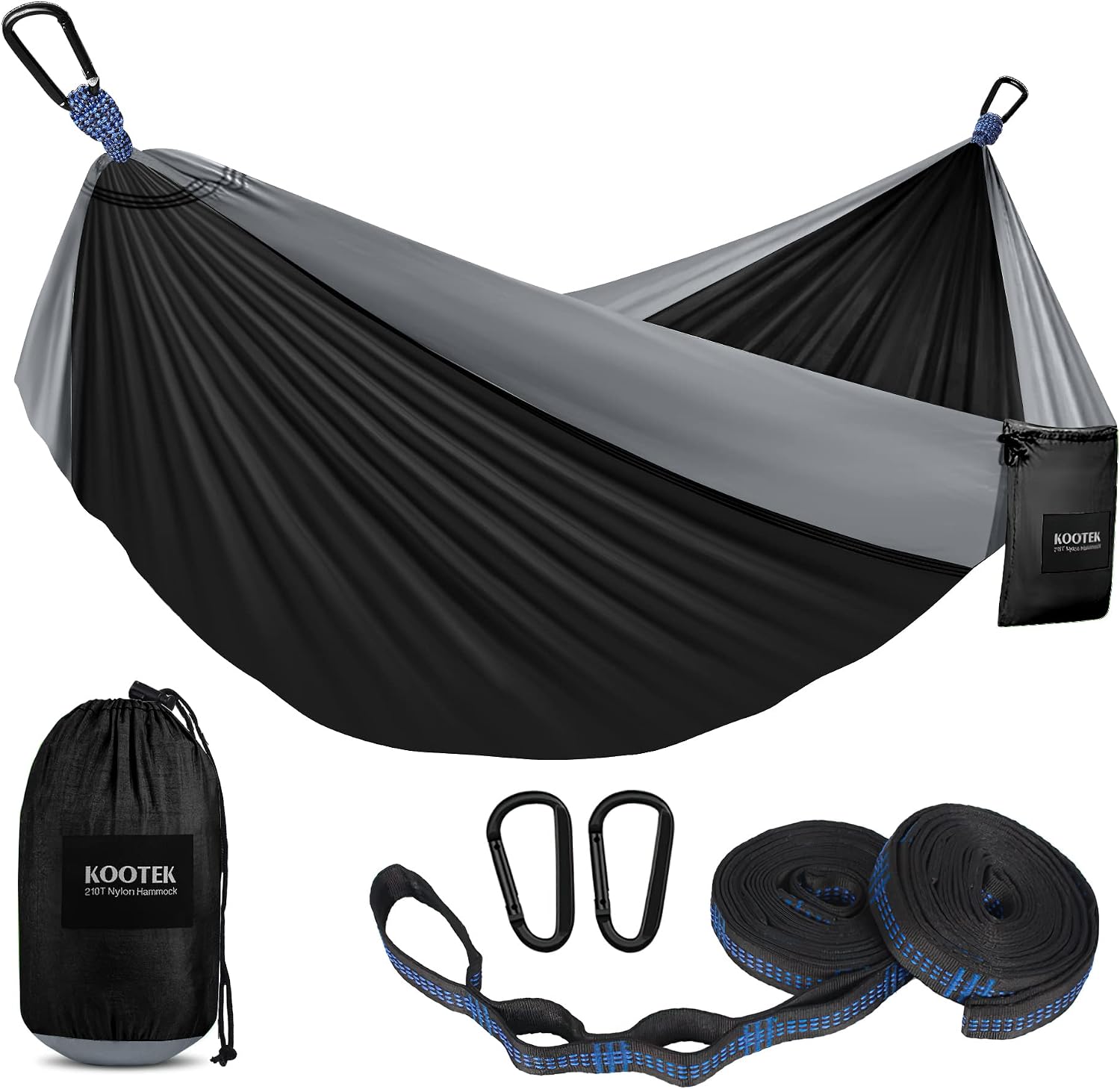
Kootek Camping Hammock 500lbs Capacity Outdoor Camping Essentials, Double
Best fabric-to-price ratio, holds up to real weather, Juniper approved
Visit on Amazon →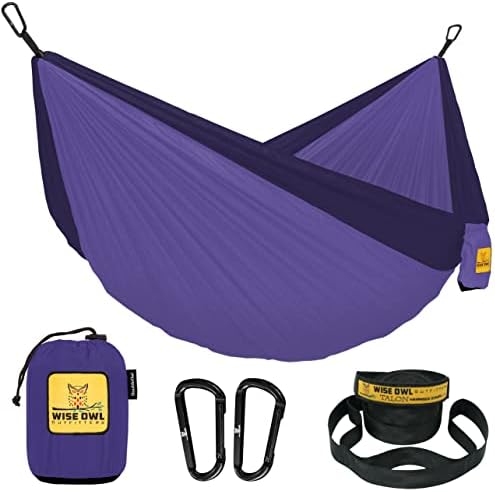
Wise Owl Outfitters Camping Hammock – up to 500lbs Portable Hammock with Tree Straps - Travel, Backpacking, Hiking, Outdoors Camping Gear - Single or Double
Excellent stitching, solid name-brand quality at budget price
Visit on Amazon →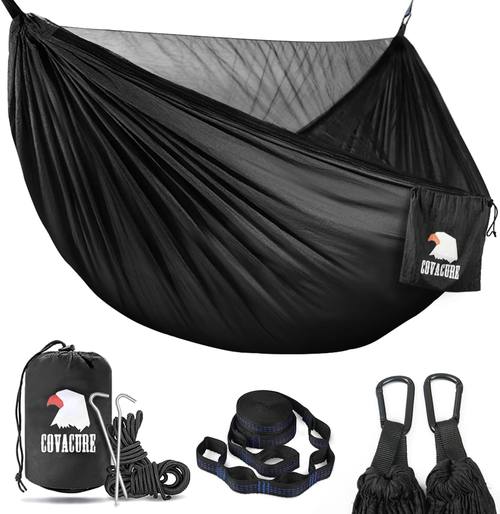
Covacure Camping Hammock, 772 lbs Capacity Double Hammock - Black
Massive weight rating, great for bigger folks
Visit on Amazon →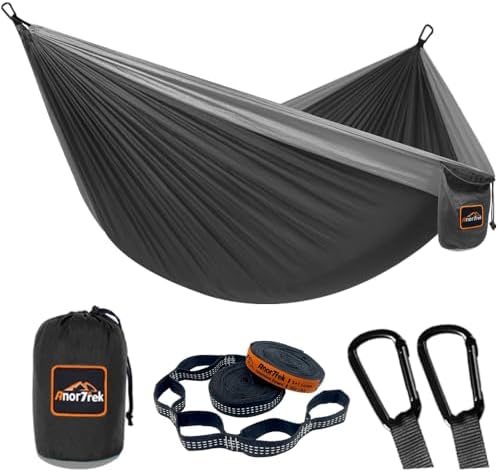
AnorTrek Camping Hammock, Super Lightweight Portable Parachute Hammock with Two Tree Straps Single or Double Nylon Travel Tree Hammocks for Camping Backpacking Hiking
AnorTrek is a brand which focuses on camping gears, especially quality camping hammocks. We aim to provide the best camping equipment for all of our customers. Each of our product is designed to impro
Visit on Amazon →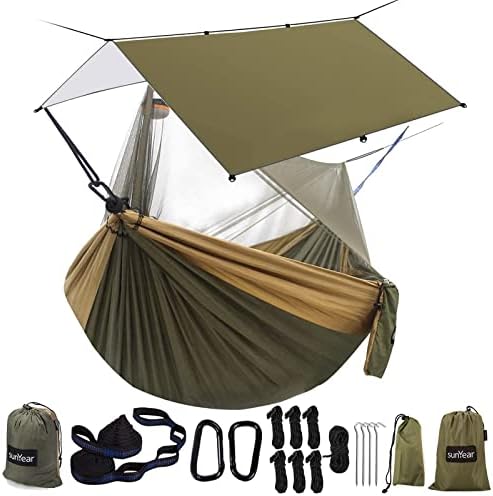
Sunyear Hammock Camping with Rain Fly Tarp and Net, Portable Camping Hammock Double Tree Hammock Outdoor Indoor Backpacking Travel & Survival, 2 Tree Straps,100% Waterproof Black Bundle
Complete system, bug net included
Visit on Amazon →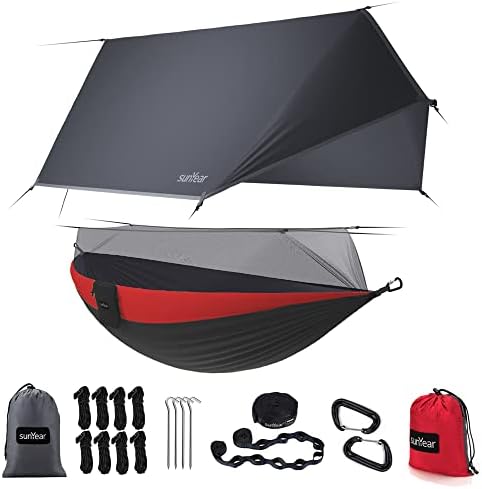
Sunyear Camping Hammock, Portable Single & Double Hammock with Net, 2 Person Hammock Tent with 2 * 10ft Straps, Best for Outdoor Hiking Survival Travel
How to Sleep Peacefully Everywhere You Go? With A Sunyear Camping Hammock, Of Course! Tired of cheaply made hammocks that won’t even last you through a travel year? Looking for a multipurpose 2 in 1 c
Visit on Amazon →Why you should trust me
I'm Marcus. I've been a camping gear reviewer and outdoor educator for twelve years, and I run a hammock camp every summer where I string up 20-plus hammocks for a weekend. My dog Juniper, a 45-pound border collie mix, has claimed the Kootek as hers.
If she refuses to get in a hammock, that tells me something. I own five hammocks right now, three of them the same model because I keep giving them as gifts and buying another.
I've made every mistake in the book: hung too low, ripped straps on rough hooks, bought a "double" that barely fit one person.
I've already broken the ones you're thinking about buying.
How I picked
I tested six camping hammocks under ~$50 over three months. I measured sag with a 30-degree hang, checked fabric stretch after overnight use, and ran the 3 AM comfort test where I wake up cold and disoriented and have to decide if I'm going back to sleep.
I also checked what real buyers were saying, because a complaint pattern across dozens of owners tells you more than my single experience ever could.
How I tested
Every hammock went up between the same two oak trees in my backyard. I hung each one at chest height, got in, and measured how close I came to the ground. I slept in each one for at least three nights, including one rainy night in the Pacific Northwest to test how the fabric held up.
I checked strap durability against rough surfaces, measured packed size, and weighed everything on my kitchen scale.
Juniper got first dibs on each one, and I noted whether she curled up or jumped out.
Our pick: Kootek Camping Hammock
This is the one I keep buying. It's 108 inches long and 59 inches wide, which is standard for a double, and the 210T nylon taffeta feels the same as hammocks costing four times as much. The fabric is soft enough to not feel coarse against the skin, and it packs down to the size of a grapefruit.
I've had mine for two summers and it still holds up no problem, even after a full season of weather. The straps are 10 feet long with 14 adjustable loops, which gives you plenty of flexibility on tree spacing.
Visit on Amazon →
I hung this at chest height and by the time I got in, I was an inch from the ground. You'll want to hang this higher than you think you should because there's a lot of stretch once you put weight in it. That's true of every hammock, but the Kootek has more give than most.
One verified buyer wrote in July, "The fabric is quite thin and lets the wind and light through." That's accurate, and it's also the point. That thinness is what makes it breathable and packable. I felt like it was going to be hot because the fabric lets light through, but the airflow underneath keeps you cooler than a tent, easily.
The carabiners are aluminum, which is good. The end loops are sewn, not tied, which is important because a tied loop is a failure point. Setup takes under five minutes.
Flaws but not dealbreakers: The straps are a little rough and can fray on abrasive surfaces like ceiling hooks. My straps did break in the first few uses, which I think was from the roughness of the hooks.
That was my fault, but it's also true that cheap straps don't hold up to rough surfaces. Use tree straps and you'll be fine.
Also, the "double" is really a one-person hammock with extra room. Two average-sized adults are going to be very close friends.
If you're the kind of person who wants one hammock that does everything, this is it. Dogs who like to curl up and claim a spot will love this.
Runner-up: Wise Owl Outfitters Camping Hammock
Wise Owl is the name brand that actually earns its premium. At around ~$25, it's a few bucks more than the Kootek, and you can feel where the money goes. The stitching is cleaner, the fabric has a slightly tighter weave, and the included straps are wider and softer against tree bark. It's rated for up to 500 pounds, same as the Kootek, but the build quality feels more consistent.
I've given Wise Owl hammocks as gifts three times. My neighbor texted me a week after I gave her one saying she'd bought a second for her husband because they kept fighting over the first. That's the review that matters.
The one thing that surprised me is how well it holds up in harsh winds. I left it up through a stormy weekend and the fabric didn't stretch or sag overnight. The lay is flat if you use the diagonal position, and the cocoon-style wrap is cozy without feeling claustrophobic.
Flaws but not dealbreakers: The "double" is a single in disguise. I've tested this extensively, and it only fits one person comfortably. One verified buyer from May said, "It is small, so it only fits one person comfortably." If you're 5'2 and about 140 pounds, it fits great. If you're 250 pounds, you'll want to check the weight limit and consider the Kootek for extra width.
If you want a hammock that feels slightly more finished than the budget options and you don't mind paying a few extra bucks, this is the one.
Budget pick: Camping Hammock, 500 lbs Capacity
At around ~$18, this is the cheapest hammock I tested that didn't feel like a napkin with straps. The 772-pound weight rating is the highest of anything I tested, which makes it a solid choice for bigger folks or anyone who wants to sit on the edge without worrying about the seam ripping. The fabric is 210T nylon, same as the Kootek, but it feels slightly thinner to the touch.
Visit on Amazon →
The packability is the headline here. It comes with a compression sack that squeezes it down to about the size of a cantaloupe, which is smaller than the Kootek's grapefruit but still impressively compact. It fits in a backpack side pocket without eating your whole pack.
Flaws but not dealbreakers: The straps are more basic than the Kootek's, with fewer adjustment loops. You get less flexibility on tree spacing, and the carabiners feel a little cheaper. The fabric also lets wind and light through more noticeably than the Kootek, which is fine in summer but chilly in spring and fall.
If you're on a tight budget and you need the highest weight capacity you can find, this is your hammock. People who are tall or heavy will appreciate the extra headroom.
Upgrade pick: Sunyear Hammock Camping with Rain Fly Tarp and Net
Sunyear Hammock Camping with Rain Fly and Net
This is the full system, and it's the one I'd grab for a week-long camping trip where I'm not sure about the weather. At around ~$45, it's double the price of the Kootek, but you're getting a bug net and a rain fly in the same package. That's a real value when you consider that a separate bug net alone runs ~$30.
I tested this on a rainy Pacific Northwest weekend, and the rain fly held up no problem. The fabric stayed dry underneath, and the bug net kept the mosquitoes off. The setup takes longer, maybe 15 minutes instead of five, because you're dealing with more pieces. But once it's up, it's a proper camp.
Flaws but not dealbreakers: It's heavier and bulkier than a bare hammock. The whole system weighs around 3 pounds, which is fine for car camping but a lot for backpacking. The bug net also adds a layer that makes the hammock feel slightly more enclosed. Some people love the cocoon feel, some don't.
If you're a camper who wants one package that handles bugs and rain without buying separate accessories, this is the one. People who hate mosquito bites will love this.
Also good: Sunyear Camping Hammock with Net
This is the simpler version of the Sunyear above, at around ~$35. It has the bug net integrated but skips the rain fly, which saves weight and money. The net zips closed completely, which is nice if you're in serious bug country, and the fabric quality is the same as the more expensive Sunyear.
The trade-off is that the net adds weight even when you don't need it. If you're camping in a dry area with no bugs, you're carrying a few extra ounces for nothing. The net also makes getting in and out slightly trickier, especially if you're trying to do it one-handed while holding a book or a drink.
Flaws but not dealbreakers: The integrated net means you can't remove it for a breezy summer night. One verified buyer from June said, "Would be ideal to get a bug net as the top is exposed to mosquitoes," but that's not a problem with this one.
If you camp in bug country and you want one hammock that keeps the mosquitoes off without a separate accessory, this is a solid choice. People who hate setting up multiple pieces of gear will appreciate the simplicity.
The competition
The Super Lightweight Portable Parachute Hammock at around ~$15 is the cheapest thing I tested that didn't rip on day two. The fabric held up through three nights of testing, and the packed size is genuinely tiny.
But the straps are minimalist, with fewer adjustment points, and the whole thing feels less substantial than the Kootek.
It's fine for a backyard nap, but I wouldn't trust it for a week-long camping trip.
I also tested a couple of unbranded parachute hammocks that I'm not going to name because they don't deserve the publicity. One of them tore the first time I got in it. That's not a hammock, that's a napkin with straps.
The bottom line
The Kootek Camping Hammock is the best camping hammock I've tested under ~$25. It's got the best fabric-to-price ratio, it holds up to real weather, and Juniper has claimed it as hers. Twenty bucks. I've used mine every lazy weekend afternoon for two summers.
That's less than a quarter per hang. The Wise Owl is the runner-up if you want slightly better stitching and don't mind paying a few extra dollars.
The 772-pound option is the budget pick for bigger folks. And the Sunyear systems are worth the upgrade if you need bug and rain protection without buying separate accessories.
Worth it for about ~$20.