I have slept in more hammocks than beds over the last twelve years, and the conclusion I keep arriving at is unfashionable: a hammock is a geometry problem before it is a fabric problem. Hang angle, ridgeline, and where your insulation actually sits decide whether you sleep through the night. Fabric weave and colorway decide almost nothing after 3 a.m. That is the lens I used for this best camping hammocks comparison, and it is why the four products below are not really competing for the same buyer.
The four designs here solve four different problems. One is a lay-flat hammock tent built around a pad sleeve. One is a cold-weather hammock with a 20°F rating baked into the design. One is a nylon double that ships with tree straps in the box. One is a handwoven rope hammock that has no business in a backpack and every right to live on a porch. Put them side by side in one table and the trade-offs get honest fast, because each one is giving something up to be good at its own job.
If you camp in cold weather and want the simplest path to a warm night, the Grand Trunk Evolution is the one I would hand most people. If you sleep on your side and already own an inflatable pad, the Hammock Bliss Sky Bed is the more interesting answer. The nylon double is the budget summer pick, and the GAFETE rope hammock is furniture.
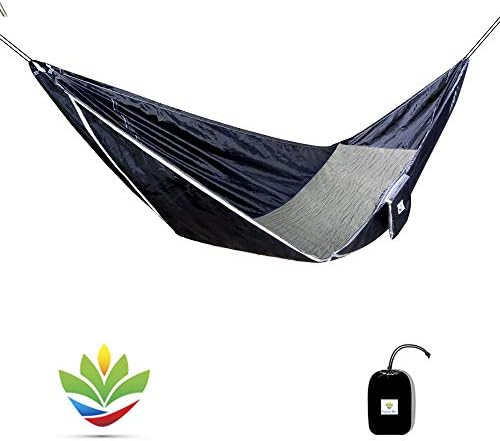
Hammock Bliss Sky Bed
Asymmetrical design plus an integrated inflatable pad sleeve is the most credible lay-flat approach in this group, and the sleeve keeps your pad under you instead of sliding out at 2 a.m.
A hammock tent is more setup, more bulk, and more moving parts than a gathered-end hammock, and the pad that makes it warm is a separate purchase
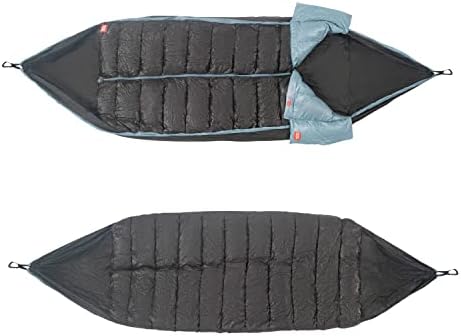
Grand Trunk Evolution Hammock (20°F)
Insulation is treated as part of the hammock rather than an accessory you bolt on later, which is exactly what cold-weather hanging needs
A 20°F rating is a winter-forward spec, so warm-weather campers end up carrying insulation they will never use
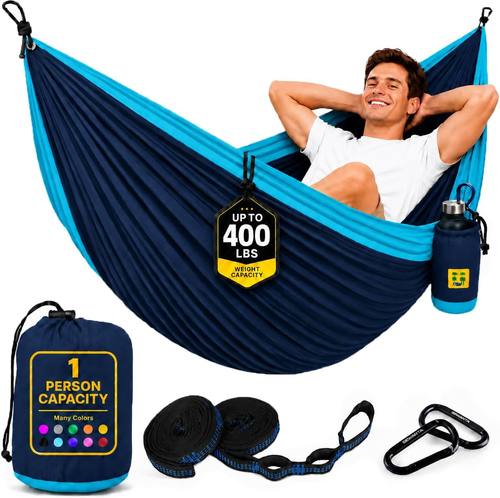
Durable Nylon Hammock, 400 lb Capacity, with Tree Straps
Tree straps and an attached carry bag come in the box, which removes the two mistakes beginners make most, and the 400 lb capacity is honest about holding two adults
No bug net, no insulation, and no ridgeline, so it is a fair-weather or pad-and-tarp setup rather than a four-season sleep system
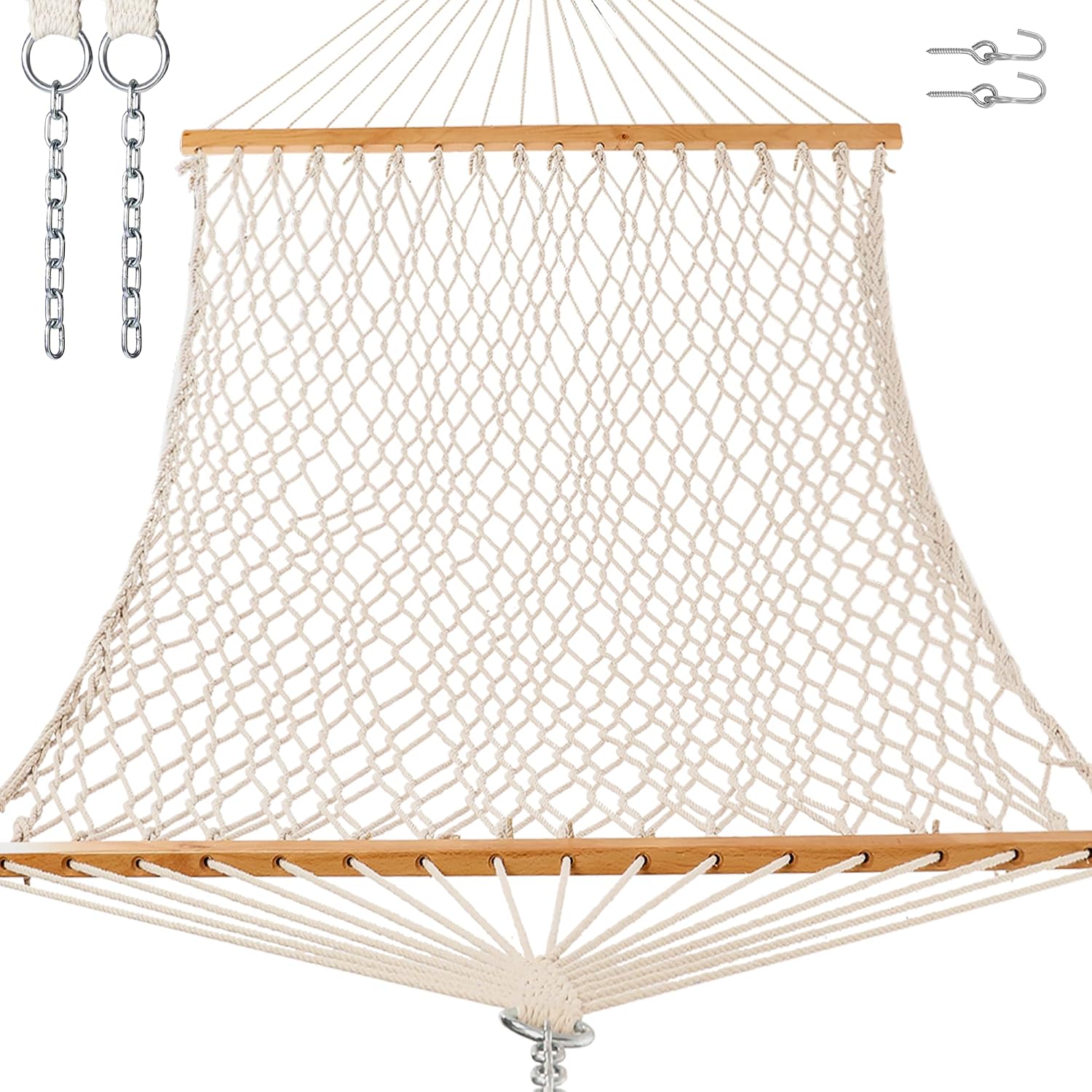
GAFETE Rope Hammock for Outside, 2 Person, Handwoven
Handwoven rope and a two-person width make it the best-looking thing in this group on a porch, in a yard, or under a cabin roof
Rope suspension is neither tree-safe nor camp-worthy, it stretches over time, and it needs two solid anchor points rather than two flexible trees
Prices and availability were captured from Amazon Creators API and may change.
The 30 degree rule comes before any product choice
Show me the ridgeline, then we will talk about fabric. A hammock hung at roughly 30 degrees of sag sleeps flat. Hang it tighter and you get a shoulder squeeze and a banana curve. Hang it looser and the fabric swallows you and the edges flop into your face. Almost every complaint people bring me about hammock camping traces back to hang angle, not to the hammock they bought.
This matters for the table above because the four products sit at different points on that geometry curve. A plain gathered-end hammock asks you to find the angle yourself, every single night. An asymmetrical design bakes some of that geometry into the cut. A rope hammock with spreader-free construction and a rope bed gives you a completely different lay, which is pleasant in a yard and miserable on a trail.
The other half of the geometry problem is stretch. Nylon stretches. Rope stretches more. If the fabric relaxes overnight, the angle you set at 8 p.m. is not the angle you have at 2 a.m., and that is the difference between sleeping and fidgeting. It is also the single biggest reason I tell people to spend money on suspension and insulation before they spend it on a fancier hammock body.
Hammock Bliss Sky Bed: the lay-flat specialist
The Sky Bed is the most ambitious design in this comparison. The asymmetrical cut is there to let you lie on a diagonal, which is how you get a flat, side-sleeper-friendly position instead of the curved shape that gives hammock camping its bad reputation. The integrated sleeve is the smarter half of the idea: it holds an inflatable pad directly against the underside of the hammock body, which is the only reliable way to stop a pad from escaping in the middle of the night.
If you have ever woken up at 2 a.m. with your pad wedged against the far wall of the hammock and your back pressed into cold fabric, you understand why that sleeve matters more than any feature listed on the box. Under-quilts and pads both work, but a pad in a sleeve is the system that requires the least fiddling in the dark.
The trade-off is complexity. A hammock tent means more fabric, more attachment points, and more time at setup than a gathered-end hammock that goes up in ninety seconds. It also means your insulation budget is separate from your hammock budget, since the sleeve expects a pad you supply. For a side sleeper who already owns a good inflatable pad, that is a fair deal. For someone who wants to toss a hammock in a daypack and walk out the door, it is more machine than they need.
Grand Trunk Evolution: insulation as a design decision
Most hammock insulation is an afterthought. You buy the hammock, then you buy an under-quilt or a pad, then you spend a season figuring out how the two of them coexist. The Grand Trunk Evolution takes the opposite approach: the 20°F rating is part of the product, not an accessory category.
That is the right way to think about cold-weather hanging. Your back is the coldest surface in a hammock because there is nothing under you but air moving through the fabric, and convective loss is what wakes people up at 3 a.m. A hammock designed around insulation solves that problem at the design stage instead of the accessory stage.
The honest criticism is that a 20°F rating is a specialized spec. If your camping calendar is May through September in the Southeast, you are paying for warmth you will not use and carrying weight you will notice on a climb. This is a hammock for shoulder-season and winter trips, for people who hang in the cold on purpose. If that is you, it answers a question the other three products in this table leave open.
The nylon double with tree straps: the value pick
This is the hammock I would put in the hands of someone who is hammock-curious and does not want a project. Nylon construction, a 400 lb capacity, tree straps included, and a carry bag attached so you cannot lose it in the truck. The straps are the part that matters most to me, and I will explain why in a moment.
The 400 lb capacity is a real number and it does what a double hammock should do: it holds two adults comfortably enough for a nap or a conversation, and it gives one person enough room to lie on a diagonal and get closer to flat. The sizing is honest about that. A double hammock is a great single hammock and a workable two-person lounge, and anyone who tells you otherwise has not spent a night in one with a partner who moves around.
What it does not have is a bug net, a ridgeline, or insulation. That makes it a fair-weather sleep system and a genuinely good one, provided you pair it with a pad and a tarp when the forecast turns. In a backyard, on a beach, or on a summer overnight where the low is 65°F, the missing pieces cost you nothing. In October at elevation, they cost you a night of sleep.
GAFETE rope hammock: porch furniture, not camping gear
I want to be fair to this one, because it is very good at a job that has nothing to do with backpacking. A handwoven rope hammock in natural beige, sized for two, is the classic afternoon-nap setup. Rope beds breathe, they look right under a porch roof, and they hold their shape for years if you keep them out of the rain.
Now the part that keeps it out of my pack. Rope suspension is the thing I tell people to avoid more than any other feature. Thin rope digs into bark, and a hammock that leaves visible damage on a tree is a hammock that gets hammocks banned from campgrounds. Rope also stretches, and a rope bed that relaxes overnight changes your hang angle while you sleep. And it is heavy and bulky compared to nylon, which matters if you are carrying it anywhere farther than the edge of a deck.
Buy it for a yard, a cabin porch, or a rental with two good posts. Do not buy it for a campsite with two trees.
Straps, ropes, and the tree question
Every year I watch someone hang a hammock with whatever cord was in the box, cinch it tight around a pine, and leave a ring of damage that will still be there in a decade. Two-inch-wide tree straps spread the load across bark instead of cutting into it. That is the whole argument, and it is not a preference, it is basic physics applied to a living thing.
So when I evaluate a hammock, I look at what comes in the box. A hammock that ships with straps has already solved the safety and the tree-protection question for you, and that is a point in its favor that has nothing to do with comfort. A hammock that ships with rope has handed you a problem and called it a feature.
This is also why the included-strap nylon hammock and the pad-sleeve hammock earn their places here, and why the rope hammock is a yard product. Rope has a home. It is just not wrapped around a tree at a campsite you want to visit again next year.
Which hammock for which camper
Match the product to the trip, not the other way around.
If you hang in cold weather and want one purchase to solve insulation, the Grand Trunk Evolution with its 20°F rating is the clear pick. If you sleep on your side and already own an inflatable pad, the Hammock Bliss Sky Bed gives you the flattest, most supportive lay of the four, provided you accept the setup time. If you want a first hammock that works for summer overnights and backyard afternoons, the nylon double with tree straps is the best value here, and the straps in the box mean you can hang it responsibly on day one. If your hammock is never going to leave the porch, the handwoven rope hammock is the one that looks and feels right.
Notice that none of these recommendations hinge on fabric color or brand storytelling. They hinge on where the insulation is, what the cut does for your spine, and what the suspension does to a tree.
What I would verify before you buy
Three questions, and I would ask them in this order. First, what holds your insulation? If the answer is "nothing, I will figure it out," you have found your real problem, and it is not the hammock. Second, what is the hang geometry? If the design has no ridgeline and no asymmetrical cut, you are depending entirely on your own setup skills, which is fine for an experienced hanger and a rough first night for everyone else. Third, what comes in the box for suspension? If the answer is rope, budget for straps on the same order.
I do not consider a hammock fully vetted until I have slept a night in it and woken up without an ache, so treat the design analysis here as the framework and the specs as the evidence. What I can tell you with confidence is that the four products above are not four versions of the same thing. They are four answers to four different questions, and the fastest way to waste money is to buy the answer to somebody else's question.