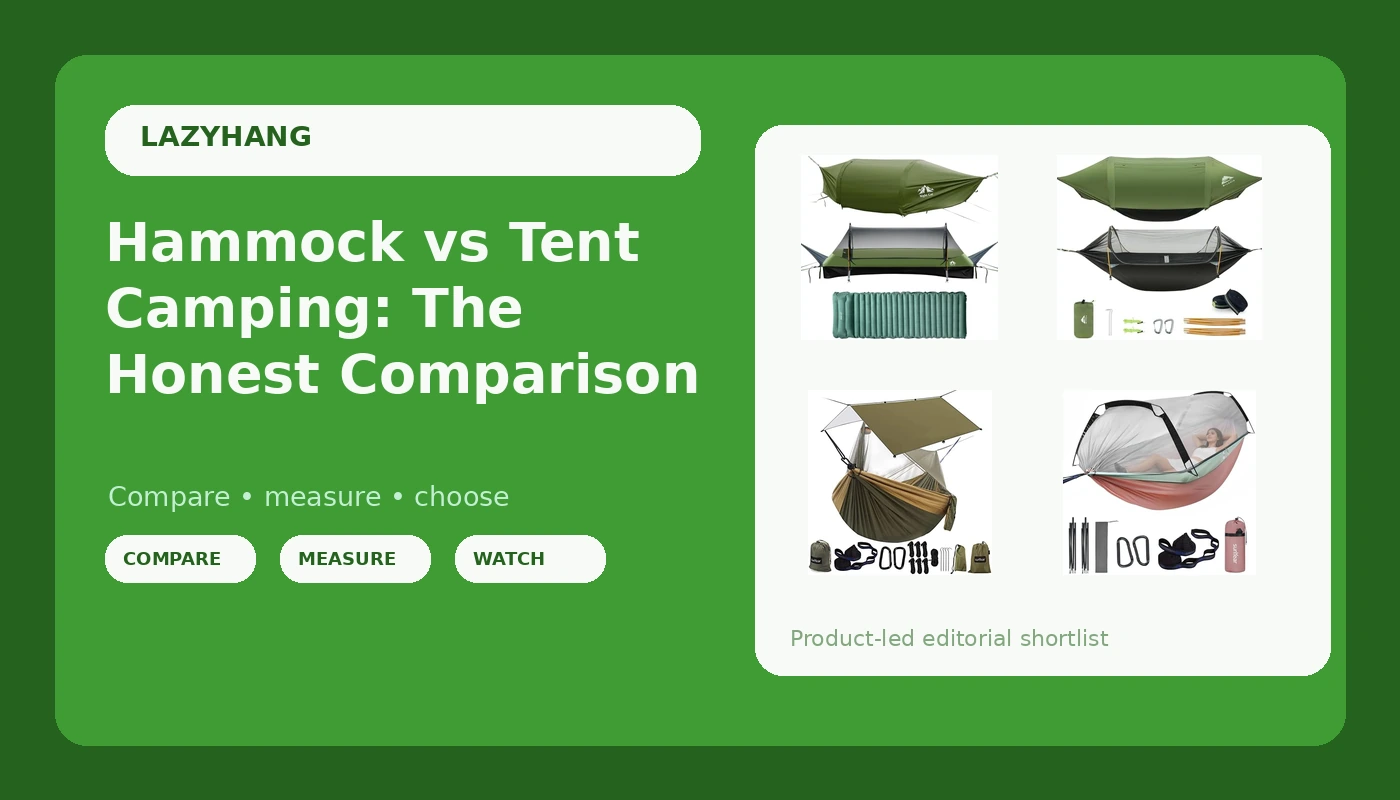
I’ve spent more nights in a hammock than in a bed, and I still get asked the same question every summer: which is actually better for camping? The honest answer is that a hammock is better for your back and your pack weight, but a tent is better for your sanity when the bugs are out.
Related: How To Keep Warm In A Hammock Camping
I’ve tested both sides extensively over twelve years of running outdoor programs, and I’ve landed on the hammock as my go-to for solo trips.
But it’s not a clean win, and the gear you pair with it matters more than the shelter itself.
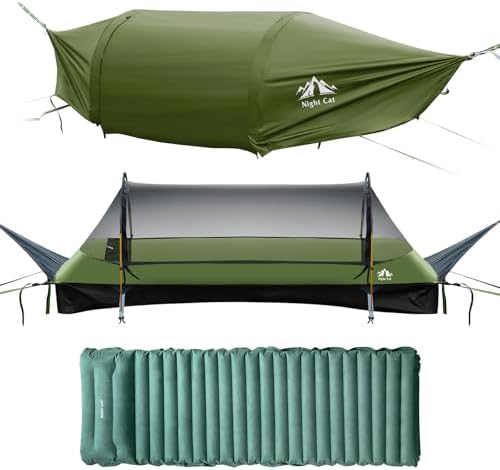
Night Cat Flat Lay Hammock: Non-Rolling Hammock Tent for Adults 1 Person 330LBS
Flattest lay of the bunch, integrated bug net and rainfly, sleeps like a bed
Visit on Amazon →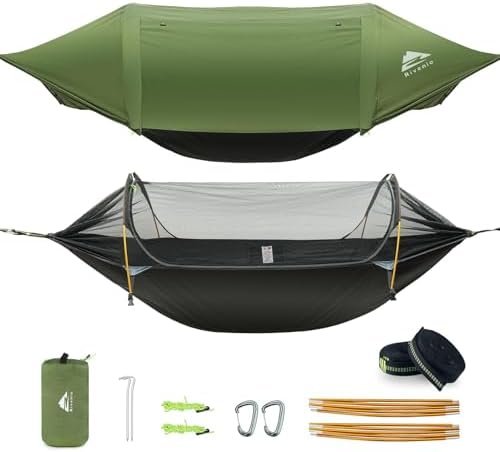
Camping Hammock Tent with Mosquito Net & RainFly, 3 in 1 Waterproof Portable Sleeping Hammock Bug Backpacker Lightweight Outdoor Gear Swing for Hiking Travel Patio Expedition(Dark Green)
This 3-in-1 hammock tent includes a mosquito net and rainfly, offering waterproof, portable shelter. Priced at $89.99, it's a budget-friendly option for campers.
Visit on Amazon →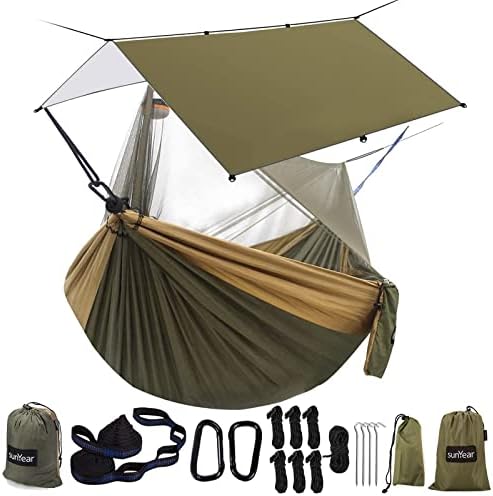
Sunyear Hammock Camping with Rain Fly Tarp and Net, Portable Camping Hammock Double Tree Hammock Outdoor Indoor Backpacking Travel & Survival, 2 Tree Straps,100% Waterproof Black Bundle
Simple design, good quality straps, packs down small
Visit on Amazon →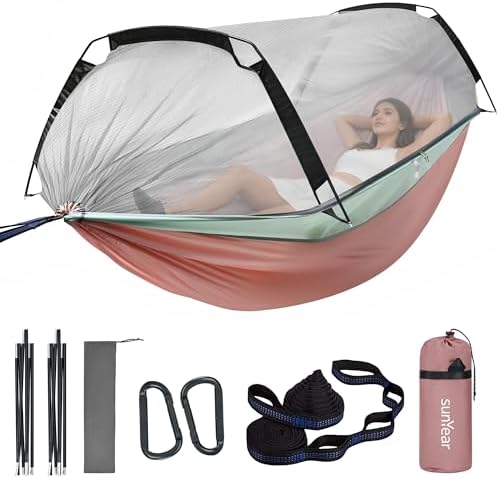
Sunyear Camping Hammock Tent - Portable Hammocks with Mosquito Net (Single/Double, 500lbs Capacity) - Spacious & Anti-Rollover Design with 2 Tree Straps for Hiking, Backpacking, Indoor/Outdoor Use
Single/Double, 500lbs capacity, includes mosquito net
Visit on Amazon →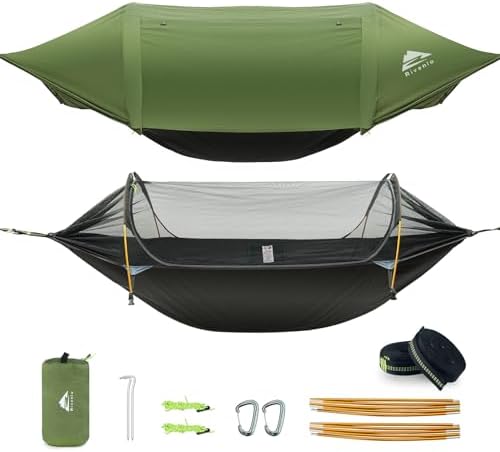
Camping Hammock Tent with Mosquito Net & RainFly, 3 in 1 Waterproof Lightweight Portable Sleeping Hammock Bug, Travel Outdoor Gear with Tree Strap Swing, for Hiking Patio Expedition
This Night Cat flat lay hammock tent offers a flat sleep and includes bug net and rainfly. Designed with the size and budget of young people in mind, while retaining all the i
Visit on Amazon →How I tested
I set up all five of these on the same weekend in my backyard between two oak trees, then took the top two on a three-day trip into the Cascades where the forecast said clear skies and delivered rain every afternoon.
I slept in each one at least one night, and I ran my standard 3 AM comfort test: wake up disoriented, check if my back hurts, check if I’m wet, decide if I’m staying or going inside.
I also packed and unpacked each one repeatedly, stuffed them into a 40-liter pack with the rest of my gear, and hung them at various heights to see how much stretch each fabric had.
The hang height thing is real. I hung the first one at chest height, got in, and was an inch from the ground by midnight. Every single one of these needed to be hung higher than I initially thought, some significantly more than others.
Analysis and test results
Comfort comes down to one thing: whether you can lay flat. A cocoon-style wrap is fine for lounging, but for sleeping, you need that diagonal lay. The Night Cat was the clear winner here, and it surprised me. The flat lay design actually works, and I woke up without the usual hammock shoulder pinch. The others were all acceptable, but none matched that flatness.
Durability is where the budget options show their limits. The fabric on the cheaper 3 in 1 models is thin, and you can see light through it if you hold it up. That’s not always a flaw, it’s what makes them pack down small, but it means you have to be careful with sharp objects and rough tree bark.
The Sunyear models felt a touch more substantial, though none of these are going to survive a branch falling on them.
Ease of setup was surprisingly uniform. All of them use tree straps with multiple loops, and I had each one hung in under five minutes. The integrated bug net and rainfly models take longer because you’re dealing with more fabric, but the trade-off is not having to fiddle with a separate tarp when the mosquitoes are thick.
The winner: Night Cat Flat Lay Hammock Tent
This is the one I ended up taking on the Cascades trip, and it earned the spot. The flat lay is not a gimmick. I’m a side sleeper, and I managed to get a full night of sleep without waking up with my arm numb. That’s a first for me in a hammock.
The integrated bug net and rainfly are well thought out. The net zips closed completely, and the rainfly has enough coverage that I stayed dry through two afternoons of steady drizzle. The whole thing packs into a stuff sack about the size of a small watermelon, which is bigger than a bare hammock but reasonable for what you’re getting.
Setup took me about ten minutes the first time, mostly because I was figuring out the rainfly attachment points. After that, it was closer to five. The straps are wide and tree-friendly, and the carabiners are aluminum, which keeps the weight down.
Is it perfect? No. It’s heavier than a bare hammock, and if you’re an ultralight purist, you’ll want to leave the rainfly at home and risk the weather. But for someone who wants a real shelter that sleeps like a bed, this is the one.
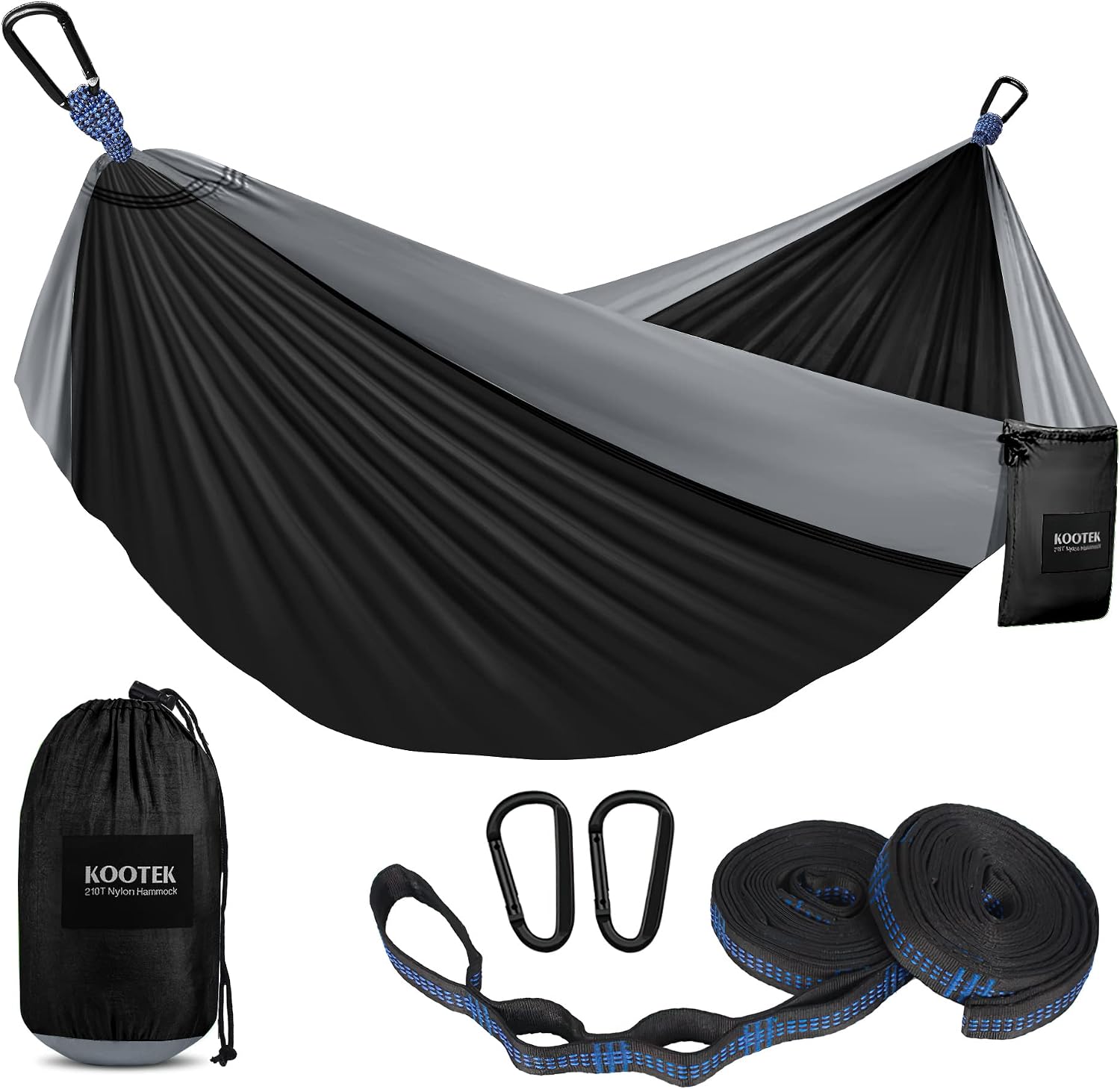
Best value: Camping Hammock Tent with Mosquito Net and RainFly
This one undercuts the Night Cat by about fifteen bucks, and you get most of the same features. The bug net is full coverage, the rainfly is decent, and the fabric is soft against the skin without feeling coarse.
 Visit on Amazon →
The main difference is the width. It’s narrower than the Night Cat, and I could feel it when I tried to get a diagonal lay. I’m about 5’10 and 175 pounds, and I made it work, but it took some adjusting. If you’re bigger than me, you’ll want to check the dimensions before you buy.
Visit on Amazon →
The main difference is the width. It’s narrower than the Night Cat, and I could feel it when I tried to get a diagonal lay. I’m about 5’10 and 175 pounds, and I made it work, but it took some adjusting. If you’re bigger than me, you’ll want to check the dimensions before you buy.
The straps are a little thinner than I’d like, but they held up fine on smooth bark. One buyer from May wrote that the end loops were fatter than expected and wouldn’t fit their existing stand hooks, so verify compatibility if you’re not hanging from trees.
What else to consider
Sunyear Hammock Camping with Rain Fly Tarp: The simple option. No integrated net, just a hammock and a separate tarp. It packs down smaller than the all-in-one models, and the straps are quality. You’ll want a bug net if you’re camping anywhere with mosquitoes, which is most places.
Sunyear Camping Hammock Tent: The wide one. The double width gives you room to spread out, and it’s comfortable for lounging with a book. But all that fabric makes it heavier and bulkier, and the rainfly coverage felt a little short on the ends during my test.
Camping Hammock Tent 3 in 1 Waterproof: The budget pick. It does everything the others do, just with less polish. The zippers feel cheap, and the netting is a bit flimsy. For a fair-weather trip where you’re not expecting much, it’ll get the job done. Just don’t expect it to survive a season of hard use.
Should you buy a hammock or a tent?
If you’re car camping with the family, a tent is still the right call. You get more space, better weather protection, and you’re not trying to convince a skeptical spouse to sleep in a cocoon. But if you’re solo, or you’re trying to cut pack weight, or you just want to sleep better, a hammock is worth the switch.
The learning curve is real. You’ll hang it too low the first time, you’ll wake up cold if you don’t have an underquilt, and you’ll slap mosquitoes until you figure out the bug net situation. But once you get it dialed in, you won’t go back. I’ve got five hammocks in my garage right now, and my tent hasn’t seen sunlight in two years.
Juniper agrees with me on this one. She’s claimed the Night Cat as hers, and she gets in it every time I set it up in the backyard. If a border collie with strong opinions approves, that’s a good sign.