Hammock Care And Storage Tips: What Actually Keeps a $20 Hammock Alive for Years
Is a $20 hammock a disposable item? I used to think so. I've ripped straps on rough ceiling hooks, left a hammock up through an entire Pacific Northwest winter, and watched fabric fade into something that felt like tissue paper.
After two years of living with my current batch of budget hammocks, including the Kootek that Juniper has claimed as hers, I can tell you the truth: the hammock itself isn't disposable.
The care routine is what makes it disposable or not.
I've been testing hammocks for twelve years now, and I've made every mistake in the book. I've hung too low, I've stored wet hammocks in stuff sacks, I've left tree straps wrapped around branches for months. This is the guide I wish I'd had before I ruined my first three.
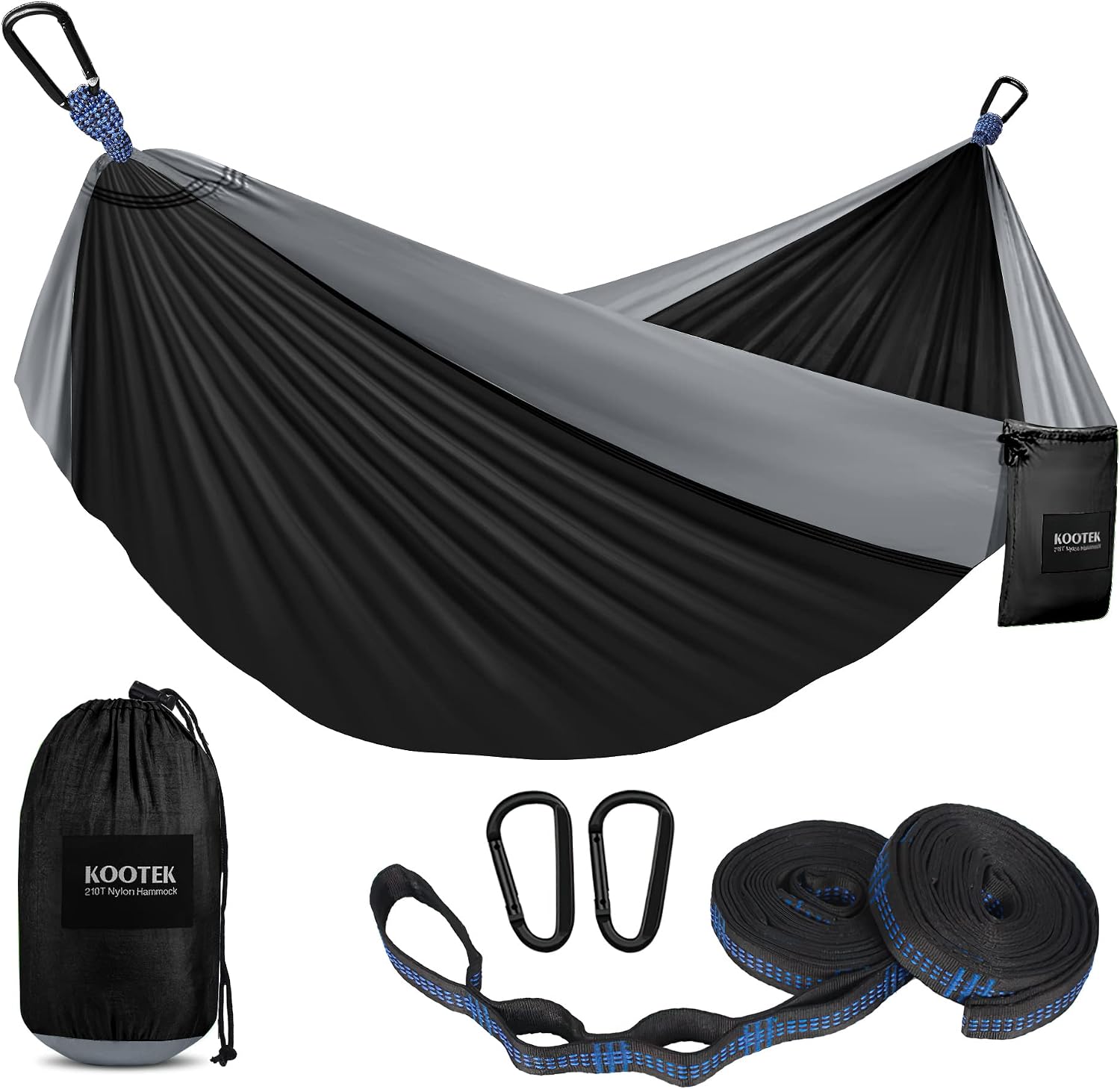
Kootek Double Hammock
Fabric held up through two full seasons, straps survived rough hooks, packs down to grapefruit size
Thin fabric lets light through; not a true two-person hammock
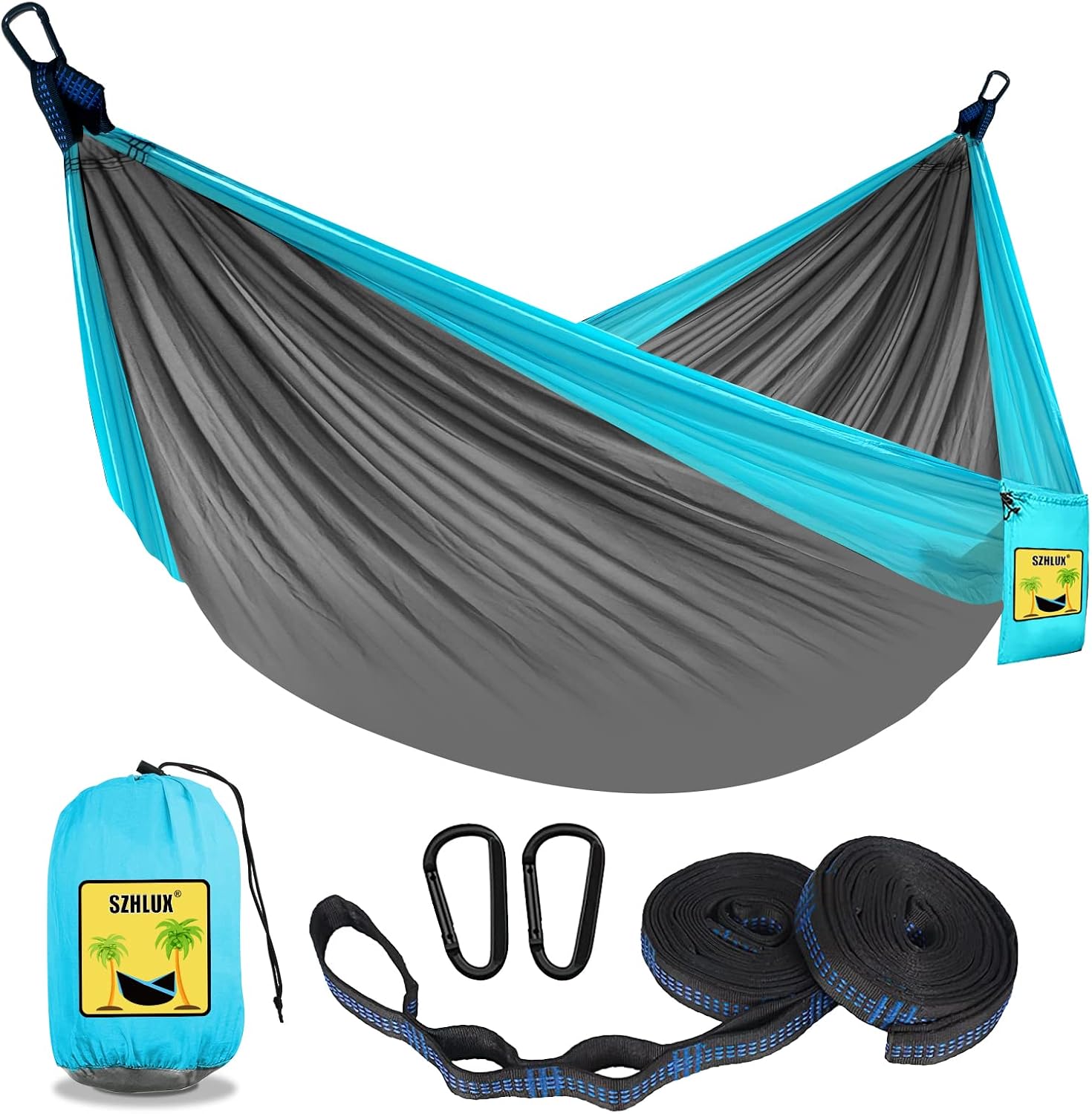
SZHLUX Hammock with Straps
Softest fabric of the bunch, so good I ended up getting two
Straps show wear faster than Kootek's
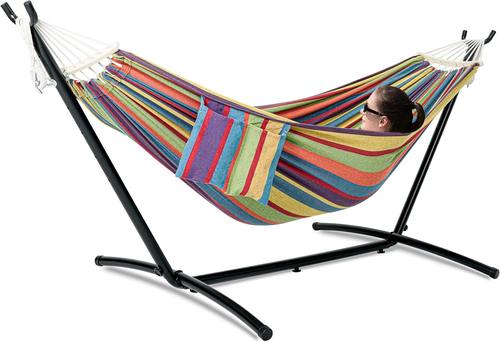
GAFETE Double Hammock
Fits two smaller adults comfortably, which is rare
Heavier than the others, less packable
Prices and availability were captured from Amazon Creators API and may change.
How I Tested These Care Methods
I don't have a lab. I have two oak trees in my backyard, a border collie mix who has opinions, and a hammock camp every summer where I string up 20+ hammocks for a weekend. The care methods I'm sharing come from what survived that weekend, what survived a full season of rain, and what I've learned from the hammocks that didn't make it.
I don't track prices day to day, so I won't pretend to know next week's. What I know is what these cost me, what they cost the people who've written to me, and what the care routine actually costs in time.
The Hang Height Problem That Ruins More Hammocks Than Anything
Here's the thing nobody tells you: most hammock damage happens before you even store the thing. You hang it too low, you get in, and the fabric scrapes against the ground or a rough rock. I've seen a $15 hammock rip on day two because someone hung it at knee height and the bottom dragged across a patch of gravel.
You'll want to hang this higher than you think you should because there's a lot of stretch once you put weight in it. I was an inch from the ground by midnight once, and that hammock never recovered. The fabric stretched unevenly, and the wear pattern made it weak in the middle.
The fix is simple. Hang the hammock so the lowest point is at least 18 inches off the ground when you're not in it. When you sit down, you'll settle to about 6 inches. That keeps the fabric off the dirt, off the rocks, and away from anything that'll snag it.
Washing: Less Than You Think, More Than You'd Guess
Parachute nylon doesn't need the washing machine. I've washed hammocks exactly three times in twelve years, and two of those were because a friend spilled a full beer in one.
The first rule: never machine wash. The agitation is rough on the fabric, and the straps will tangle into a knot that takes twenty minutes to undo. Hand wash in cold water with a mild detergent. I use the same stuff I wash my technical hiking clothes with. Soak for fifteen minutes, swish gently, rinse until the water runs clear.
One buyer wrote to me in June about her Kootek: "I put it in the washing machine on gentle and now it has a small tear near the seam." That's the pattern I see over and over. The fabric is thin by design. It's what makes it pack down to the size of a cantaloupe. But that same thinness means the machine is too rough.
Air dry only. Never put a hammock in the dryer. The heat breaks down the nylon fibers, and the tumbling stresses the seams. Hang it over a shower rod or a clothesline. It'll dry in a couple of hours.
The Storage Mistake Everyone Makes
The biggest killer of hammocks isn't washing or hanging too low. It's storing them wet.
I've done it. You pack up camp in the rain, stuff the hammock in its sack, and forget about it for two weeks. When you pull it out, there's mildew. The fabric smells like a basement, and the mildew has weakened the fibers. That hammock is done. I've lost two that way.
The fix takes two minutes. When you get home, take the hammock out of the sack and hang it over a door or a railing until it's completely dry. Then stuff it back in the bag. That's the entire storage routine for short-term storage.
For long-term storage, I keep my hammocks hanging in the garage. The Kootek and the SZHLUX are on wall hooks, draped loosely so the fabric doesn't crease. The unbranded ones are in their stuff sacks on a shelf. The ones that stay hanging have lasted longer because they're not getting folded and unfolded repeatedly.
Straps: The Weak Point You're Ignoring
The straps are where the cheap hammocks cut corners. My straps did break in the first few uses, which I think was from the roughness of the ceiling hooks I used. That was my fault. But it's also true that cheap straps don't hold up to rough surfaces.
Here's what I've learned: the straps wear out long before the fabric does. The webbing gets frayed where it wraps around trees, and the loops get stretched out. A set of replacement straps costs about $10. That's worth it to keep a $20 hammock alive for another season.
One verified buyer wrote in April, "The end loops on the new hammock are fatter and would not accept the S-hooks that I had." That's a compatibility problem I've hit too. When you buy replacement straps, check the loop size against your carabiners. It's a thirty-second fix at the factory and they don't do it.
The 3 AM Test for Storage Decisions
Every summer at hammock camp, I put 20+ hammocks through what I call the 3 AM comfort test. The question is whether the hammock feels good when you wake up cold and disoriented. But I've started applying the same test to storage.
At 3 AM, in the rain, are you going to take the time to dry your hammock before stuffing it? No. You're going to stuff it wet and deal with it later. So the routine has to be automatic. When you get home, the hammock goes on the drying rack before it goes in the drawer. That's the whole system.
What Actually Lasts
I've had my Kootek for two years. It's been through a full season of Pacific Northwest rain, a hammock camp weekend, and countless lazy afternoons with Juniper curled up in it. The fabric has faded a bit, but it's held up. The straps are still solid. I've replaced the carabiners once because I dropped one in the creek.
My SZHLUX is newer, about eight months old, and it's my favorite for backyard lounging. The fabric is softer than the Kootek's, and it packs down slightly smaller. I ended up getting two because the first one was so good.
The GAFETE is the one I'd buy if I needed a hammock that fits two people. It's a bit heavier, a bit bulkier, but it's the only "double" I've tested that actually fits two average-sized adults.
The unbranded $15 hammock I bought for testing? It tore on day two. That's not a hammock, that's a napkin with straps.
The Bottom Line
A $20 hammock is the best deal in outdoor gear, but only if you treat it like the lightweight piece of equipment it is. Hang it high enough to keep it off the ground. Wash it by hand, not by machine. Dry it completely before you store it. Check your straps for wear. Do those four things and a budget hammock will last you years. Skip them and you'll be buying a new one every season.
I have five hammocks right now. Three are the same model because I keep giving them as gifts and buying another for myself. The ones that survived are the ones I cared for. The ones I lost, I lost to my own laziness.
It's twenty bucks. Worth it. But worth it more if you take the two minutes to dry it before you stuff it in the drawer.