Related: Hammock Hang Angle: Why 30 Degrees Is the Sweet Spot
I hang more than twenty hammocks in a single weekend every summer, then sleep in a different one each night to see which ones I would still trust at 3 AM. The verdict is always the same. The hammock matters, but the hammock bug net and suspension straps matter more than most people expect, and the small repair kit at the bottom of the pack matters most of all on the night something springs a leak. What follows is the short list of add-ons I keep coming back to, and the reasoning behind each one.
One thing before the list. A hammock is a geometry problem. If the hang angle is wrong, no fabric, no brand, and no price tag will save your night. Fix the geometry first. Then add the pieces below.
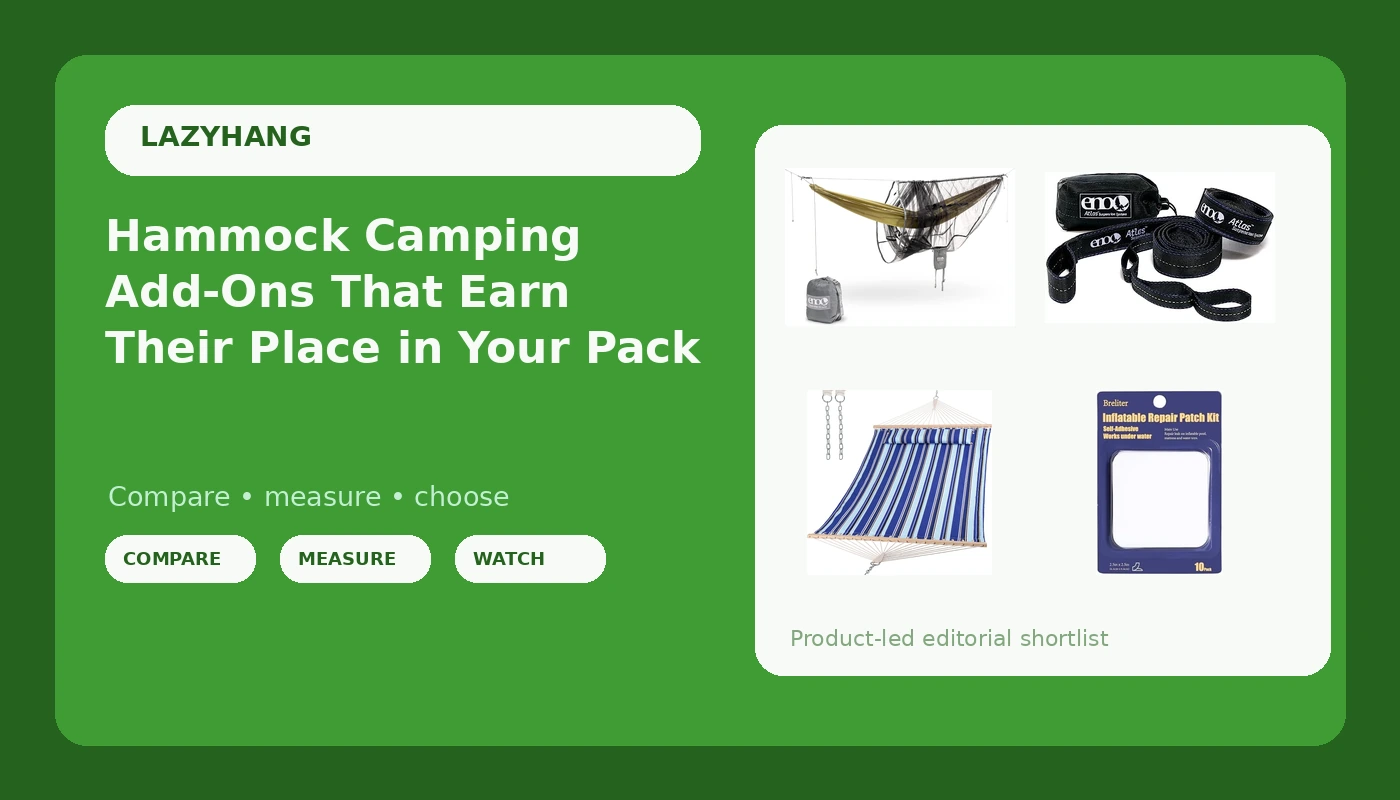
Best Backyard Hammock: SUNCREAT Quilted Fabric Hammock
Some hammocks are camping gear. This one is furniture, and I mean that as a compliment. The SUNCREAT is a quilted fabric hammock with a stated capacity of 475 pounds, spreader bars that hold the bed open, and a blue stripe pattern that looks at home on a porch. You lie flat in it instead of folded into a banana, and the quilted fabric does not have the cold, slick feel of parachute nylon, so you can stretch out in shorts without that clammy first minute.
That flat lie is the whole point of spreader bars. On a gathered-end camping hammock you get flat by hanging at roughly 30 degrees and adding a structural ridgeline. On a spreader bar hammock the bars do that job for you. The tradeoff is real: you cannot hang it under a small tarp, you cannot dial in a ridgeline, and you are not carrying it into the backcountry. It wants a stand or two solid trees spaced well apart.
For a yard, a deck, or a rental with a good tree, that is the right set of compromises. It is the hammock guests ask about, and the one that makes an afternoon disappear.
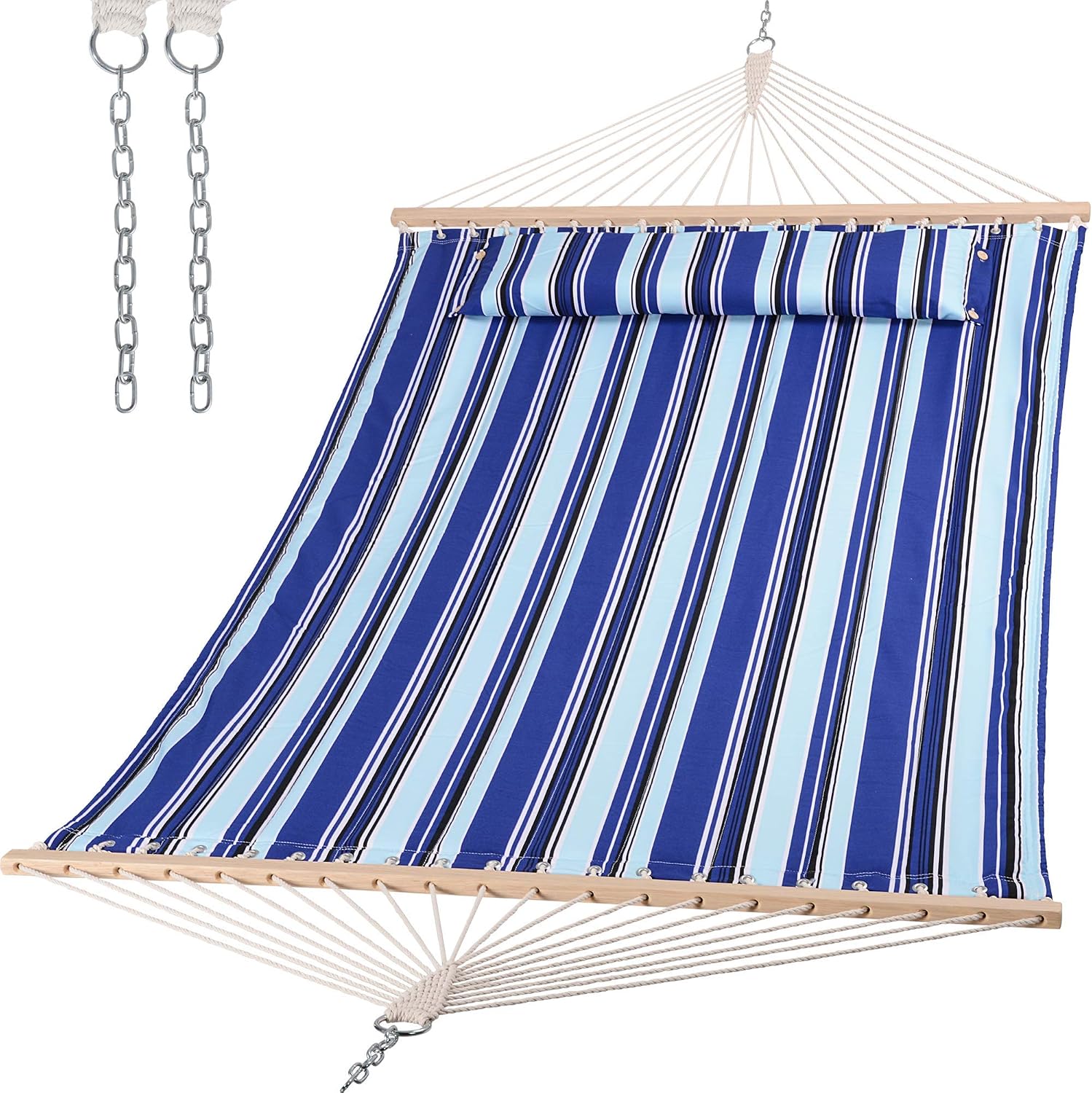
Best Bug Net: ENO Guardian SL Bug Net
A bug net is not an accessory. It is the difference between camping and surviving, and anyone who has spent a July night in the Appalachians knows exactly what I mean. The ENO Guardian SL is a separate net that hangs on its own ridgeline over a gathered-end hammock, which is the design I prefer. A net built into the hammock is convenient, but it also means the net is the thing that fails first, and you cannot leave it home on a dry, bug-free trip.
The detail I check before anything else is the zipper. A net that only opens from the inside is a trap, and I have watched people wake up and fight one at 6 AM. You want a net you can open from outside, positioned so you are not doing gymnastics to get in and out. The Guardian SL hangs over the hammock rather than wrapping around your face, and that matters more than any spec sheet number.
It packs small, which is the other thing I care about. A bug net that eats a third of your pack is a bug net you will leave at home. This one disappears into a side pocket.
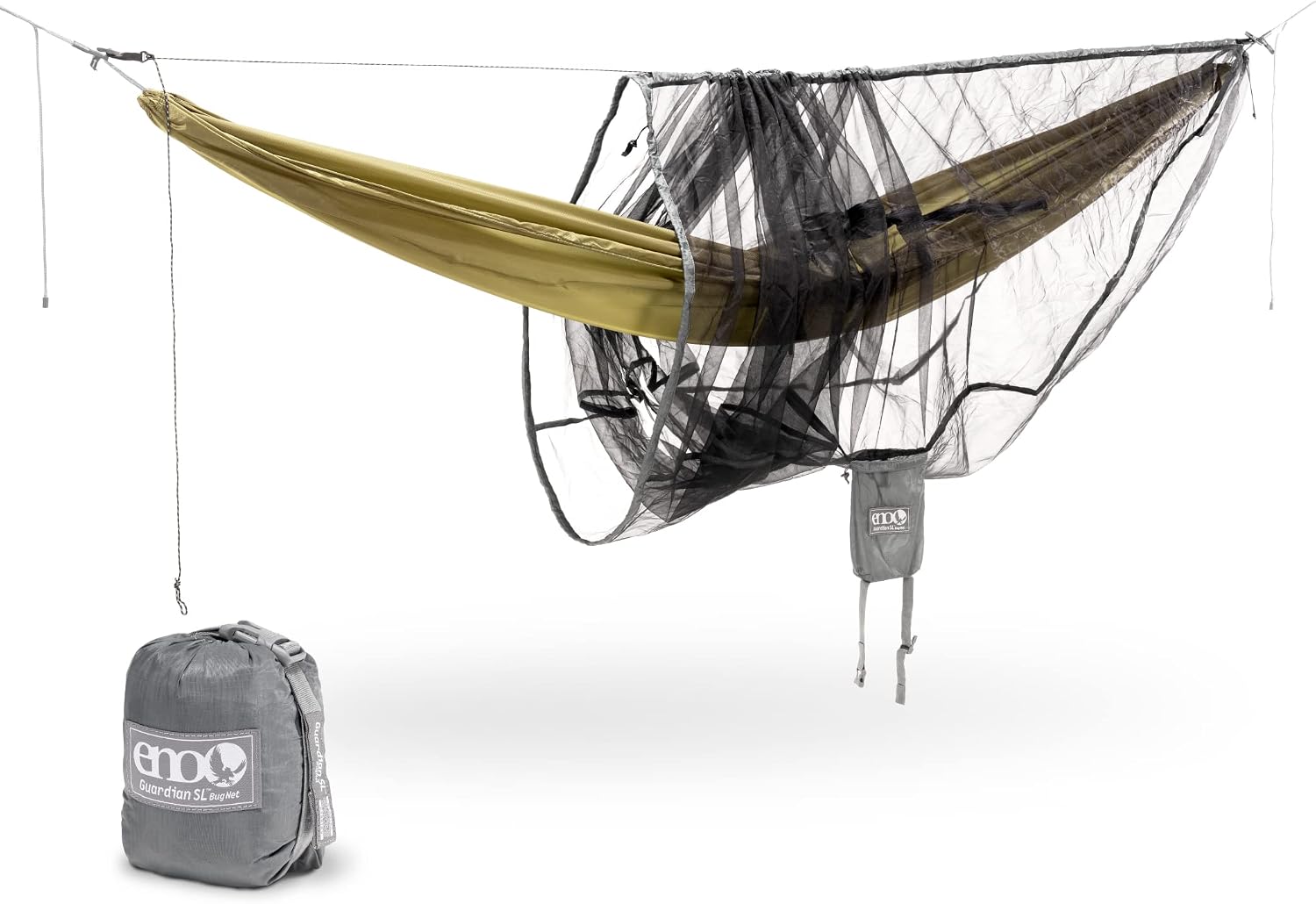
Best Suspension: ENO Atlas Suspension System
I will say this as plainly as I can. The straps matter more than the hammock. Rope kills trees, rope stretches, and rope will fail you at 3 AM when the temperature drops and the bark starts to slip. The ENO Atlas Suspension System is the daisy chain style strap setup I keep coming back to, and it solves two problems at once.
First, the loops. Instead of tying knots or hunting for the right wrap, you clip into a loop and you are done. Adjusting the hang angle takes seconds, which matters because I re-hang a hammock three or four times before I am happy with the sag. Second, the webbing. Wide webbing spreads the load across the trunk instead of cutting into the cambium layer, and if you hang in the same spot every summer, that difference shows up after a decade.
I do not make tree safety claims without checking the strap width, and I would rather have more webbing than less. Pair these with a hammock that has a proper ridgeline and you have a system that sets up fast and does not move.
Best Repair Kit for the Bottom of the Pack: Breliter Inflatable Patch Repair Kit
Nobody plans to use a patch kit. That is the point. The Breliter kit is ten waterproof TPU patches, each a 2.5 inch square, and it covers the failure points that ruin a trip: a pinhole in an air mattress, a puncture in an inflatable pad, a leak in a dry bag, a tear in a stuff sack. It weighs almost nothing and it lives in the repair pouch with the tape and the spare cord.
The reason I carry patches instead of a single roll of tape is simple. When something leaks at night, you want to fix it once, in the dark, without cutting. Peel, press, done. A square patch on a pad seam is faster than any field repair I have tried, and the adhesive backing means you are not hunting for scissors.
This is the least exciting item on this list and the one I have been most grateful for.
How I tested
Every piece of gear I write about gets the same treatment: two nights minimum, hung at roughly 30 degrees, with a sag check before I get in and another at 3 AM. I do not review hammocks or add-ons from a chair in a showroom. I sleep in them, in the rain when I can arrange it, and I note what changed overnight.
For nets, the test is whether the mesh stays off my face and whether the zipper still works after a humid night. For straps, it is whether the hang angle holds after the trees take on moisture and whether the bark underneath is intact the next morning. For a repair kit, it is whether the patch holds through a temperature swing.
Analysis and test results
Across every hammock setup I have hung, four things separate the good nights from the bad ones.
The hang angle. Thirty degrees is the sweet spot, and everything downstream depends on it. Too flat and you slide toward the middle. Too steep and you fold like a taco. A daisy chain strap system makes the adjustment fast enough that you will actually do it instead of settling.
The fabric. Parachute nylon is fine for a backyard. Quilted fabric is warmer against the skin and does not stretch the same way overnight. Neither is better in the abstract, they are different tools for different hangs, and the SUNCREAT makes the backyard case convincingly.
The net. Mesh quality is the difference between a net you forget about and a net you fight. The design detail that matters most is where the opening sits and which side it opens from. Get that wrong and every trip becomes a wrestling match.
The small stuff. A patch kit, a spare strap, a bit of cord. None of it is glamorous, all of it is the reason a trip ends on schedule. The Breliter kit is the cheapest insurance in my pack, and I have used it on a sleeping pad in a shelter and on an inflatable pillow at a campsite in Pisgah.
The hammock add-on reference table
This is the table I keep in my notes, and it is the same one I use when I am helping someone build a setup from scratch. Match the item to the job, then go hang it.
| Item | Where it earns its keep | What I check first | Notes |
|---|---|---|---|
 Visit on Amazon → SUNCREAT Quilted Fabric Hammock |
Backyard, porch, patio | Stated 475 lb capacity, quilted bed, spreader bars | Flat lie without a ridgeline |
 Visit on Amazon → ENO Guardian SL Bug Net |
Anywhere with mosquitoes | Zipper access from outside, mesh off the face | Packs into a side pocket |
 Visit on Amazon → ENO Atlas Suspension System |
Every hang | Strap width, daisy chain loops | Fast hang angle adjustment |
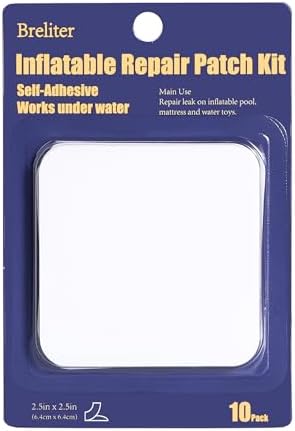 Visit on Amazon → Breliter Inflatable Patch Repair Kit |
Pads, dry bags, stuff sacks | Patch size and adhesive backing | Ten 2.5 inch squares |
A hammock is a system. The hammock is the center of it, the net and the straps are what make it sleepable, and the patch kit is what keeps a small failure from ending the trip. Buy the pieces in that order.
Should you buy the SUNCREAT Quilted Fabric Hammock?
Yes, if you have two trees or a stand and you want the hammock that actually gets used. The stated 475 pound capacity means two people can sit down without a negotiation, the quilted fabric is comfortable against bare skin, and the flat lie is what makes it a place to nap rather than a place to perch. It is not a backpacking hammock and it was never trying to be. If you want a camping setup, keep reading. If you want a Tuesday afternoon to disappear, this is the one.
Should you buy the ENO Guardian SL Bug Net?
Yes, if you camp in a gathered-end hammock anywhere with mosquitoes. The separate ridgeline design keeps the mesh off your face, it packs small enough to live in your pack year round, and it does not force you to buy a whole new hammock to get protection. Check the zipper orientation before your first trip. That is the only thing that ever goes wrong with a net.
Should you buy the ENO Atlas Suspension System?
Yes. Straps are the part of a hammock setup where people try to save money and end up regretting it. The daisy chain loops make a 30 degree hang a two second adjustment instead of a knot tying exercise, and the webbing protects the trees you hang from. If you are still using the rope that came in the box, replace it before your next trip. That is not an opinion. It is the most common mistake I see at my summer hangs.
Should you buy the Breliter Inflatable Patch Repair Kit?
Yes, and then forget you own it until you need it. Ten waterproof TPU squares weigh next to nothing, they fix pads, dry bags, and stuff sacks, and they turn a trip ending leak into a five minute stop in the dark.