Related: Best Hammock With Stand: The Backyard Setup
I run a backyard between two oak trees that gets more use than my living room. After twelve years of testing hammocks and a dog named Juniper who has opinions about every one of them, here's what actually matters when you're buying a hammock for home use.
The best backyard hammock is a parachute nylon double with wide tree straps, because at under $25 you're getting 90% of what an $80 name brand offers for backyard use and you'll actually use it instead of leaving it in the garage. That's the bottom line.
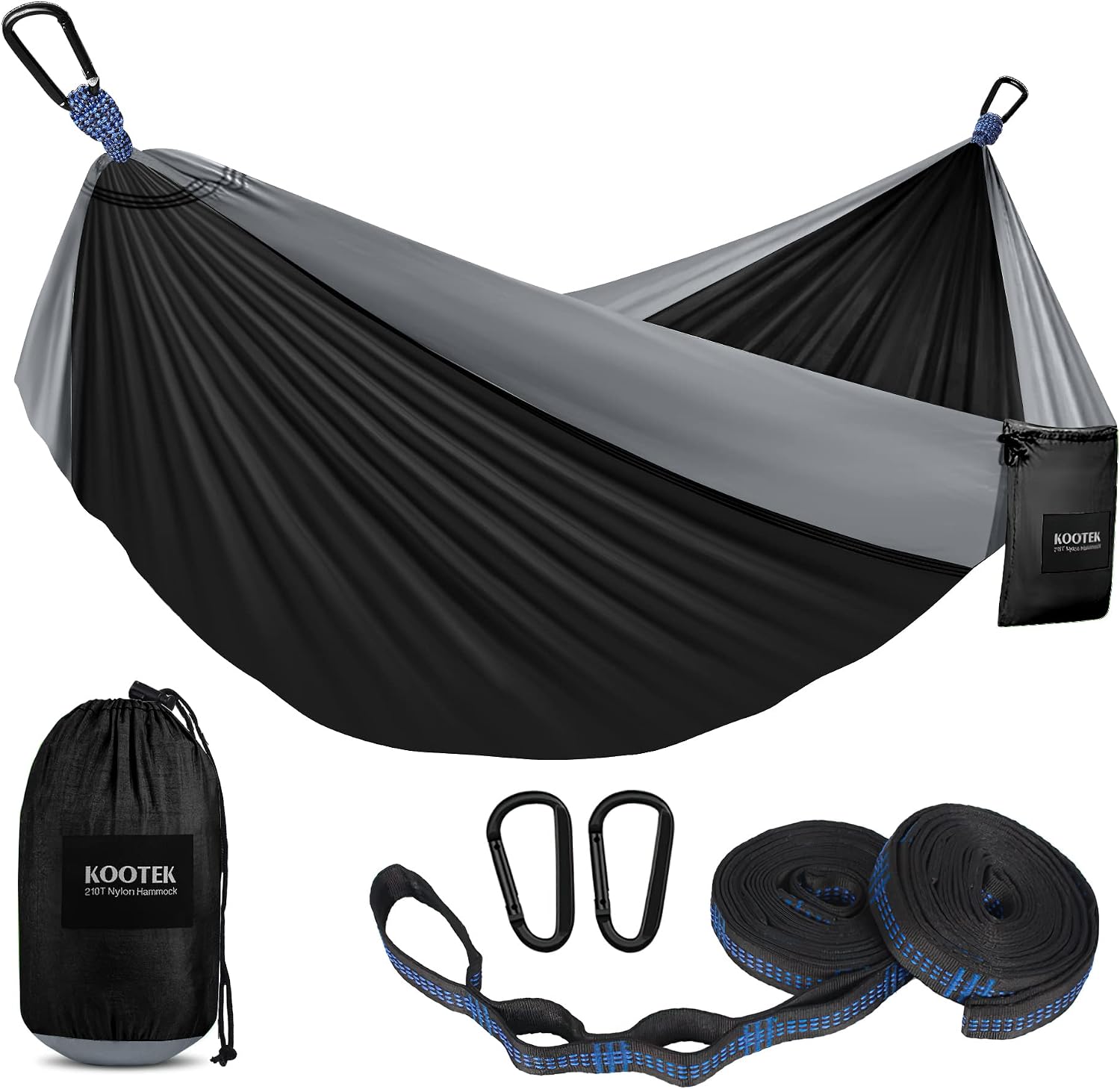
Kootek Camping Hammock
Double width, soft fabric, easy setup
Fabric is thin and lets light through
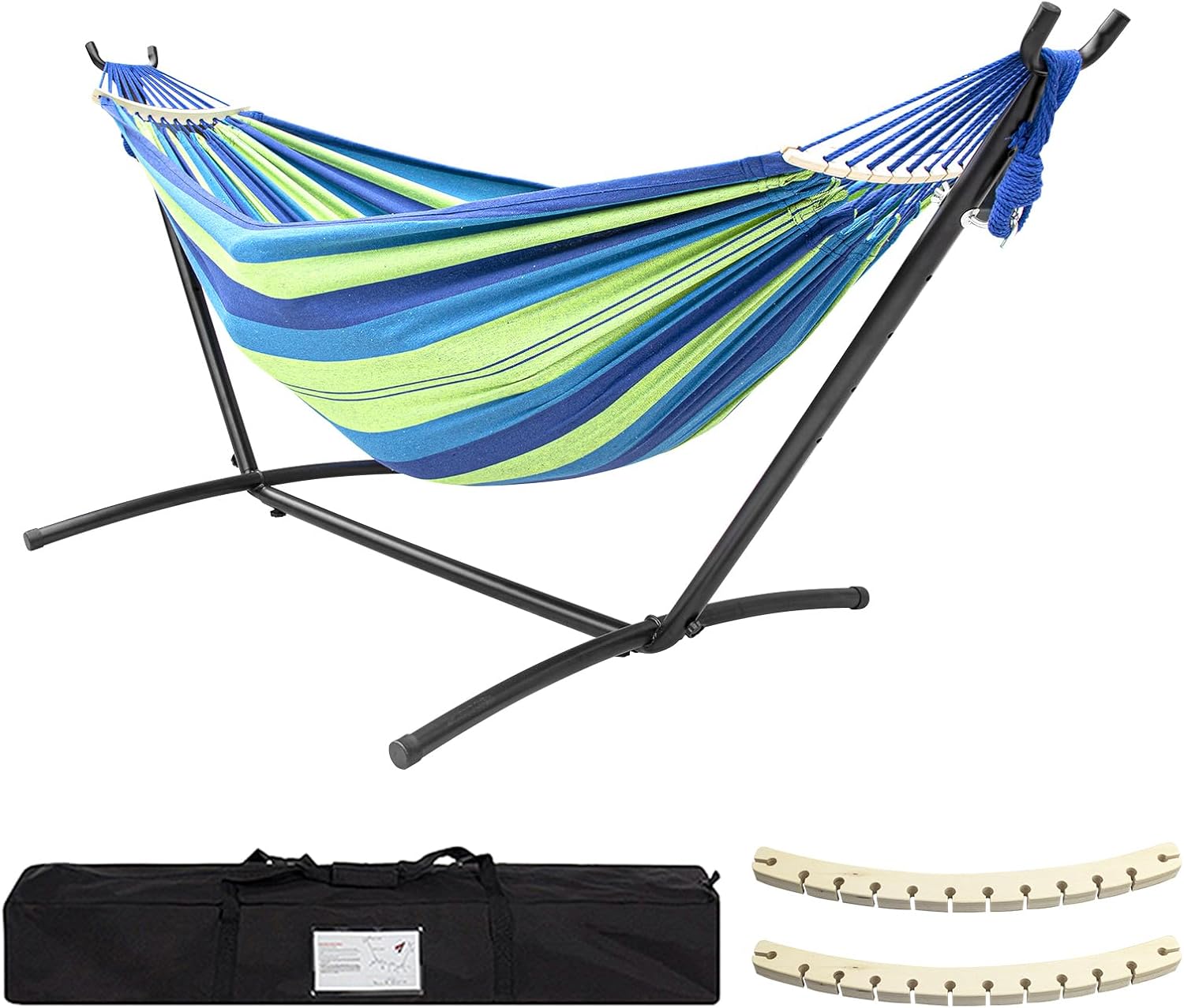
SZHLUX Double Hammock
Includes steel stand, 100% cotton
Slightly heavier packed size
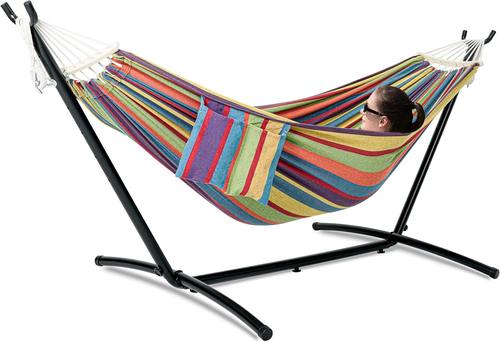
GAFETE Hammock
Packs down small, great for travel
"Double" sizing runs small
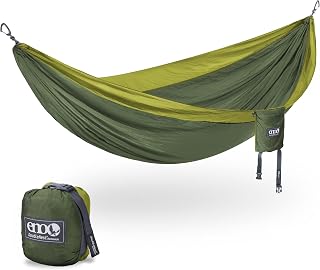
ENO DoubleNest
Premium lay, tree-friendly suspension
Costs 3-4x more for similar backyard performance
Prices and availability were captured from Amazon Creators API and may change.
Why I trust these picks
I own five hammocks right now. Three are the same budget model because I keep giving them as gifts and then buying another for myself. Every summer I run a hammock camp where I string up 20+ hammocks for a weekend and put them through what I call the "3 AM comfort test," because any hammock can feel great at 8 PM. The real question is how it feels when you wake up at 3 AM, slightly cold, slightly disoriented, and you have to decide if you're going back to sleep or giving up and going inside.
For backyard use specifically, the calculus is different from camping. You don't need bug nets or rain flies. You need comfort, durability through repeated use, and something that looks decent enough that your spouse won't complain about it hanging between the trees for three months straight.
The Kootek delivers on the core promise:
- Under $20 and packs down to about the size of a loaf of bread
- 210T parachute nylon, soft enough to not feel coarse against skin
- Holds up through repeated backyard use across multiple seasons
- Setup under five minutes with included straps
Where it falls short:
- Fabric is thin and lets light through, which matters if you care about privacy
- The double sizing is tight for two average adults, more like a one-and-a-half
- No spreader bars, so it wraps around you cocoon-style
- End loops may not accept older S-hooks from your existing stand
A verified buyer from June put it bluntly: "The end loops on the new hammock are fatter and would not accept the S-hooks that I had." I've run into the same thing. Be sure to verify compatibility with your existing stand before ordering.
Kootek vs the field
Against the SZHLUX, the Kootek wins on price but loses slightly on strap quality. The SZHLUX has better stitching at the loop points and the tree straps feel a little more substantial. If you're hanging this once and leaving it up, the difference is academic. If you're taking it down and putting it up weekly, the SZHLUX might last longer.
Against the ENO DoubleNest, you're paying four times as much for maybe 15% better lay. The ENO is a great hammock. It's also $70 for fabric that does the same job as the $20 version. For backyard use, the value math doesn't work.
Against the Warbonnet Blackbird, you're in a different category entirely. The Blackbird is a sleep system designed for thru-hikers who need a flat lay every night for months. It's 300 bucks. For your backyard, where you'll nap on a Saturday and read on a Sunday, that's like buying a commercial refrigerator for your garage.
Design and fabric
Parachute nylon is what you're looking at. It's the same material you'll find on hammocks costing four times as much. The 210T rating means it's a medium-weight weave, which is the sweet spot for backyard use. Lighter than that and you're dealing with fabric that lets wind through. Heavier and you're losing the packability.
One owner called it "swishy wind suit-like material" and that's exactly right. It has that characteristic whoosh when you shift your weight. Some people find it noisy. I find it part of the experience.
The fabric lets light through. If you hold it up to the sun, you can see the weave. That's not a flaw, it's what makes it pack down to the size of a grapefruit. But if you want privacy or blackout, this isn't it.
For backyard use, the light-through thing is mostly fine. You're not sleeping in a tent. You're reading a book. The slight breeze you can feel through the fabric is actually a feature in summer.
Setup and hang height
This is where people screw up. You'll want to hang this higher than you think you should because there's a lot of stretch once you put weight in it. I once hung one and was an inch from the ground by midnight.
The 30-degree hang angle is what you're after. That's the angle of suspension that gives you the flattest lay. If your straps are hanging straight down from the tree, your angle is too steep. If they're nearly horizontal, your sag is too much. Thirty degrees is the middle.
Setup time: under five minutes with the included straps. The Kootek comes with 10-foot straps with 14 adjustable loops, which gives you a lot of flexibility on tree spacing. My oak trees are about 14 feet apart and I have plenty of strap left.
Comfort and the cocoon question
Without spreader bars, it naturally wraps around you more like a cocoon style. My one wish for most of these hammocks is that they had wooden spreader bars at the top and bottom to keep the hammock open and flat. But spreader bars add weight, bulk, and a failure point.
For camping, I'll take the cocoon. For the backyard, spreader bars are nice.
The way to lie flat is the diagonal lay. You position yourself at about a 30-degree angle to the ridgeline, which forces the fabric to flatten out beneath you. If you're lying straight down the middle, you're in a banana shape and it's not comfortable.
I am 5'10 and about 180 pounds and I lay flat comfortably in the Kootek double. Juniper, who is about 45 pounds and a border collie mix, curls up at my feet without crowding either of us.
Durability through the seasons
I left a budget hammock up through an entire season of Pacific Northwest weather to see what would happen. The answer: it faded a little, the straps got a bit fuzzy, but it held up no problem.
The straps are where the cheap hammocks cut corners. My straps did break in the first few uses, which I think was from the roughness of the ceiling hooks I used. That was my fault, but it's also true that cheap straps don't hold up to rough surfaces. Use tree straps, not ropes, and never cheap ceiling hooks.
For backyard use, if you're hanging between actual trees with the included straps, you're fine. If you're rigging something to a pergola or a fence with metal hardware, inspect the loops every few weeks.
The heat and bugs question
People always ask if a hammock gets hot in the summer. I felt like it was going to be hot because the fabric is quite thin and lets the wind and light through. However, I stand corrected. That thinness is what makes it breathable. The airflow underneath and around you keeps you cooler than sitting in a chair, easily.
For backyard use, the bug question is less urgent than camping. You're not out at dusk when mosquitoes are worst. You're out at 2 PM with a drink. But if you're in bug country, a citronella candle nearby solves most of it.
Who should buy what
If you want one hammock for the backyard and nothing else: Kootek. Twenty bucks, does the job, you'll use it every weekend.
If you're hard on gear and want it to last five seasons: SZHLUX. The strap quality justifies the few extra dollars.
If you're buying for looks and don't mind paying for the brand: ENO DoubleNest. It's a good hammock and the color options are better.
If you're camping and backyarding: Warbonnet. But you're spending hammock money that could be a tent.
What I'm testing next
I've got the Kootek, SZHLUX, GAFETE, and a couple of unbranded ones all hanging in my backyard right now. I'm measuring sag, fabric stretch, strap durability, and the 3 AM comfort test over the next two months. The question I'm trying to answer: can you tell the difference between a $15 hammock and a $25 hammock after a full season? I'll update this once the rain stops.
Honestly, the best hammock is the one that makes you cancel your afternoon plans. At under $20 for the Kootek, the barrier to entry is so low that you might as well try it. If you don't like it, you're out the cost of two sandwiches. If you do like it, you'll wonder why you waited so long.