I hung my first hammock between two pines behind a rented cabin in 2014, woke up at 3 AM shaped like a banana with a numb left arm, and spent the next twelve years figuring out why. These days I run a hammock camp every summer where 20-plus hammocks go up for a weekend and I measure sag angle, fabric stretch, and the only metric that has ever mattered to me: whether I sleep through the night. This camping hammock comparison is built around that test, not around listing copy.
The best camping hammock in this group for most people is the Sunyear Camping Hammock, because it is the one here that ships with an integrated bug net and two 10-foot straps, which covers the two failures that ruin a night outdoors: insects and bad suspension. If you expect weather, the rain fly set is the only one of the four that deals with rain. If you want a hammock for afternoons, festivals, and the backyard, the SUNCREAT double is the fun one.
None of these four is a boutique build. They sit in the entry-to-mid range, and three of them are parachute nylon, which is exactly the fabric you want at this tier: cheap, packable, and strong enough when the suspension is right. What separates them is not thread count. It is what shows up in the box.
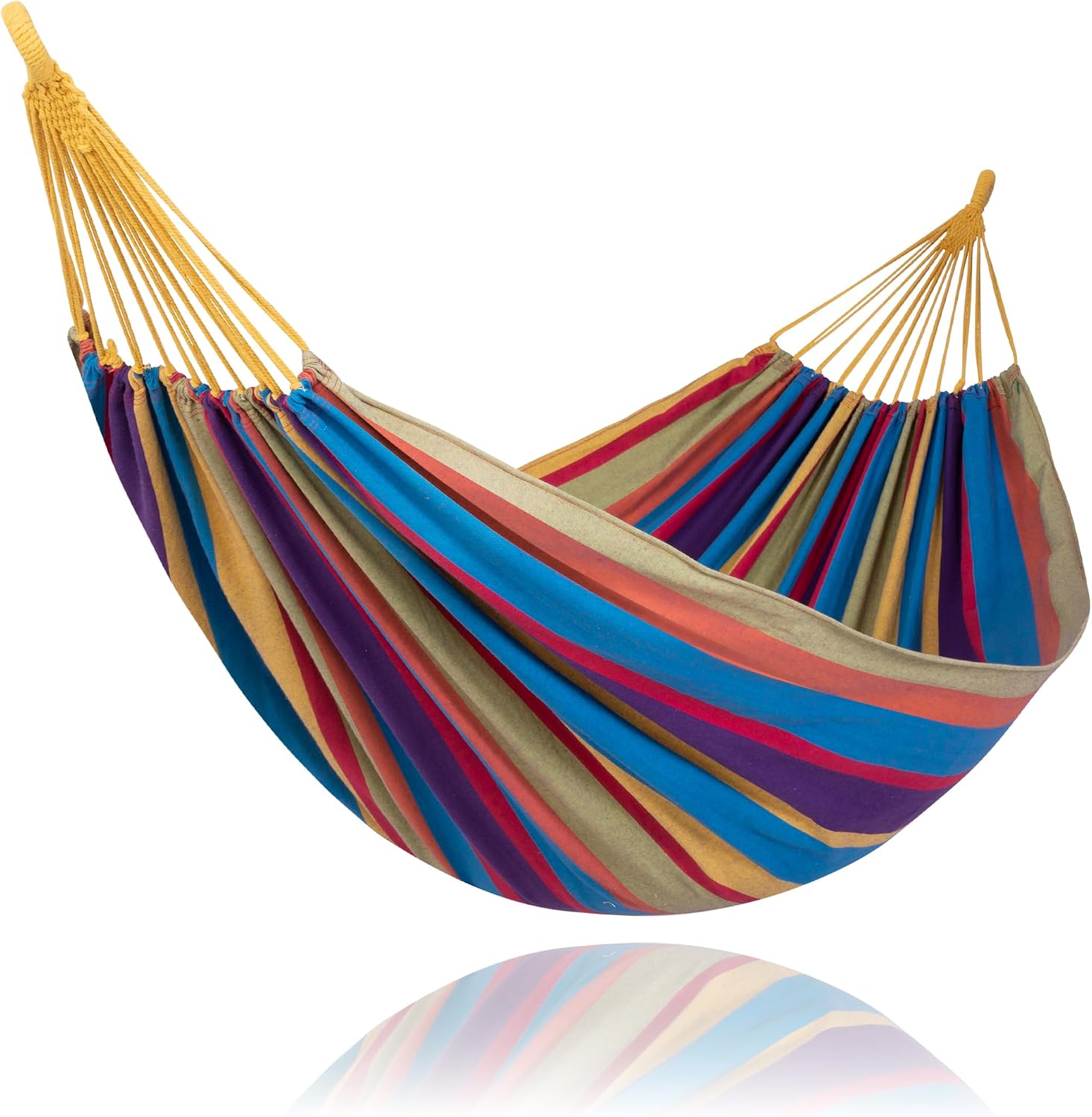
SUNCREAT Outdoor Double Hammock, Portable Tree Colorful Hammock, Colorful Stripes
Roomiest body of the group, striped fabric that makes it the one people grab for a lazy afternoon
Listing shows no bug net, no rain fly, and no ridgeline, so it is a fair-weather hammock
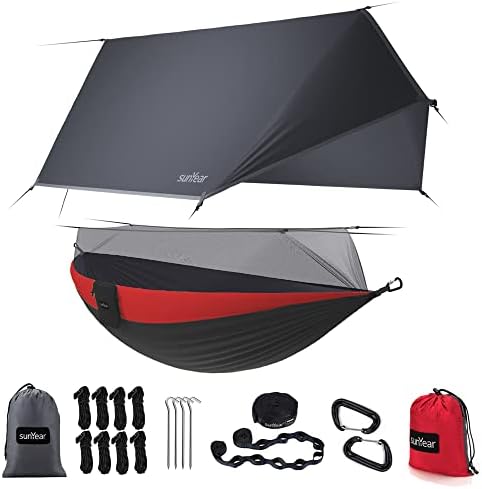
Sunyear Camping Hammock, Portable Single & Double Hammock with Net, 2 Person Hammock Tent with 2 * 10ft Straps, Best for Outdoor Hiking Survival Travel
Integrated bug net plus two 10-foot straps, which is the combination that actually gets you through a night
No rain fly in the box, so a tarp is still on you
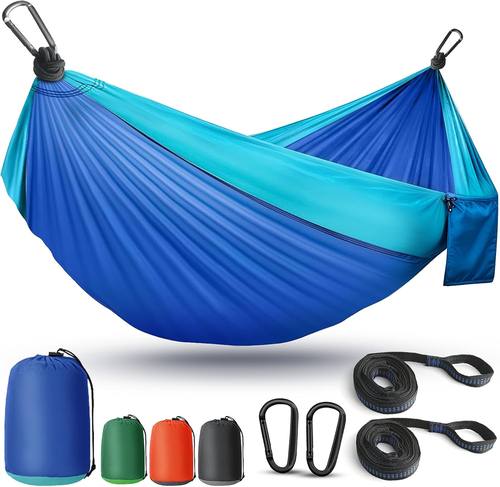
Camping Hammock Lightweight, Portable Hammocks Parachute Hammock with Two Tree Straps, Single or Double Travel Swing Nylon Camp Hammocks, Outdoor Essentials for Beach Backpacking Hiking, Blue
Lightest and most packable of the four, with two straps included, so it disappears into a daypack
Single-or-double sizing means it is a generous single and a tight double, and strap width is not spelled out
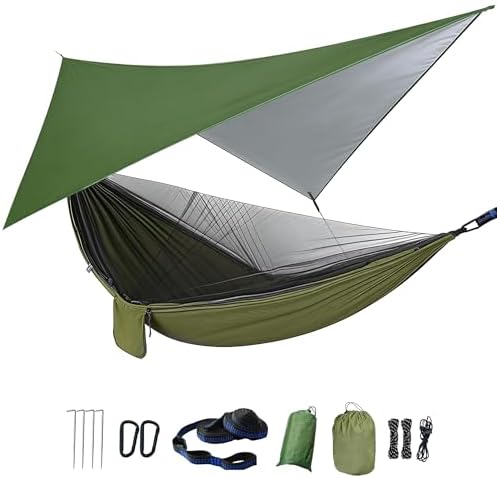
Camping Hammock with Rain Fly Tarp Mosquito Net Heavy Duty Tree Straps Portable Double Parachute Hammock Tent Waterproof Rainfly Set 660lbs Maximum Weight
Only complete weather system here: rain fly, mosquito net, and heavy duty straps with a 660 lb listed maximum
More parts to pack and pitch, and a full set rewards patience on the first hang
Prices and availability were captured from Amazon Creators API and may change.
How I judge a hammock
A hammock is a geometry problem. If the hang angle is wrong, no fabric quality saves you, and a $300 system hung badly sleeps worse than a $20 one hung right. So I start every evaluation the same way: show me the suspension, then we talk about the body.
Three things decide whether you sleep or just lie there. The hang angle, which should sit near 30 degrees so you lie closer to flat instead of curled in a banana. The suspension, which should be wide, flat webbing rather than rope, both because rope chews bark and because rope stretches and slips under load. And the fabric's behavior overnight, because nylon that feels taut at 9 PM can have you sagging toward the ground by 2 AM.
The 3 AM test is simple. I wake up, and I ask one question: do I know where my feet are? If the answer is no, the hammock is a chair pretending to be a bed. Everything I recommend has to survive that question.
None of these four listings mentions a structural ridgeline, the cord that locks your sag so you hang the same way every time. That is the single cheapest upgrade you can add to any of them, and it is the first thing I would buy after the hammock itself.
SUNCREAT Outdoor Double Hammock: the one you will actually use on a Saturday
The SUNCREAT is the largest body in this group and the least serious, and I mean that as a compliment. It is a double-width parachute hammock in colorful stripes, built for a tree in the yard, a festival, a lake afternoon, or a spot by a fire. The striped fabric is the reason it gets picked up more than the plain ones, because a hammock that looks inviting gets used.
Where it earns its place: space. A double body means you can lie on the diagonal and get genuinely flat, which is the trick most people never learn on a narrow single. That diagonal lie is what makes a hammock comfortable at all, and you need width to do it.
Where it loses: the listing covers the hammock, and that is it. No bug net, no rain fly, no ridgeline. Take it camping in the Southeast in July and you will be the person slapping their own face at midnight. Budget for a separate tarp and a separate net if you plan to sleep in it outside the yard, and check whether suspension is included before you assume it is.
Sunyear Camping Hammock: the netted option that covers the basics
The Sunyear is the pick I would hand to a first-time hammock camper, because it solves two problems in one box. First, an integrated bug net, which means no separate net to rig, no gaps at the ends, and no zipper hunting in the dark. Second, two 10-foot straps, which are longer than the trees you think you will find and short enough to pack.
Ten-foot straps matter more than people expect. A lot of hammock grief comes from straps that are too short for a real trunk, forcing you to either hang at a bad angle or risk a dead branch. Longer straps buy you choices.
It is listed as a single and double with a two-person tent framing, and I will be honest about that language the way I am about all of it: a hammock that says two people is a comfortable one person and a cozy two, and cozy means you had better like the other person and their sleeping position.
Where it loses: no rain fly. A bug net solves June. It does nothing for a 4 AM shower, and I have learned that lesson the damp way. If you buy this one, pair it with a tarp and learn a basic diamond pitch before your trip.
The lightweight parachute hammock: the one that lives in your pack
This blue parachute hammock is the lightest and most packable of the four, and it comes with two tree straps, which puts it ahead of most hammocks at its tier. If your goal is backpacking, beach days, and a hammock that rides in the bottom of a pack without you noticing, this is the shape you want: nylon body, compact stuff, minimal hardware.
The single-or-double framing is the part to read carefully. In practice these convertible bodies are a roomy single and a snug double, and if you are taller than about six feet, plan on the diagonal lie and check the listed dimensions before you commit.
The honest caveat is the straps. The listing says two tree straps, and it does not spell out the width. Width is the whole ballgame for tree safety and for comfort, because a wide flat strap spreads load without biting bark and holds position without slipping. If the straps that arrive are narrow, replace them with two-inch webbing. That is a small purchase that protects the trees you hang from and keeps you off the ground.
The rain fly set: the only complete camping system here
This is the one that behaves like an actual sleep system rather than a hammock. Rain fly tarp, mosquito net, heavy duty tree straps, double parachute body, and a listed 660 lb maximum weight. Weather protection and insect protection in the same package is the line between camping and surviving, and this set is on the right side of it.
Two things I care about in a rig like this. The tarp has to be big enough and pitched to shed water past the hammock body, not onto it, and it has to have enough coverage that wind-driven rain does not find the open end. And the net has to open and close from outside the hammock, because a net that only zips from inside means you are sealed in with whatever flew in with you. Check both before your first night.
The trade-off is complexity. More parts means more pitching, more lines to stake, and a first hang that takes longer than the others here. Do a full setup in the yard in daylight before you trust it in the rain at night. Once it is dialed, this is the one of the four I would take into actual weather.
The trade-offs nobody puts in the bullet points
Every hammock in this price band makes the same set of compromises somewhere, and knowing where they are is more useful than any spec sheet.
Suspension first. Rope in the box is a downgrade no matter how the rest of the hammock looks, and included rope is the most common way a cheap hammock fails you at 3 AM. Wide webbing, always. If a listing is vague about strap width, treat that as a to-do item, not a detail.
Second, stretch. Parachute nylon relaxes overnight, which is fine as long as you start with a slightly higher hang and a ridgeline to hold your angle. If your hammock sags like a banana no matter what you do, the fix is usually your hang angle, not the fabric.
Third, sizing honesty. A double is a comfortable one person. If two people plan to sleep, plan on a lot of contact and a shorter night.
Fourth, what is not included. Of these four, one has a net, one has a net and a fly, and two are just bodies. That is the real comparison. Everything else is color and pack size.
What to add to any of these
A structural ridgeline, so your sag is repeatable instead of eyeballed. Two-inch tree straps if your kit came with anything narrower. A tarp if your hammock does not include a fly, because rain does not care about your plans. And a pad or an underquilt, because the air under a hammock pulls warmth away all night and a sleeping bag alone will not save you below about 60 degrees.
Hang in the yard first. Every one of these, including the full rain fly set, deserves one daylight setup before it earns a night in the woods.
Bottom line
For camping, the Sunyear with its integrated net and 10-foot straps is the most complete single purchase here, and the rain fly set is the answer if you want protection from both bugs and weather in one order. The lightweight blue parachute hammock is the pack-and-go pick, provided you confirm the strap width. And the SUNCREAT double is the one I would hang for an afternoon with zero intention of sleeping outside, which is a legitimate use and probably the one you will get the most hours out of.
Test your hang, protect the trees, and fix your sag before you blame the hammock.