I have slept in more hammocks than beds, and I have the shoulder knots to prove it. When friends ask me to sort out the best double hammocks for a backyard, a campsite, or a rental with no trees at all, I do not answer with brand loyalty. I answer with geometry. Where will you hang it, how far apart are the anchor points, and what happens to the fabric at 3 AM when the temperature drops? Those three questions eliminate most of the market, and they explain why the four hammocks below are so different from each other.
Related: Hammock Sag Angle Explained: Why 30 Degrees Sleeps Flat
The short version: with two trees, the ANYOO Cotton Camping Hammock is the best value here, straps included and the highest weight capacity in the group. Without trees, the Amazon Basics Double Hammock with its 9-foot steel stand is the one that actually gets used. The other two are specialist picks, and by the end of this comparison you will know which specialist you are.
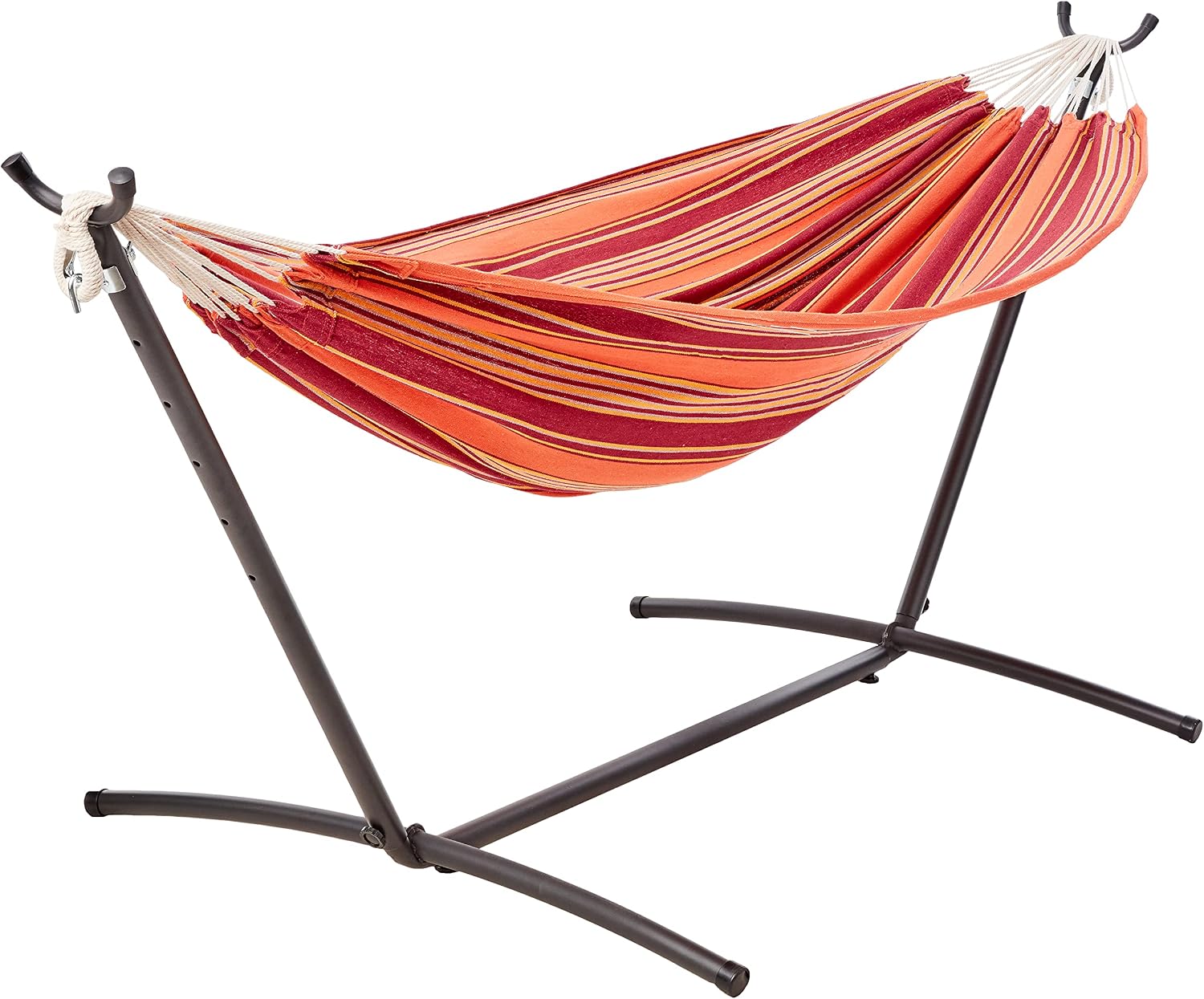
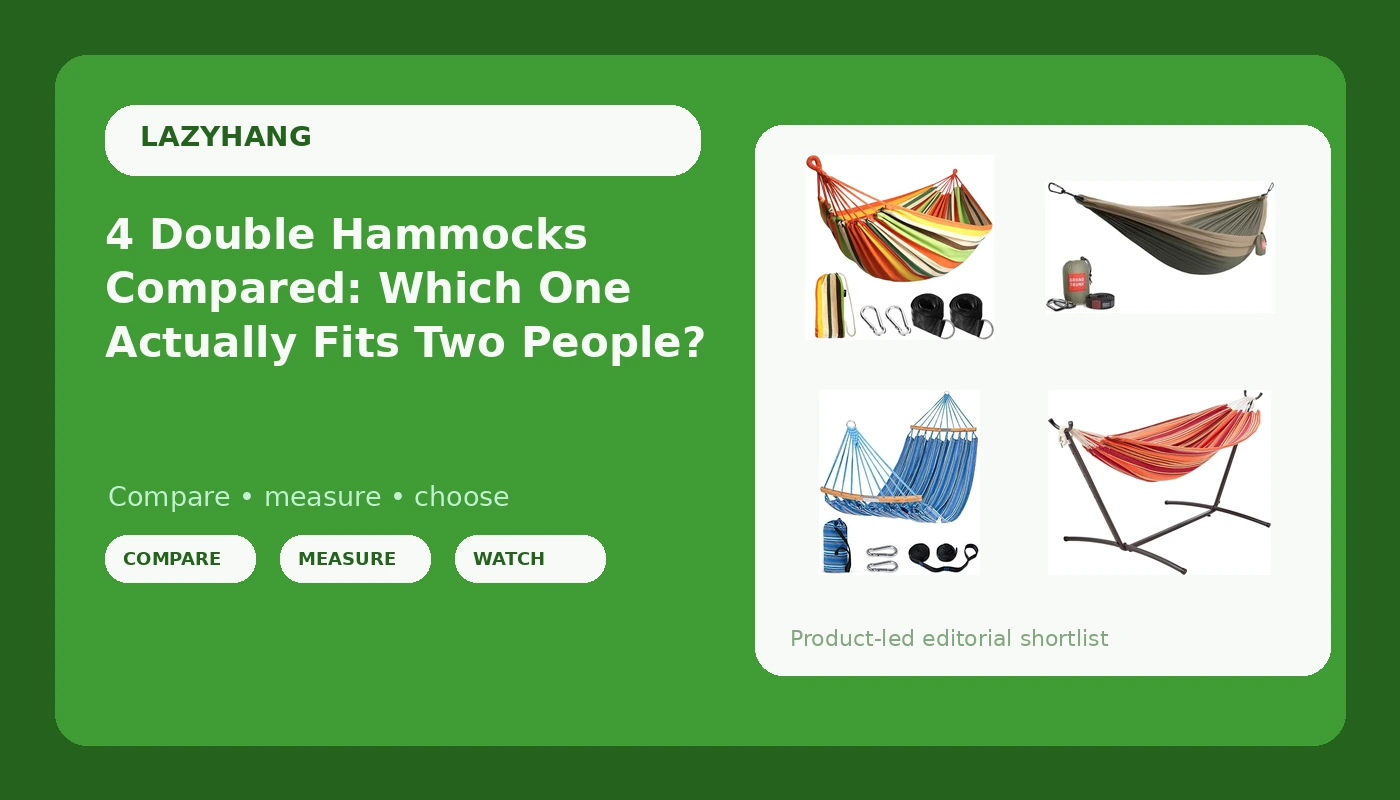
Amazon Basics Double Hammock with 9-Foot Steel Stand and Carrying Case
Hammock, stand, and carrying case in one box, so it works on a patio, a deck, or a rental yard with no trees
The 450 lb capacity is the lowest in this group, and a 9-foot steel stand is not going in a pack
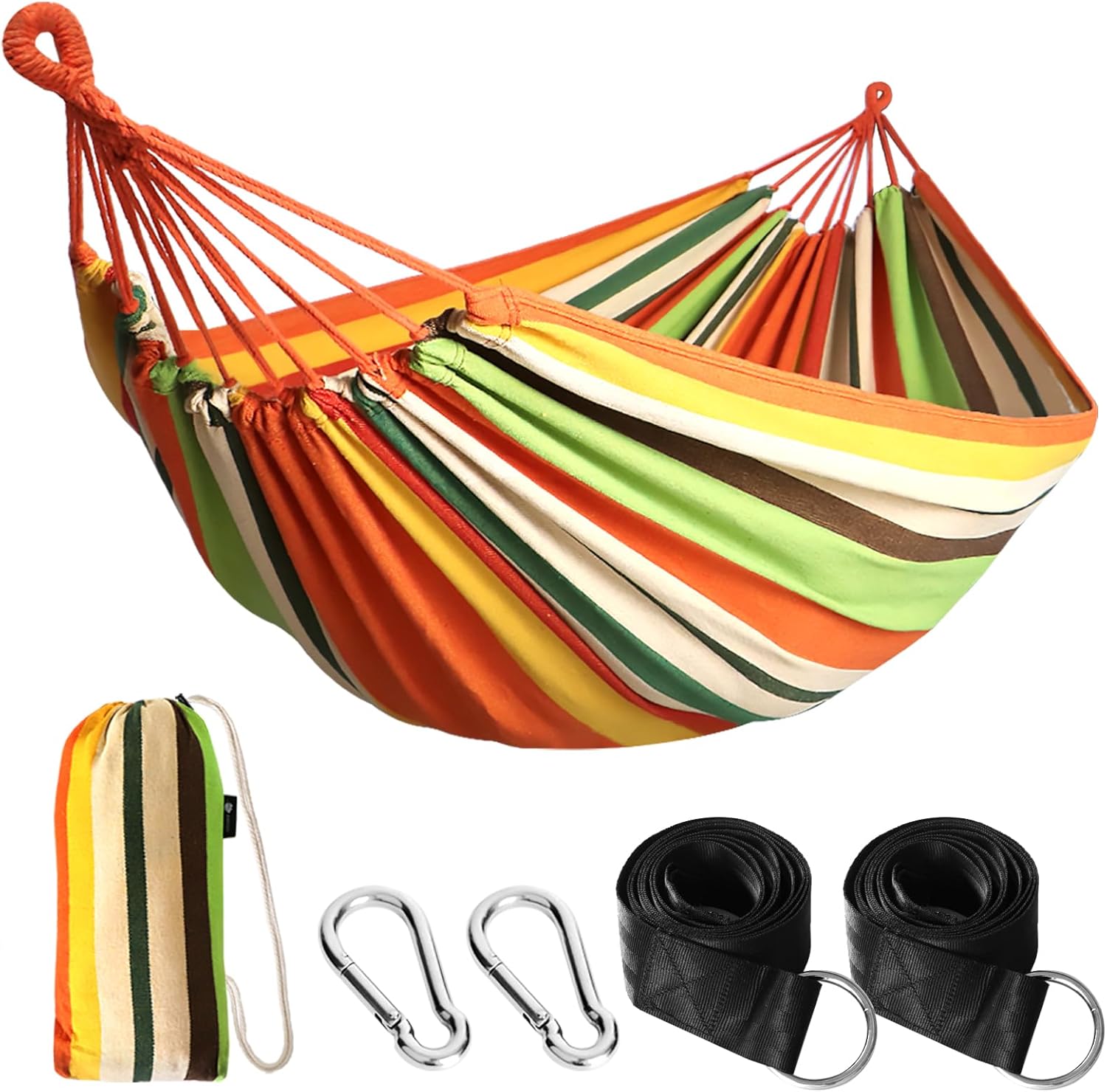
ANYOO Cotton Camping Hammock with Tree Straps
Cotton sleeps softer than parachute nylon, tree straps are included, and the 660 lb capacity is the highest here
Cotton holds water, so it is a fair-weather hammock, and there is no bug net or tarp in the box
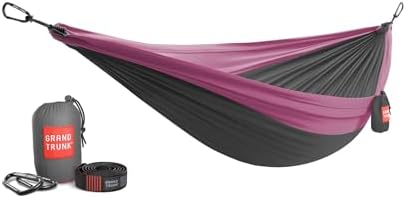
GRAND TRUNK Double Deluxe Hammock, 11 ft
The longest hammock in this comparison, which gives you room to hang flat instead of banana-curved
No stand and no straps in the box, and an 11-foot hammock needs its two anchor points further apart
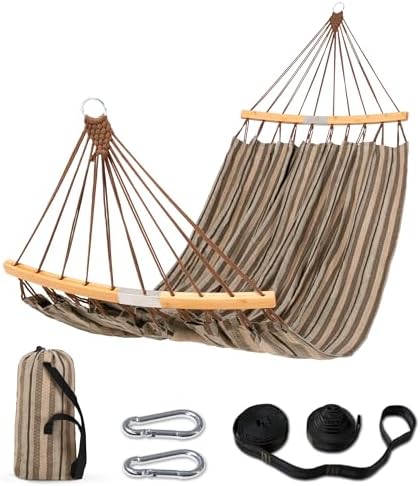
SUNCREAT Double Hammock with Curved Spreader Bar
The curved spreader bar holds the fabric open like a cot, so two people can sit and talk without sliding into each other
A spreader bar wants a stand or wide anchors, and it is a lounging design rather than a camping sleep system
Prices and availability were captured from Amazon Creators API and may change.
What I actually look at in a double hammock
A double hammock is not just a wider single. Width changes the geometry. More fabric means more sag for the same hang angle, and more sag means a banana curve unless you get the hang right. The three things I check first are the length of the hammock, the suspension that comes in the box, and what the fabric does when it gets damp.
Length matters more than width. A longer hammock lets you hang the ends higher and still lie flat, because the extra fabric absorbs the curve. A shorter hammock forces a tighter hang, which is fine for a nap and miserable for a night.
Suspension is the other half of the equation. Rope does not belong anywhere near a tree, and it does not belong in a hammock box either. Two-inch straps spread the load, protect the bark, and will not cut into you when the hammock shifts. If a hammock ships with rope, budget for straps on day one.
Fabric is the last variable. Parachute nylon is light, packs small, and dries fast. Cotton feels better against skin and breathes, but it holds water and it stretches over a long night. Neither is wrong. They are for different evenings.
Stand versus trees: the first decision
If you do not have two healthy trees the right distance apart, nothing else in this comparison matters. That is the case for the Amazon Basics Double Hammock, which arrives with a 9-foot space-saving steel stand and a carrying case, rated for two people at 450 lb. The hammock itself measures 110 by 47 inches, so it is a genuine two-person size rather than a single with delusions.
The reason I like this configuration for beginners is that it removes the two most common failure points: bad anchor points and bad hang angle. You build it once, you learn what a comfortable hang feels like, and you stop blaming the hammock. The 450 lb capacity is the lowest in this group, which matters if two large adults plan to share it, and a steel stand is a fairly permanent object. It lives on a deck or a patio. It does not go backpacking.
For a rental, a small yard, or a family that wants an afternoon nap option without touching a tree, this is the setup that gets used most.
The cotton outlier: ANYOO
Most inexpensive camping hammocks are parachute nylon, and most of them feel like it. The ANYOO Cotton Camping Hammock goes the other direction: cotton fabric, tree straps in the box, and a 660 lb capacity that is the highest number in this comparison. It is also the cheapest way into a hammock that comes with proper suspension rather than rope.
Cotton is the reason to choose it and the reason to be careful with it. It feels softer and less slick than nylon, which is why it makes such a good reading hammock. But cotton absorbs water, so this is a fair-weather hammock. If the forecast has rain in it, you want nylon and a tarp, not cotton. The straps in the box are the real value here, because straps are the part most people buy wrong. Given how much of the entry-level market still ships with rope, a hammock that includes tree-safe straps at this price is doing the right thing.
For a car camper who hangs between two trees at a drive-in site, this is the pick. For a backpacker counting grams, it is not.
Length is the quiet spec: GRAND TRUNK Double Deluxe
The GRAND TRUNK Double Deluxe is an 11-foot hammock, and that one number tells you most of what you need to know. Length is the spec that decides whether you sleep flat or curl up like a shrimp. An 11-foot hammock gives you enough fabric to hang at a relaxed angle and still lie diagonally, which is the whole trick to a flat lay.
The trade-off is that a longer hammock needs its anchor points further apart and higher up. If your trees are close together or your stand is short, an 11-foot hammock will hang like a hammock from a cartoon, which is to say badly. Grand Trunk does not include a stand or straps here, so you are buying the hammock as one piece of a system. That is the correct way to buy camping gear, but it is not the correct way to buy a gift for someone who just wants to nap in the yard.
This is the hammock I would hand to someone who has already figured out their hang and wants more room in it.
Spreader bars: the SUNCREAT difference
The SUNCREAT Double Hammock with Curved Spreader Bar is a different species. Instead of gathering the fabric at each end, it holds the ends open with a curved bar, which turns the hammock into something closer to a suspended cot. Two people can sit in it side by side, face each other, and have a conversation without rolling into the middle.
That is genuinely great for a patio, a lake house, or a deck where the hammock is furniture rather than a sleep system. It is also why I would not take it camping. A spreader bar needs a wide, stable hang, which usually means a stand, and it changes the way the fabric loads at the ends. For lounging with a book or a drink, the flat, open feel is the entire point. For sleeping, the gathered-end designs above are the ones I trust.
If your hammock is going to live in one spot and hold two people who are not trying to sleep, this is the most comfortable of the four.
The trade-offs nobody puts on the box
Capacity numbers are not equal. The ANYOO is rated to 660 lb, the Amazon Basics to 450 lb, and the other two do not publish a number in the specs I have. Treat any capacity figure as a ceiling for the whole system, not just the fabric, and remember that the suspension is usually the weakest link.
Straps versus rope is the second quiet trade-off. Rope is cheap, it looks fine in a photo, and it damages bark and fails without warning. Two-inch straps cost a little more and are worth it. If a hammock does not include them, add them before you hang anything.
Weather is the third. Cotton is comfortable and water-hungry. Nylon is slick and weather-resistant. Neither one is a rain fly, and none of these four hammocks include a tarp or a bug net, so if you are camping overnight, plan for both. A hammock without a bug net is a bed for mosquitoes.
The last trade-off is space. A stand takes up floor area. An 11-foot hammock needs a long span. A spreader bar needs width. Measure before you buy, because the hammock is rarely the thing that does not fit.
Which one to buy
If you have trees and a modest budget, buy the ANYOO Cotton Camping Hammock with Tree Straps. It is the best combination of price, included suspension, and capacity in this group, and cotton is a genuinely pleasant fabric for a nap.
If you do not have trees, or you want a hammock that a guest can use without instruction, buy the Amazon Basics Double Hammock with the 9-foot steel stand. The stand and carrying case remove every setup question, and the 450 lb rating is plenty for most pairs.
If you already know your hang and want the flattest possible lay, buy the GRAND TRUNK Double Deluxe. Eleven feet of fabric is the difference between sleeping and perching, provided you have the span for it.
If you want a two-person lounger for a deck and you are not sleeping in it, buy the SUNCREAT Double Hammock with Curved Spreader Bar. It is the most social of the four.
What I'm hanging next
I am in the middle of my annual 3 AM comfort test, which means ten hammocks, two nights each, and one question in the morning: did I actually sleep through the night, or did I wake up fighting the fabric? The pattern I keep seeing is that length and hang angle beat fabric quality every time. A cheap hammock hung at 30 degrees sleeps better than an expensive one strung tight between two close trees.
That is also why I keep coming back to the same advice. Buy the straps first. Learn the hang. Then upgrade the hammock, once you know what your current one is doing wrong.