I have a rule about double hammocks for the backyard: if you have to fight it to get comfortable, it is a chair, not a bed. That rule comes from 12 years of hanging gear for a living and sleeping in more hammocks than beds, from $15 parachute nylon that tore on day two to $300 camping systems with bug nets and rain flies. Every summer I run a hammock camp in western North Carolina where I hang more than 20 hammocks for a weekend and measure sag, fabric stretch, and the 3 AM comfort test that separates good hammocks from great ones. The four hammocks in this comparison sit on the lazy end of that spectrum. Two are fabric hammocks that hang from trees, one is a rope hammock that looks like a porch postcard, and one arrives with its own stand so you do not need a tree at all.
Related: Hammock Straps Vs Rope: Why Tree Safety Starts At 2 Inches
The short answer: if you want the best all-around double hammocks for the backyard, the ENO DoubleNest is the one most people should buy, and the SUNCREAT Large Hammock for Tree is the value pick when you want the most lounging surface for the least money. The long answer is that all four of these are relaxation hammocks, not camping sleep systems. The difference between a hammock you use every weekend and one that ends up folded on a shelf comes down to geometry: how the bed spreads, how it sags, and what holds it up.
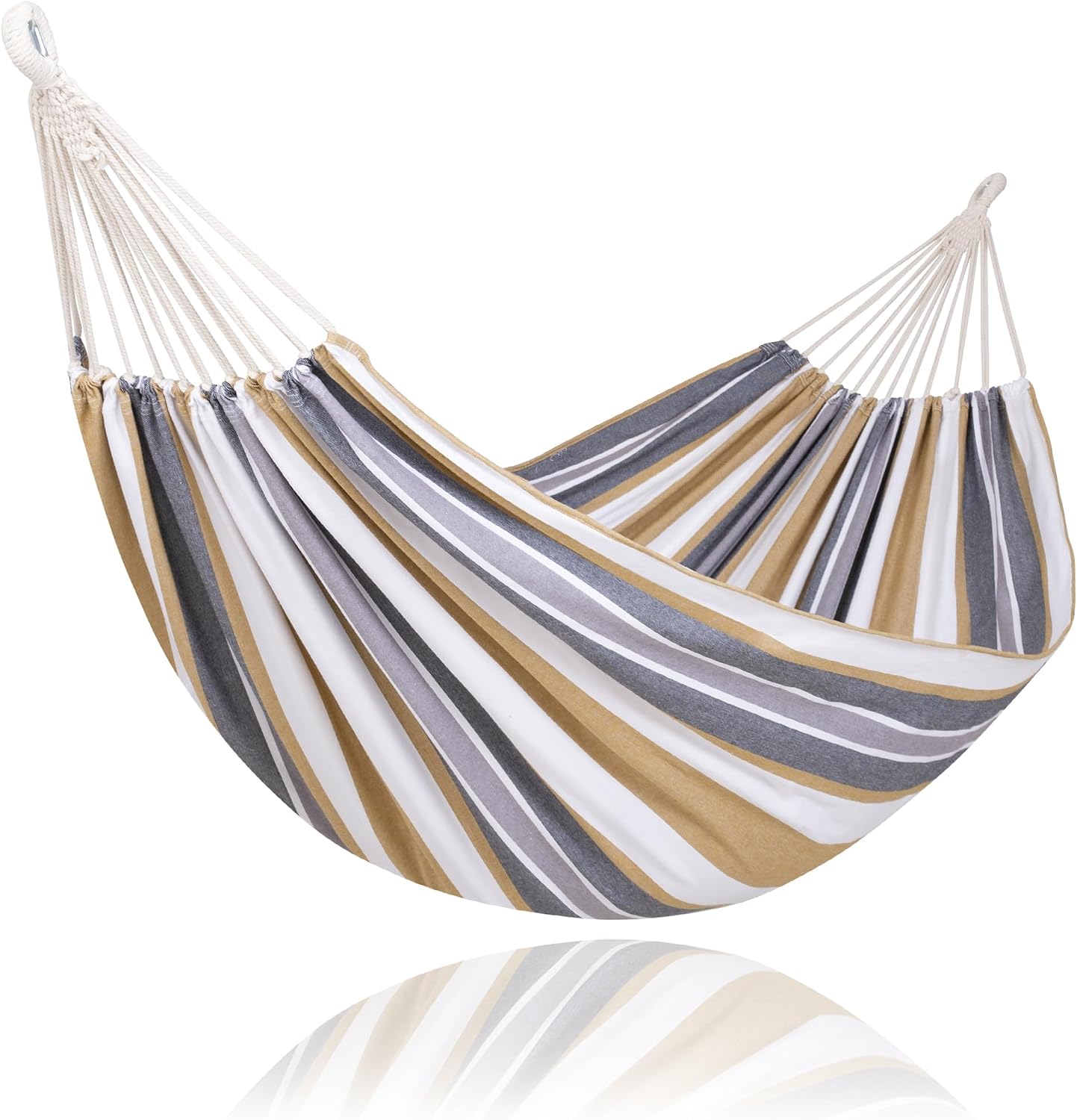
SUNCREAT Large Hammock for Tree, Outdoor Tree Fabric Hammock Only, Coffee Stripes
The biggest single fabric bed in this comparison. No spreader bar to wrestle with, no frame to assemble, and it hangs from two trees with nothing extra to buy except the straps you should already own.
It is a hammock only, so no straps and no stand come in the box, and a plain gathered-end bed gives you nothing to brace a foot against when you want a flatter lie.
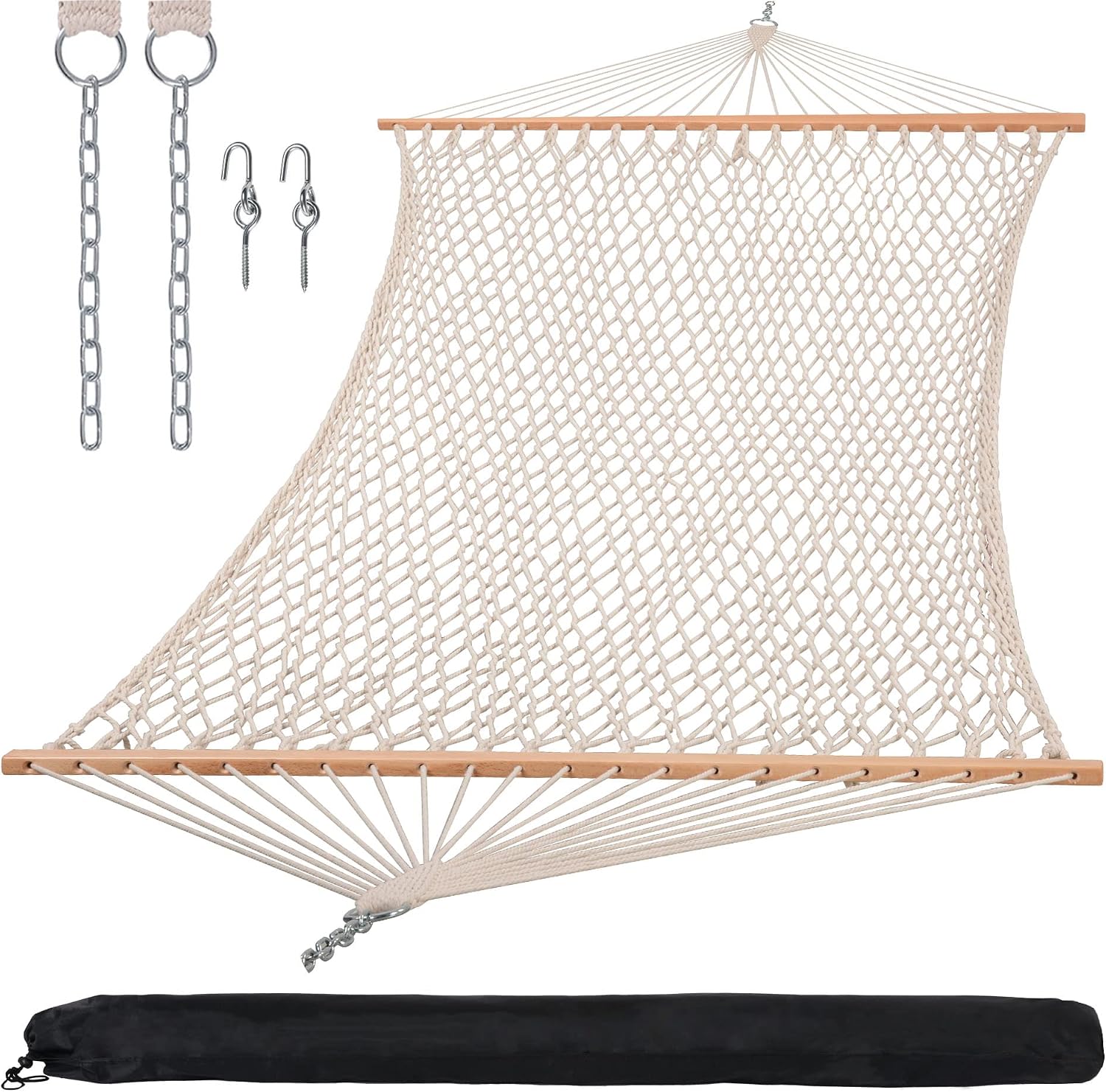
SUNCREAT Traditional Rope Double Hammock, 450 lbs Capacity, Natural
The traditional rope weave breathes in summer heat and gives a firm, open lie that feels like a porch swing instead of a cocoon. The stated 450 lb capacity is the highest figure in this group.
Rope beds are bulkier and less packable than fabric, the open weave is not something I would trust for a full camping night, and this is a porch piece rather than a travel piece.
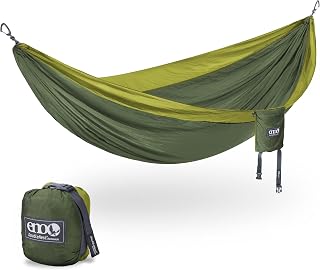
ENO, Eagles Nest Outfitters DoubleNest Lightweight Camping Hammock, 1 to 2 Person, Special Edition Colors, ATC
The most versatile hammock here. It is light enough to carry, it packs small, and it works as a backyard lounger and as a genuine camping hammock once you add a structural ridgeline and a tarp.
No straps and no stand in the box, and the two-person sizing is optimistic for two adults who actually want to sleep rather than wrestle.
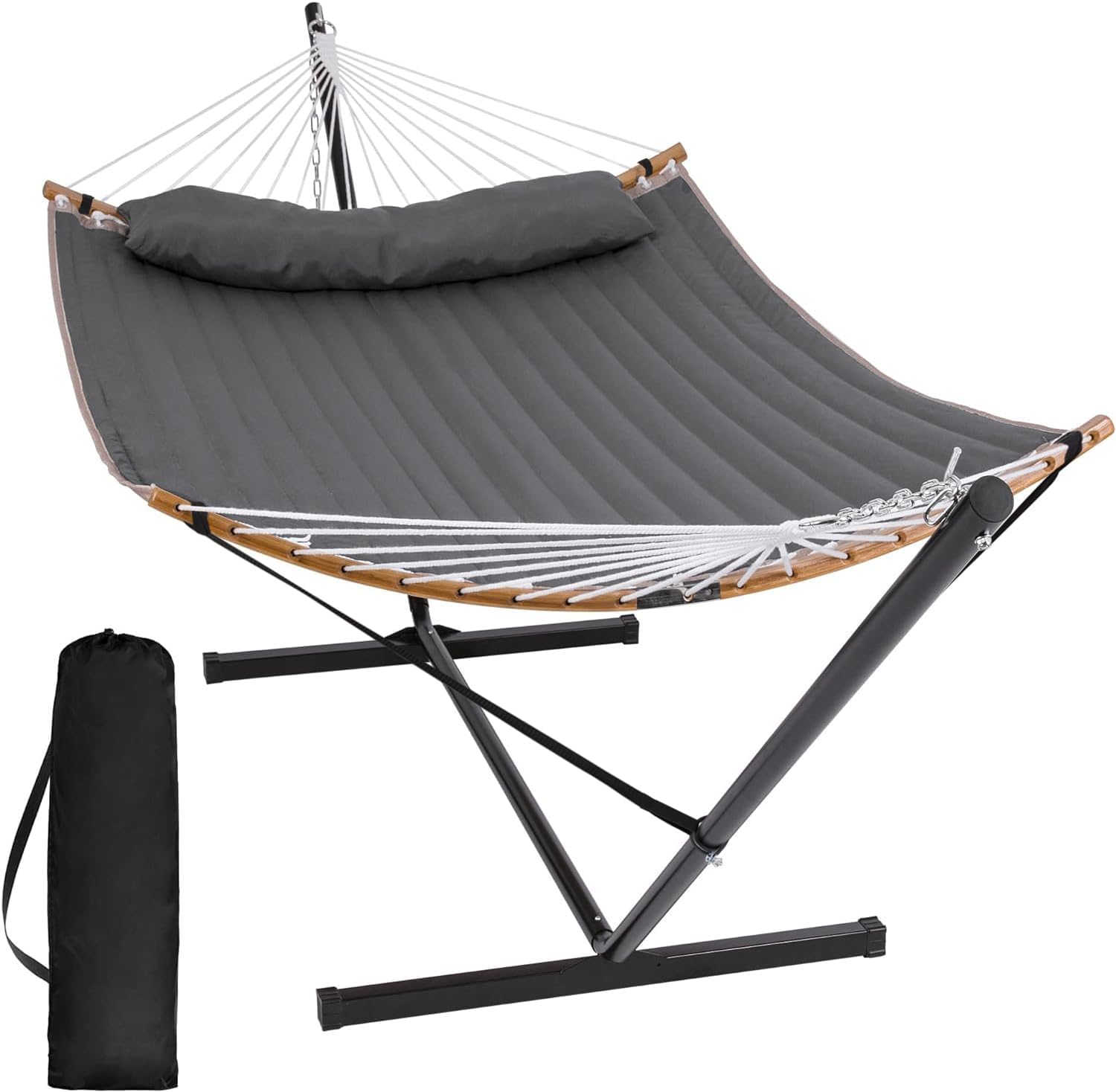
SUNCREAT Double Portable Hammock with Stand, 2 Person Hammock with Curved Spreader Bar, Balance Ropes Included, Dark Gray
No trees, no straps, and no tree damage debate. The curved spreader bar holds the bed open and flat, and the stand means you can chase shade across the yard all afternoon.
It is the heaviest and the most expensive of the four, and a spreader bar hammock will never give you the deep wrap of a gathered-end fabric bed.
Prices and availability were captured from Amazon Creators API and may change.
How I judge a hammock before it earns a spot in the rotation
A hammock is a geometry problem. If the sag is wrong, no fabric quality saves you. The sleep sweet spot for a gathered-end hammock is a hang angle near 30 degrees, which sounds precise until you are standing between two trees eyeballing it like everyone else. At 30 degrees you get a diagonal lie that is close to flat. Hang it tighter and you turn into a banana. Hang it looser and you sink into a pocket that is comfortable for 20 minutes and miserable by midnight.
I check four things on any hammock that comes through my hands. First, does it sleep flat at a 30-degree hang, or does the cut of the bed fight the geometry? Second, how much does the fabric stretch overnight? Nylon relaxes under body heat and weight, so a hammock that feels perfect at 9 PM can have you on the ground at 3 AM. Third, what is holding it up? Two-inch straps protect the tree and hold the hang. Rope does neither. Fourth, would I trust it in weather, which means does it accept a tarp and does it accept a bug net without turning into a sewing project.
None of the four hammocks in this comparison ship with a structural ridgeline, because none of them are camping systems. For a nap in the yard that is fine. For an overnight, it is the difference between sleeping and surviving.
The four hammocks, one at a time
SUNCREAT Large Hammock for Tree, Outdoor Tree Fabric Hammock Only, Coffee Stripes
This is the simplest thing in the group and that is the appeal. It is a big fabric bed with gathered ends and a coffee stripe pattern, sold as a hammock only. There is no frame to assemble, no spreader bar to fight, and nothing between you and the trees except the suspension you choose.
Because it is a gathered-end hammock, it responds to sag exactly the way a hammock should. Set the angle near 30 degrees and you get that long diagonal lie that keeps your spine out of the banana curve. The bed is generous enough that a second person fits for lounging, though I would not promise anyone a full night of sleep with two adults in it.
The honest caveat is the box contents. There are no straps here, which means you need to buy them, and you should buy wide ones. This is also not a hammock I would carry on a backpacking trip. It is a backyard and car camping hammock, and it is very good at that job.
ENO, Eagles Nest Outfitters DoubleNest Lightweight Camping Hammock, 1 to 2 Person, Special Edition Colors, ATC
The DoubleNest is the one I recommend most often, and my reasoning is boring: it is the hammock people keep using. The fabric holds up, the special edition colors make it something you actually want to leave hanging, and it does double duty as a backyard hammock and a camping hammock. Packed down it takes up about as much room as a loaf of bread, which matters if it lives in a car or a pack.
The 1 to 2 person rating is where I get skeptical, and it is not an ENO problem so much as a physics problem. Two adults in any gathered-end hammock end up stacked on top of each other or pinned against the fabric wall. It is a great two-person lounger and a one-person sleeper.
If you want to take this past the backyard, you need three additions: a structural ridgeline to lock your sag, two-inch straps for the trees, and a tarp for rain. Add those and it becomes a real sleep system. Without them it is a very good hangout hammock, which is exactly what most buyers want.
SUNCREAT Traditional Rope Double Hammock, 450 lbs Capacity, Natural
Rope hammocks are a different animal, and I mean that literally. The woven rope bed spreads your weight across a network of cords instead of a single sheet of fabric, so the lie is firmer and more open. In July heat that open weave breathes in a way nylon never will. The stated 450 lb capacity is the highest number in this comparison, and the natural rope look belongs on a screened porch.
Where it loses me is portability and overnight use. A rope bed is bulky, it does not compress into a stuff sack, and it is not a hammock I would carry anywhere. Rope also gives you a textured lie, which some people love and some people find fiddly, since the cords shift under you as you move.
If your plan is a permanent hang between two porch posts and a book on a Sunday afternoon, this is a perfectly good answer. If your plan involves a trailhead, it is the wrong tool.
SUNCREAT Double Portable Hammock with Stand, 2 Person Hammock with Curved Spreader Bar, Balance Ropes Included, Dark Gray
This is the only option here that solves the tree problem by removing trees from the equation. The curved spreader bar holds the bed open and flat, so you get an actual rectangle of space instead of a fabric pocket, and the included stand means the hammock can live on a patio, a deck, or a lawn with no anchor points at all. Balance ropes are included to keep the bed from swinging wildly when someone climbs in.
The trade-off is the shape itself. A spreader bar hammock is stable and easy to get into, and it will never give you the deep wrap of a gathered-end fabric bed. Some people prefer that. If you have ever felt trapped in a hammock that swallowed you, this is the antidote.
It is also the heaviest and most expensive hammock in this comparison, and moving it around the yard is a two-hand job, not a one-hand job. You are paying for the stand and the convenience, and if you have no trees, that is money well spent.
Straps, trees, and the one thing I will not compromise on
Three of these four hammocks assume you will supply your own suspension, and that is a good thing, because the suspension matters more than the hammock. Two-inch wide tree straps spread the load across the bark. Rope, cord, and thin webbing cut into the cambium layer, and a decade of that damage is visible from a distance. A forest ranger showed me exactly what it looks like, and I have never hung on anything narrower since.
Straps also decide whether you sleep. A strap that stretches will drop your hang angle overnight, and a hang angle that drifts is a hammock that stops being flat at 3 AM. I want polyester webbing with a tree-friendly width and a buckle or whoopie sling setup I can adjust without untying anything in the dark.
If a hammock arrives with rope in the box, I set the rope aside. It is not a judgment on the hammock. It is a judgment on rope.
Who should buy which
Buy the ENO DoubleNest if you want one hammock that works in the yard and on a campsite, and you are willing to buy straps and a tarp to complete the system. It is the most versatile pick here.
Buy the SUNCREAT Large Hammock for Tree if you want maximum lounging surface for the least money and you already own wide straps. It is the simplest hang in this group.
Buy the SUNCREAT Traditional Rope Double Hammock if you want a permanent porch piece with an open, breathable, old-school lie and no plans to travel with it.
Buy the SUNCREAT Double Portable Hammock with Stand if you have no trees, no patience for suspension, or a deck that gets better shade than the yard. The stand is the feature.
One last note for couples: every hammock here is marketed as a double, and every one of them is a single sleeper in practice. Buy two hammocks, hang them side by side under one tarp, and you will both actually sleep. That is the advice I give most often, and it is the advice people ignore most often.
What I am testing next
I have a stack of 2026 hammocks on the bench right now, part of a 10-unit run where each one gets two nights and a "would I actually sleep through the night" score. The pattern I keep seeing is that fabric quality has plateaued and suspension has not. The hammocks that fail my test almost never fail because of the bed. They fail because the straps stretch, the sag drifts, or the whole thing was never designed to hold a tarp.
That is the test that matters. Not how a hammock looks hanging between two trees at a cookout, but whether you are still comfortable in it when the temperature drops and the novelty is gone. The DoubleNest and the big SUNCREAT fabric bed pass that test in the backyard. The rope hammock and the stand model pass a different test, and knowing which test you are buying for is the whole decision.